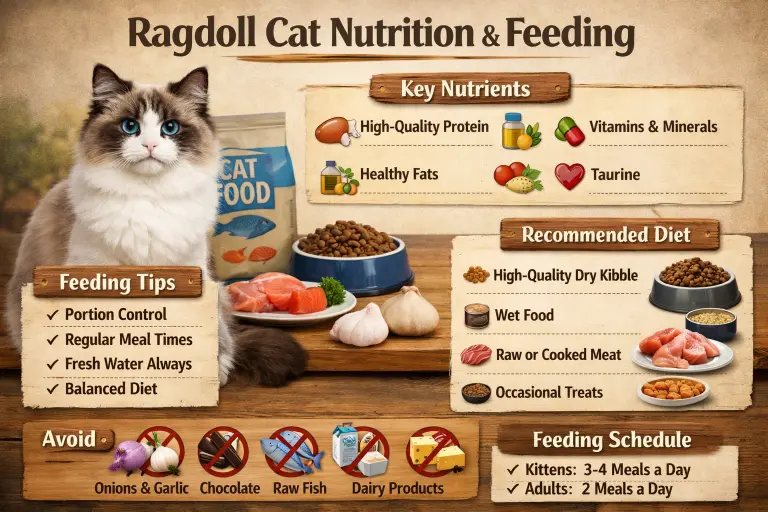
Ragdoll cats are known for their gentle personalities and striking blue eyes, but their unique body type and lifestyle also shape what they need from their diet. Nutrition isn’t just about filling a bowl — it’s about giving your Ragdoll the energy, nutrients, and hydration its body needs to stay healthy from kittenhood through adulthood and into their senior years. Because Ragdolls tend to be larger and less active than some breeds, their diet needs careful planning to help maintain a healthy weight without underfeeding essential nutrients.
All cats, including Ragdolls, are obligate carnivores. This means they rely on animal‑based proteins for most of their essential nutrients. Unlike humans or dogs, cats cannot make certain amino acids on their own and must get them from meat. One of the most important of these is taurine, which supports heart and eye health. Ragdoll diets should prioritize high‑quality animal protein as the main ingredient in the food they eat. Low‑quality plant proteins or grain fillers do not give the amino acids cats truly need.
In addition to proteins, fats are another key component. Fats provide concentrated energy, support skin and coat health, and help your cat absorb fat‑soluble vitamins. Healthy fats like omega‑3 and omega‑6 help keep a Ragdoll’s coat soft and shiny and support brain and immune function. While cats can use some carbohydrates for energy, they do not digest them as efficiently as proteins and fats. Too many carbs in the diet can contribute to weight gain without providing the nutrients a Ragdoll truly needs.
Water and moisture also play a big role in feline health. Wild cats get most of their water from the prey they eat, which is why many domesticated cats can become dehydrated if they only eat dry kibble. For Ragdolls, especially those that eat little wet food, encouraging water intake can reduce the risk of urinary tract issues and support kidney health. The first section of this article helps you understand the “why” behind feeding choices so that later sections can guide you on “how” to make the right decisions for your Ragdoll’s diet.
Choosing the Right Food for Your Ragdoll
Choosing the right food for your Ragdoll involves comparing options and knowing what to look for on the label. Not all cat foods are created equal, and the right choice can help your cat stay healthy and active throughout life. Ragdolls do well with diets rich in animal protein and moderate in fat. Foods with too many carbohydrates or fillers can lead to unnecessary calorie intake and weight gain.
There are two main types of commercial cat food: wet food and dry food. Many owners like to feed a mix of both to balance moisture intake and convenience. Wet food has a higher moisture content, which can support hydration and mimic the natural moisture cats would get from prey. Dry food is convenient and can help keep teeth cleaner, but it usually contains more carbohydrates than wet foods. Below is a simple table that compares wet and dry foods so you can see their pros and cons at a glance.
Wet vs Dry Food Comparison
| Feature | Wet Food | Dry Food |
|---|---|---|
| Moisture Content | High (70–80%) | Low (5–10%) |
| Hydration Support | Strong | Weak |
| Dental Impact | Neutral | Can help clean teeth |
| Protein Density | Usually higher | Varies |
| Cost per Feeding | Higher | Lower |
| Shelf Life After Opening | Short | Longer |
Use this table to think about how each food type fits your Ragdoll’s routine. Some owners choose wet food at mealtimes and leave dry food available later. Others feed set portions of both twice a day. Whichever schedule you choose, make sure you read the ingredient list and guarantee analysis on the package. Look for named animal proteins (like chicken, turkey, salmon) at the top of the list and avoid vague terms like “animal by‑product meal” which may indicate lower quality.
When reading labels, the first few ingredients tell you what makes up most of the food. Cats need real meat, not grain or plant protein, as their primary source. Also check for added taurine, omega fatty acids, and minimal fillers. Even if a food is labeled “premium” or “natural,” the true nutrient quality comes from the actual ingredients and how they are balanced.
Feeding Frequency, Portion Sizes & Sample Feeding Guide
Feeding your Ragdoll the right amount is just as important as feeding the right food. Overfeeding can easily lead to weight gain, while underfeeding can leave your cat missing essential nutrients. The frequency and portion size depend on age, activity level, and whether your cat is spayed or neutered. Kittens and active adults burn more calories and may need more food than older or less active cats.
Kittens grow quickly and need frequent feeding. During the first six months, most kittens should eat 3–4 small meals per day. This helps maintain stable energy levels and supports their fast pace of growth. As your Ragdoll reaches adulthood (about 1 year old), feeding 2 meals per day is usually sufficient. Senior cats sometimes eat smaller meals more often, especially if they have dental sensitivity or a lower appetite. Always adjust portion sizes to your cat’s individual needs — these guides are not one‑size‑fits‑all.
Below is a sample feeding guide to help you estimate amounts based on body weight and life stage. Remember, these are starting points, and you should adjust based on your cat’s body condition and activity.
Sample Feeding & Portion Guide
| Body Weight (lbs) | Life Stage | Daily Wet Food (cans) | Daily Dry Food (cups) |
|---|---|---|---|
| 5–8 | Kitten | 2–3 | ¾–1 |
| 8–12 | Adult | 2 | ¾–1 ¼ |
| 12–15 | Adult | 2–2 ½ | 1–1 ½ |
| 15+ | Adult | Adjust based on activity | Adjust based on activity |
If you feed a mix of wet and dry food, split the total daily amount between the two meals. For example, if your adult Ragdoll needs 2 cans of wet food per day, you could feed 1 can in the morning and 1 at night. If adding dry food, reduce the wet amount slightly so your cat doesn’t eat more calories than needed.
Indoor cats may need fewer calories than outdoor cats because they move less. Watch your cat’s weight and adjust portions as needed. A healthy Ragdoll should have a gently rounded waist and ribs that can be felt but not seen. If you notice weight gain over time, reduce portions gradually — never cut food suddenly, as abrupt changes can cause digestive upset.
Treats, Hydration & Common Feeding Mistakes
Treats are a fun part of bonding with your Ragdoll, but they should be given sparingly. Treats should make up no more than 5–10% of your cat’s daily calories. Too many treats can unbalance nutrition and lead to weight gain. Choose treats made specifically for cats and avoid flavored human snacks, as many ingredients we enjoy can be harmful to cats.
Some human foods are toxic to cats — for example, onions, garlic, chocolate, grapes, raisins, alcohol, and caffeine. Even if a food is safe for people, it may not be safe for cats. Always research before sharing any human food, and when in doubt, skip it. Stick to cat‑specific treats or small pieces of cooked meat without seasoning.
Hydration is another area many owners overlook. Cats naturally have a low thirst drive, meaning they may not drink much water even when they need it. Feeding wet food regularly helps increase their moisture intake. You can also place multiple water dishes around the house or use a cat water fountain to encourage drinking. Fresh, clean water supports urinary tract health and aids digestion. Signs of dehydration include dry gums, lethargy, decreased urine output, or sunken eyes. If you ever suspect dehydration, contact your veterinarian promptly.
One common feeding mistake is free‑feeding dry kibble all day. This can lead to overeating and weight gain, especially in Ragdolls that are inherently laid‑back. Scheduled meals help you control portions and maintain a routine. Another mistake is not transitioning foods correctly. When you switch brands or types, do it slowly over 7–10 days by mixing increasing amounts of the new food with the old. Sudden changes can cause vomiting, diarrhea, or food refusal.
Practical Tips, FAQs & Summary for Ragdoll Owners
Here are some quick tips you can use right now to make feeding your Ragdoll easier and healthier:
• Weigh your cat monthly and adjust portions based on body condition.
• Offer a mix of wet and dry foods to balance moisture and dental benefits.
• Keep fresh water available at all times, and clean bowls daily.
• Use treat portions as part of the total daily allowance, not extra.
• Transition foods slowly to prevent digestive upset.
Frequently Asked Questions
How much should my Ragdoll eat per day?
This depends on weight and age. Most adult Ragdolls eat about 2 cans of wet food or about ¾–1 ½ cups of dry food per day, split into two meals. Adjust as needed based on activity and body condition.
Can Ragdolls eat only dry food?
They can, but since dry food has low moisture, it’s best to mix wet and dry for hydration. Cats on dry food alone need easy access to fresh water.
My Ragdoll gained weight — what should I do?
Reduce portion sizes slightly and increase play or activity. If weight gain continues, speak with your veterinarian to rule out underlying health issues.
Is grain‑free food better for Ragdolls?
Not always. What matters most is high animal protein and balanced nutrients. Grain‑free does not automatically mean healthier. Choose foods formulated for cats, not based on human trends.
How do I transition to a new food?
Mix increasing amounts of the new food with the old over 7–10 days. Start with 25% new food and 75% old food, and gradually flip the ratio.
In summary, feeding a Ragdoll cat well means understanding what its body needs and matching that with quality food, proper portions, and smart feeding habits. Focus on high‑protein diets, balanced nutrients, and enough moisture. Monitor their weight, adjust as they age, and always provide fresh water. With these guidelines, you’ll help your Ragdoll thrive at every stage of life.For additional cat nutrition guidance from an authoritative source, see the American Association of Feline Practitioners feeding recommendations at https://catfriendly.com/guidelines/nutrition/

Ata Ur Rehman is the founder of Pet Age in Human Years Calculator, an educational platform that provides age conversion charts and lifespan guides for dogs, cats, birds, and other companion animals. His work focuses on helping pet owners understand how animal ages translate into human years using commonly accepted age conversion formulas and published lifespan averages.
The website compiles breed and species lifespan data from kennel clubs, breed organizations, and general animal lifespan studies to present simple and easy-to-understand guides for pet owners worldwide.
This website was created to centralize animal age conversion charts into one easy reference platform for pet owners.