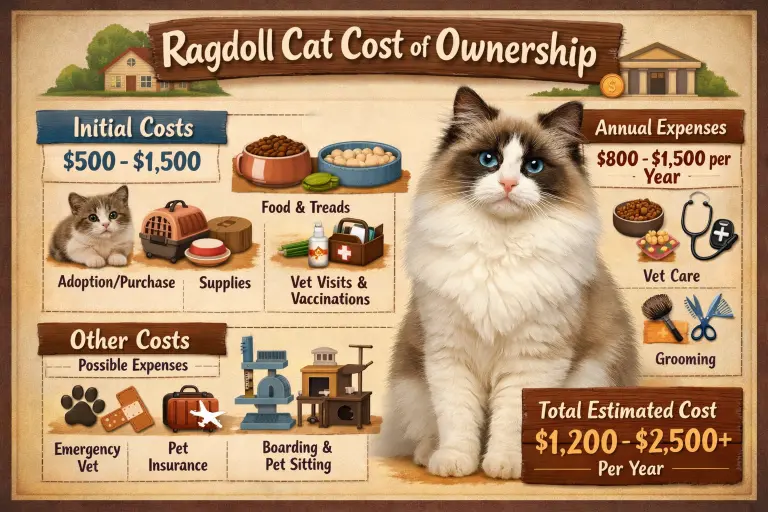
Owning a Ragdoll cat is a dream for many cat lovers. They are known for their calm temperament, striking blue eyes, and soft, plush coats. But before bringing one home, it’s important to understand the financial commitment. Ragdolls are not just adorable pets—they require proper care, nutrition, and medical attention, which can add up over time. Knowing what to expect can help you plan responsibly and avoid surprises later.
The cost of owning a Ragdoll includes more than just buying the cat. There are one-time setup expenses, ongoing monthly costs, and occasional emergency or health-related expenses. Unlike some other cats, Ragdolls often have specific dietary and grooming needs, which can increase recurring costs. They are usually indoor cats, which reduces some risks but still requires proper preparation for a long and healthy life.
Many first-time cat owners underestimate the long-term costs. A Ragdoll can live 12 to 17 years, and during that time, every aspect of care—from food and litter to veterinary visits—adds up. Planning ahead helps ensure that you can meet your cat’s needs without financial stress. This guide will break down all these costs in clear, realistic terms.
By the end of this article, you will have a better idea of the total investment required to care for a Ragdoll. You will see the difference between low, average, and high-cost scenarios, as well as what factors can increase expenses. This information is meant to help you make an informed decision and provide a comfortable, happy life for your cat.
Initial One-Time Costs for a Ragdoll
Bringing a Ragdoll into your home involves several one-time expenses. These include the adoption or purchase fee, initial veterinary care, and essential supplies. Knowing these costs upfront allows you to budget properly and avoid surprises.
The cost of buying a Ragdoll from a breeder is usually higher than adopting from a rescue. Breeder prices often range from $800 to $2,500 depending on the cat’s pedigree, color, and age. Adoption fees from a shelter are generally lower, ranging from $100 to $500, and often include basic veterinary care. Deciding whether to buy or adopt will have the biggest impact on your initial costs.
The first veterinary visit is crucial for your Ragdoll’s health. This usually includes a general check-up, vaccinations, deworming, and microchipping. Spaying or neutering is another one-time cost if it hasn’t already been done. These veterinary costs typically range from $200 to $600. Proper initial medical care ensures that your cat starts life healthy and reduces the risk of early health issues.
You also need essential supplies before your Ragdoll arrives. These include a litter box, litter, food and water dishes, a comfortable bed, scratching posts, and toys. Grooming tools such as brushes are important because Ragdolls have long hair that can mat if not properly maintained. Depending on quality and quantity, supplies can cost between $150 and $500.
TInitial One-Time Costs for a Ragdoll
| Item | Low Cost | Average Cost | High Cost |
|---|---|---|---|
| Purchase / Adoption Fee | $100 | $1,200 | $2,500 |
| Initial Vet Visit & Vaccines | $200 | $400 | $600 |
| Spay / Neuter | $100 | $200 | $300 |
| Microchip | $25 | $50 | $75 |
| Essential Supplies | $150 | $300 | $500 |
| Total Initial Cost | $575 | $2,150 | $3,975 |
Recurring Monthly and Annual Costs
After the initial setup, Ragdolls have ongoing monthly and annual costs. These cover food, litter, preventive care, grooming, and occasional boarding or pet-sitting. Keeping track of these recurring expenses helps you manage your budget effectively.
Food is one of the main monthly costs. Ragdolls benefit from high-quality cat food that supports their health and coat. On average, you might spend $50 to $100 per month on premium dry and wet food. Treats are an additional $5 to $20 per month depending on frequency. Feeding the right amount ensures your cat stays healthy and avoids weight-related health issues.
Litter is another regular expense. An indoor Ragdoll will require a clean litter box daily, and most owners use clumping litter that is easy to maintain. Monthly litter costs typically range from $15 to $40. You might also need to replace the litter box occasionally, adding about $20 to $50 per year.
Preventive veterinary care is essential for a long, healthy life. Monthly costs can include flea, tick, and worm prevention, averaging $10 to $30. Annual visits for vaccines and check-ups generally range from $100 to $300. Keeping up with preventive care helps avoid more expensive treatments later.
Grooming is especially important for Ragdolls. Their long hair can mat if not brushed regularly. Many owners spend $10 to $30 per month on grooming tools and may occasionally pay $50 to $100 for professional grooming. Toys, scratching posts, and furniture maintenance are additional costs, roughly $10 to $30 per month.
Boarding or pet-sitting can be needed if you travel. Monthly averages are hard to predict, but budgeting $20 to $50 per month for occasional stays is realistic.
Monthly and Annual Costs for a Ragdoll
| Item | Monthly Cost | Annual Cost |
|---|---|---|
| Food & Treats | $50–$100 | $600–$1,200 |
| Litter | $15–$40 | $180–$480 |
| Preventive Vet (Flea/Tick/Worm) | $10–$30 | $120–$360 |
| Grooming & Supplies | $10–$30 | $120–$360 |
| Boarding / Pet Sitting | $20–$50 | $240–$600 |
| Total Monthly | $105–$250 | $1,260–$3,000 |
Unexpected, Emergency, and Health-Related Costs
Even with careful planning, Ragdolls can encounter unexpected health costs. Emergencies, chronic conditions, and aging-related expenses should all be considered when calculating total ownership costs.
Emergency vet visits can occur at any time. Accidents, sudden illnesses, or infections may require immediate attention. Costs for emergency care typically range from $200 to $1,500 depending on severity. Hospitalization, surgery, or specialized tests can increase this amount.
Chronic conditions are more common in Ragdolls than in some other breeds. Hypertrophic cardiomyopathy (HCM), a heart condition, and kidney disease are examples. Managing these conditions can require regular vet visits, medications, and monitoring, costing between $500 and $2,000 per year. Budgeting for potential chronic care helps you avoid being caught unprepared.
Aging cats may need additional care, such as joint supplements, special diets, or more frequent vet visits. End-of-life care, while emotional, also has a financial component. Planning for these costs ensures your Ragdoll remains comfortable and well cared for throughout life.
Emergency and Health-Related Costs
| Scenario | Low Cost | Average Cost | High Cost |
|---|---|---|---|
| Minor Emergency Visit | $200 | $400 | $600 |
| Major Emergency / Surgery | $500 | $1,000 | $1,500 |
| Chronic Condition Management | $500 | $1,000 | $2,000 |
| Aging & Special Care | $100 | $300 | $500 |
Lifetime Cost Summary and Practical Ownership Guidance
Adding all costs together gives a realistic estimate of what owning a Ragdoll might cost over its lifetime. This helps potential owners assess whether they can commit to the financial responsibilities.
Lifetime costs are affected by many factors, including lifestyle, number of cats in the household, and health status. A single indoor Ragdoll with minimal health issues will have lower lifetime costs than multiple cats or cats with chronic conditions. Understanding these variables allows for better planning.
A low-cost scenario combines budget adoption, basic food and supplies, minimal vet care, and no emergencies. This can total around $12,000 over 15 years. An average-cost scenario assumes breeder purchase, premium food, routine vet care, and occasional emergencies, totaling approximately $25,000. High-cost scenarios, including chronic conditions, professional grooming, and frequent boarding, can exceed $40,000.
Lifetime Cost Overview for a Ragdoll (15-Year Lifespan)
| Cost Category | Low Cost | Average Cost | High Cost |
|---|---|---|---|
| Initial One-Time Costs | $575 | $2,150 | $3,975 |
| Monthly & Annual Costs | $1,260–$3,000/year | $1,500–$3,500/year | $2,500–$5,000/year |
| Emergency / Health Costs | $800 | $1,700 | $4,000 |
| Total Lifetime Cost | ~$12,000 | ~$25,000 | ~$40,000+ |
Practical tips to manage costs include setting aside a monthly savings fund for emergencies, researching affordable but quality food options, and keeping up with preventive vet care. Ethical cost management helps ensure your Ragdoll has a long, healthy life without financial strain.It’s also important to evaluate your own financial readiness. If the thought of unexpected veterinary bills or monthly expenses is stressful, it may not be the right time to bring a Ragdoll home. Responsible planning benefits both you and your cat.For more detailed information on Ragdoll care, including health concerns and behavior tips, you can visit The International Cat Association Ragdoll Breed Page.

Ata Ur Rehman is the founder of Pet Age in Human Years Calculator, an educational platform that provides age conversion charts and lifespan guides for dogs, cats, birds, and other companion animals. His work focuses on helping pet owners understand how animal ages translate into human years using commonly accepted age conversion formulas and published lifespan averages.
The website compiles breed and species lifespan data from kennel clubs, breed organizations, and general animal lifespan studies to present simple and easy-to-understand guides for pet owners worldwide.
This website was created to centralize animal age conversion charts into one easy reference platform for pet owners.