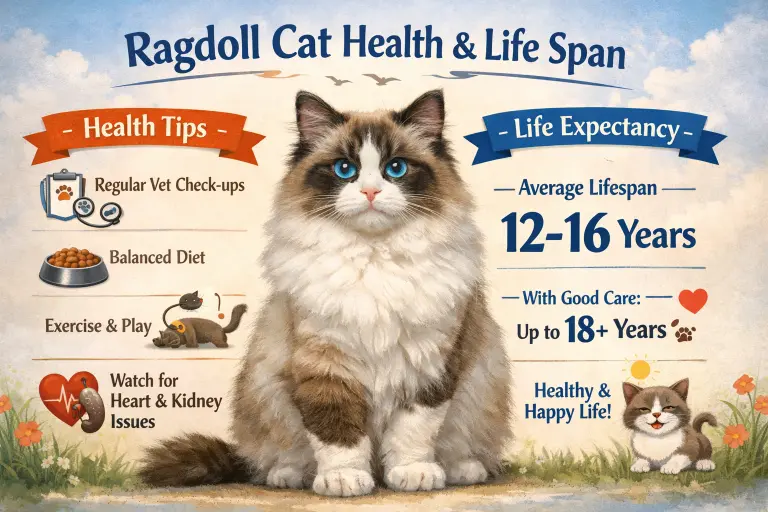
Ragdoll cats are one of the most popular cat breeds because of their calm, affectionate personalities and striking blue eyes. Many people are drawn to them for their gentle nature and their tendency to bond closely with their owners. While they are generally healthy cats, understanding their lifespan and what affects their health can help owners provide the best care possible. This section explains how long Ragdolls usually live and what factors can influence their longevity.
On average, indoor Ragdolls can live between 12 and 17 years, with some cats reaching 18 years or more. Outdoor cats, however, tend to have shorter lifespans due to higher risks of accidents, infections, and exposure to other hazards. These numbers are just averages, and each cat’s lifespan will depend on its genetics, lifestyle, diet, and preventive care.
Ragdolls are a large, muscular breed, which makes them less prone to certain illnesses common in smaller breeds, but they are still susceptible to some breed-related issues. Good nutrition, regular exercise, and preventive veterinary care can significantly improve their quality of life and help them live longer. Understanding typical Ragdoll health patterns also helps owners spot problems early.
Owners should remember that lifespan is not the only measure of a cat’s wellbeing. Quality of life, happiness, and the ability to move, eat, and play comfortably are equally important. By keeping track of changes in behavior, appetite, and energy, owners can support a long, fulfilling life for their Ragdoll cats.
shows the typical lifespan range for Ragdolls, comparing indoor and outdoor living environments.
| Living Environment | Average Lifespan | Notes |
|---|---|---|
| Indoor | 12–17 years | Safe environment, less risk of injury or disease |
| Outdoor | 10–14 years | Higher risk due to accidents, fights, or infections |
| Mixed (Indoor/Outdoor) | 11–15 years | Moderately safe, but with more health risks than fully indoor |
Common Ragdoll Health Concerns (Non‑medical Overview)
While Ragdolls are generally healthy, they are prone to some health issues that are more common in the breed. Being aware of these can help owners notice early changes and take preventive steps. This section will explain the main categories of health concerns, focusing on awareness rather than treatment.
Heart conditions are among the most common concerns in Ragdolls. Hypertrophic cardiomyopathy, or HCM, is a condition that affects the heart muscles and can appear in cats as young as two years old. While some cats show no symptoms for many years, others may develop signs later in life. Early detection through regular veterinary checkups can help monitor the condition safely.
Kidney health is another area to monitor. Chronic kidney disease becomes more common as cats age, and Ragdolls are no exception. While kidney issues are often age-related, good nutrition, hydration, and routine checkups can help identify problems before they progress. Similarly, urinary tract issues can appear at any age and may cause discomfort, so owners should be attentive to litter box habits.
Obesity and metabolic issues are a concern for many Ragdolls, particularly indoor cats that are less active. Maintaining a healthy weight through proper diet and regular play helps prevent joint problems, diabetes, and other complications. Dental disease is another common issue, as poor oral hygiene can lead to pain, infections, and other health problems. Regular dental care, including brushing or veterinary dental checkups, is important for overall wellbeing.
summarizes the most common health issues Ragdolls may face and the early warning signs owners can watch for.
| Health Concern | What It Affects | Typical Age of Onset | Early Warning Signs |
|---|---|---|---|
| Heart Conditions (HCM) | Heart muscles | 2–6 years | Lethargy, difficulty breathing, fainting |
| Kidney Disease | Kidneys | 7+ years | Increased thirst, frequent urination, weight loss |
| Urinary Tract Issues | Bladder/urethra | Any age | Straining to urinate, blood in urine, frequent litter box visits |
| Obesity/Metabolic Issues | Weight, joints, organs | Any age | Weight gain, less activity, difficulty jumping |
| Dental Disease | Teeth and gums | 2+ years | Bad breath, difficulty eating, drooling |
Preventive Care: Daily to Annual Wellness Habits
Prevention is key to keeping Ragdolls healthy and helping them live a long life. A few daily habits and regular checkups can make a big difference in their overall wellbeing.
Nutrition is one of the most important factors. Feeding a balanced diet that matches your cat’s age, activity level, and health needs supports weight management and provides essential nutrients. Many owners prefer feeding high-quality commercial cat food, but it is important to discuss diet choices with a veterinarian to ensure they meet your Ragdoll’s needs.
Regular exercise is also important. Even though Ragdolls are calm, they benefit from interactive play and opportunities to climb, jump, and explore. Play sessions help prevent obesity and provide mental stimulation, which is crucial for emotional wellbeing.
Dental care should be part of the routine from a young age. Brushing your Ragdoll’s teeth or providing dental treats can reduce the risk of dental disease. Combining this with routine veterinary dental checkups ensures that teeth and gums remain healthy.
Routine veterinary care is essential. Annual or biannual wellness exams allow early detection of potential problems before they become serious. Vaccinations, parasite prevention, and lab tests tailored to your Ragdoll’s age help maintain long-term health.
provides a simple wellness checklist for Ragdolls that owners can follow.
| Care Frequency | Wellness Activities |
|---|---|
| Daily | Feeding balanced meals, water, short play sessions |
| Weekly | Longer play sessions, grooming, brushing coat |
| Monthly | Weight check, behavior observation |
| Biannually/Annually | Veterinary checkups, vaccinations, bloodwork |
| As Needed | Dental care, nail trimming, parasite prevention |
Recognizing Concerning Changes Early
Even healthy Ragdolls can develop issues over time. Recognizing changes early helps owners act quickly and maintain their cat’s comfort. This section explains what to watch for without suggesting treatment.
Behavioral changes are often the first signs of underlying issues. If your Ragdoll becomes unusually withdrawn, less playful, or more irritable, it could indicate stress, pain, or illness. Similarly, changes in sleep patterns, excessive grooming, or hiding may signal a problem.
Appetite and weight are also important indicators. A sudden increase or decrease in food consumption, or unexplained weight changes, should not be ignored. Lethargy or reduced activity combined with weight loss may indicate a health concern.
Litter box habits are another key area. Straining to urinate, frequent visits, accidents outside the box, or blood in the urine can indicate urinary or kidney issues. Hydration is also important; ensure your cat has constant access to fresh water.
Changes in grooming or coat quality may be subtle but significant. Matted fur, hair loss, or greasy fur can signal underlying health problems. Owners should take note of these signs and consult a veterinarian if they persist.
Aging Gracefully: Senior Ragdoll Health & Quality of Life
As Ragdolls grow older, their care needs change. Supporting senior cats ensures they remain comfortable, active, and happy for as long as possible.
Joint health may become a concern with age. Older Ragdolls might be less willing to jump or climb. Providing ramps, soft bedding, and gentle exercise helps maintain mobility. Nutrition for senior cats may also need adjustment, with diets supporting kidney health, joint function, and weight management.
Cognitive and sensory changes can appear in senior cats. Vision, hearing, and memory may decline. Creating a stable and predictable environment helps reduce stress. Simple adjustments like night lights, easy access to litter boxes, and familiar resting areas are helpful.
Quality of life also includes social and emotional wellbeing. Ragdolls often enjoy interaction with their owners, so continuing gentle play, petting, and companionship remains important. Watching for signs of pain, discomfort, or behavioral changes helps owners intervene early and maintain comfort.
Finally, routine veterinary care becomes even more important for senior cats. Regular checkups, blood tests, and preventive care allow early detection of age-related health issues, helping your Ragdoll remain healthy and comfortable into their later years.For more detailed guidance on Ragdoll health and care routines, you can visit the American Association of Feline Practitioners for trusted, breed-independent advice.

Ata Ur Rehman is the founder of Pet Age in Human Years Calculator, an educational platform that provides age conversion charts and lifespan guides for dogs, cats, birds, and other companion animals. His work focuses on helping pet owners understand how animal ages translate into human years using commonly accepted age conversion formulas and published lifespan averages.
The website compiles breed and species lifespan data from kennel clubs, breed organizations, and general animal lifespan studies to present simple and easy-to-understand guides for pet owners worldwide.
This website was created to centralize animal age conversion charts into one easy reference platform for pet owners.