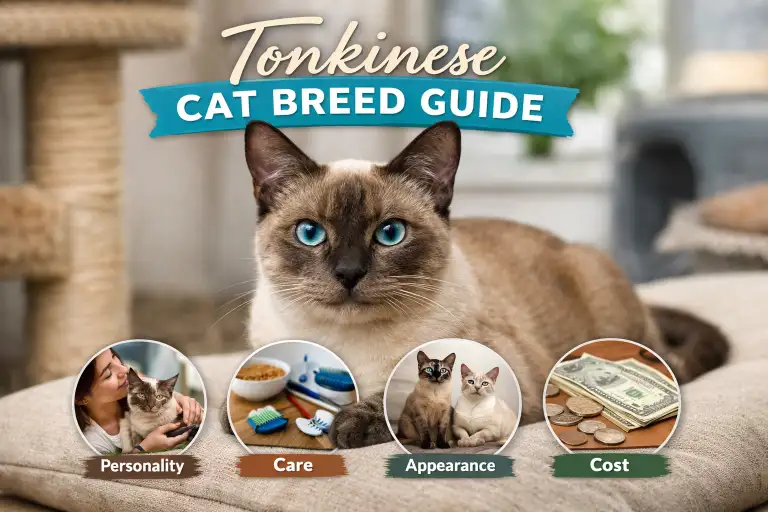
The Tonkinese cat breed is a striking blend of the affectionate Burmese and the vocal, energetic Siamese, creating a cat that is both social and playful, yet remarkably balanced in temperament. Tonkinese cats are renowned for their people-oriented nature—they often follow their favorite humans from room to room, eager to participate in daily life without being overly demanding. This breed thrives on interaction, making them excellent companions for families, singles, and even seniors who enjoy an engaged, interactive pet.
Tonkinese cats are intelligent and curious, with a natural affinity for learning new tricks or exploring puzzle toys. Unlike their Siamese ancestors, they tend to be moderately vocal; their “conversation” is soft and pleasant, rather than overwhelming. Their playfulness is paired with emotional intuition, meaning they can sense when their owner is stressed or sad and often offer quiet companionship.
Despite their social tendencies, Tonkinese cats also value independence. They are comfortable being alone for moderate periods, especially if their environment is enriched with toys and climbing structures. Their affectionate yet balanced personality makes them adaptable to a variety of homes, including apartments, multi-cat households, and homes with other pets.
Tonkinese cats also display distinct behavioral traits that set them apart from other breeds:
| Trait | Description | Owner Expectation |
|---|---|---|
| Affection | Moderate to high | Enjoys human companionship, but not overly clingy |
| Independence | Medium | Can tolerate being alone for several hours |
| Vocalization | Moderate | Communicates in conversation, not excessively noisy |
| Playfulness | High | Energetic and loves interactive toys |
| Intelligence | High | Learns quickly and enjoys puzzle toys |
| Social Behavior | Very social | Bonds closely with family members and other pets |
These qualities make the Tonkinese a breed that combines the best of both parent breeds: the Burmese’s affectionate warmth and the Siamese’s playful curiosity. Owners often describe them as “shadow cats” because of their tendency to follow loved ones around the house, seeking gentle attention, play, or simply the comfort of companionship.
This overview captures the essence of the Tonkinese cat: an affectionate, intelligent, and playful breed that adapts well to many lifestyles, providing companionship without overwhelming demands.
Tonkinese Cat Appearance, Size, and Coat Colors
Tonkinese cats are medium-sized cats with a strong, muscular body. They are not too big or too small, which makes them agile and graceful. Their body shape is balanced, with a rounded chest, strong legs, and a tail that is long but proportionate to their body. Compared to their Siamese relatives, Tonkinese cats have softer, less angular features, giving them a friendly and approachable look.
Their coat is short, fine, and silky. It lies close to the body, so grooming is easy and shedding is low. Tonkinese cats are known for their beautiful coat colors and patterns. They come in several shades including natural (warm brown), champagne (light beige), blue (grayish), and platinum (pale silver). Their coat patterns include mink, pointed, and solid. Mink Tonkinese have a soft gradient color on their body with slightly darker points on the face, ears, paws, and tail. Pointed patterns are darker on the extremities, while solid patterns are the same color all over.
One of the most striking features of the Tonkinese cat is their eye color. Most have clear aqua-colored eyes that give them a lively and expressive appearance. Eye color can vary slightly depending on the coat pattern, but it is always bright and captivating.
Here’s a quick table to make it easy to understand their appearance:
| Feature | Description | Notes |
|---|---|---|
| Size | Medium | 6–12 lbs, females usually smaller |
| Build | Muscular and athletic | Strong, agile, and balanced |
| Coat | Short, fine, silky | Low-maintenance and soft to touch |
| Colors | Natural, Champagne, Blue, Platinum | Variety of shades accepted |
| Patterns | Mink, Pointed, Solid | Pattern affects eye color intensity |
| Eyes | Aqua | Bright and expressive |
Tonkinese cats are a mix of elegance and charm. Their soft body lines, silky coat, and striking eyes make them stand out, while their moderate size and balanced build make them easy to handle and adapt to most homes.
Living With a Tonkinese Cat: Activity, Behavior, and Home Compatibility
Tonkinese cats are active and playful, but they are not hyper all the time. They love to play with toys, chase strings, and explore their surroundings. Mental activities like puzzle toys or interactive games keep them happy and prevent boredom. Even though they are playful, they also enjoy quiet time with their owners, making them balanced companions for most homes.
They are very social cats. Tonkinese enjoy spending time with people and other pets. They usually get along well with other cats and dogs if introductions are done slowly. They are also good with children, especially when kids are taught to be gentle. Because of their social nature, Tonkinese cats do best in homes where someone can interact with them daily.
Tonkinese cats can live in apartments or houses. They do not need a large space, but they enjoy climbing and exploring vertical spaces like cat trees or shelves. Indoor-only Tonkinese cats are safe and happy, but they need toys and interaction to stay entertained. Single-cat homes can work well, but having another friendly pet can give them company when the owner is away.
Here’s a simple table to see how Tonkinese cats fit into different types of homes:
| Household Type | Suitability | Notes |
|---|---|---|
| Apartments | Good | Need daily playtime to stay active |
| Houses | Excellent | Plenty of space to explore |
| Families with Children | Very good | Playful and tolerant |
| Multi-Pet Homes | Good | Usually friendly with other pets |
| Seniors / Low-Energy Owners | Moderate | Need daily interaction to prevent boredom |
| First-Time Owners | Good | Intelligent and trainable but need engagement |
Tonkinese cats are affectionate without being overly needy. They may follow you around the house and like to be involved in daily life, but they can also entertain themselves if their environment is stimulating. Their friendly and adaptable personality makes them a great choice for many types of homes.
Tonkinese Cat Health, Lifespan, and Care Needs
Tonkinese cats are generally healthy and can live a long life, usually between 12 and 16 years. Like all breeds, they have some health issues to watch for. Common concerns include dental problems, minor respiratory issues, and conditions that can be inherited from their Siamese or Burmese ancestors. Regular vet check-ups help catch problems early and keep them healthy.
Their coat is short and soft, so grooming is very easy. Brushing once a week is usually enough to keep their fur shiny and remove loose hair. Nails, ears, and teeth should also be checked regularly. Because they have short coats, Tonkinese cats can feel the cold, so keep them warm in cooler climates.
Here’s a quick table summarizing their health and care needs:
| Aspect | Details | Owner Tips |
|---|---|---|
| Lifespan | 12–16 years | Regular vet visits help them live longer |
| Health Issues | Dental, respiratory, genetics | Monitor teeth and avoid extreme temperatures |
| Grooming | Minimal | Weekly brushing, nail and ear checks |
| Shedding | Low | Easy coat maintenance |
| Climate Sensitivity | Short coat | Provide warmth in cold environments |
Tonkinese cats are smart and active, so providing toys and climbing spaces is important for their mental and physical health. Overall, they are a low-maintenance breed, but they do best when their environment keeps them engaged and healthy.
Tonkinese Cat Cost, Pros & Cons, and Similar Breeds
Owning a Tonkinese cat can be very rewarding, but it’s important to know the costs and what to expect. Tonkinese kittens usually cost between $600 and $1,200 depending on the breeder, quality, and location. Other expenses include food, toys, regular vet visits, vaccinations, and preventive care. Because their coat is short and easy to maintain, grooming costs are low, but routine dental and health check-ups are important.
Tonkinese cats have many positive traits, but like any breed, they also have a few challenges. Here’s a simple table showing the pros and cons:
| Pros | Cons |
|---|---|
| Social and affectionate | Needs daily interaction |
| Intelligent and playful | Can get bored if unstimulated |
| Low-maintenance coat | Moderate vocalization |
| Adaptable to different homes | Not ideal for owners who are rarely home |
Tonkinese cats are often compared to other breeds like Siamese, Burmese, Oriental Shorthair, and Balinese. Here’s a quick comparison:
| Breed | Temperament | Activity Level | Grooming | Vocalization |
|---|---|---|---|---|
| Siamese | Vocal, social | High | Low | High |
| Burmese | Affectionate, playful | Moderate | Low | Moderate |
| Oriental Shorthair | Energetic, social | High | Low | High |
| Balinese | Gentle, intelligent | Moderate | Low | Moderate |
| Tonkinese | Balanced, playful | Moderate-High | Low | Moderate |
Tonkinese cats are ideal for families, active singles, and first-time cat owners who can give them attention and playtime. They are playful, social, and affectionate, making them a great choice for homes with children or other pets.
For more expert-backed information on feline health, aging, and preventive care, you can explore resources from the American Association of Feline Practitioners (AAFP), which provides owner-friendly guidance written by veterinary professionals: https://catfriendly.com

Ata Ur Rehman is the founder of Pet Age in Human Years Calculator, an educational platform that provides age conversion charts and lifespan guides for dogs, cats, birds, and other companion animals. His work focuses on helping pet owners understand how animal ages translate into human years using commonly accepted age conversion formulas and published lifespan averages.
The website compiles breed and species lifespan data from kennel clubs, breed organizations, and general animal lifespan studies to present simple and easy-to-understand guides for pet owners worldwide.
This website was created to centralize animal age conversion charts into one easy reference platform for pet owners.