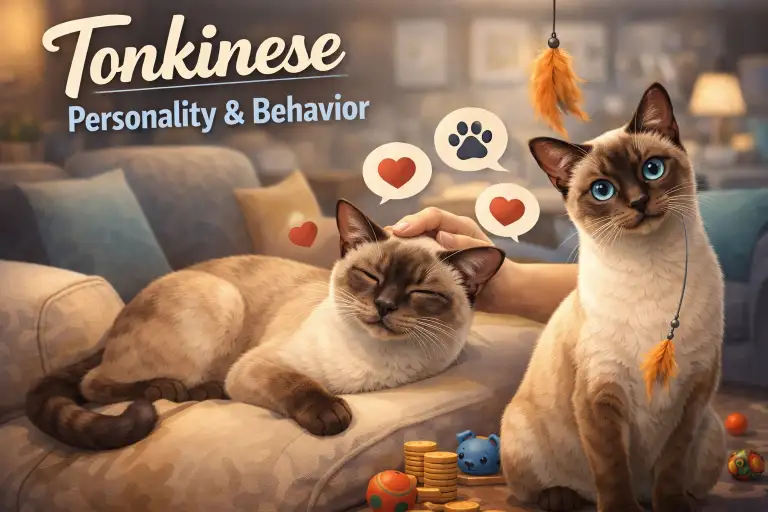
The Tonkinese cat is a fascinating blend of Burmese and Siamese heritage, resulting in a breed known for its intelligence, curiosity, and social nature. Understanding a Tonkinese’s personality starts with recognizing that, while the breed shares some common traits, each cat is a unique individual shaped by both genetics and life experiences.
Personality in Tonkinese cats is influenced by several key factors:
- Genetics and breed history: Tonkinese inherit traits from both Burmese and Siamese ancestors, which often translates into affectionate behavior, playfulness, and a tendency to form strong bonds with humans.
- Early socialization: Kittens that experience positive interactions with people, other animals, and various environments are more likely to develop confident, friendly, and adaptable personalities.
- Environment and daily life: A Tonkinese raised in a stimulating environment with toys, perches, and interactive playtime tends to be more curious, active, and mentally sharp.
- Individual variation: Even within the breed, some Tonkinese may prefer quiet observation while others seek constant engagement. Recognizing and respecting these differences is key to understanding your cat.
Tonkinese cats are highly intelligent and learn quickly, which makes them both playful problem-solvers and sensitive communicators. They often express their moods through subtle cues, so careful observation is essential to truly understanding what your cat is feeling and needing.
Owners often notice that Tonkinese cats are affectionate without being overly dependent, striking a balance between companionship and independence. They are usually curious and adventurous, exploring new spaces with confidence while maintaining a strong connection with their human family members.
By understanding the factors that shape Tonkinese personality, owners can better appreciate their cat’s behavior, provide appropriate enrichment, and strengthen the human-animal bond. Observing your Tonkinese over time will reveal the full richness of its personality, from playful antics to gentle displays of affection.
Tonkinese Communication & Social Behavior
Tonkinese cats are very social and love to interact with their humans. They can be playful, affectionate, and curious all at the same time. Understanding how they communicate helps you know what your cat wants and feels.
Body Language
Tonkinese use their body to tell you how they feel. Watching their ears, tail, eyes, and posture gives clues about their mood.
Table: Tonkinese Body Language Signals
| Signal | Meaning | What It Means for You |
|---|---|---|
| Tail up and quivering | Excited or happy | Your cat is greeting you warmly |
| Ears forward, eyes relaxed | Interested or curious | Safe to approach or play |
| Tail flicking, ears sideways | Agitated or overstimulated | Give some space |
| Hunched back, ears flat | Scared or defensive | Let your cat calm down |
| Slow blinking | Relaxed and trusting | Your cat feels comfortable |
Vocalizations
Tonkinese cats are often chatty. Their sounds can mean different things depending on the situation.
Common Tonkinese Vocalizations
| Vocalization | When They Use It | What It Means |
|---|---|---|
| Chirp or trill | Greeting or asking for attention | Friendly, wants interaction |
| Meow | Asking for food, play, or attention | Communicating a need |
| Purr | Contentment or seeking comfort | Relaxed or happy |
| Hiss or growl | Feeling threatened or upset | Back off and give space |
Social Behavior with Humans and Other Pets
- Tonkinese often follow their favorite people around the house.
- They may prefer gentle petting and lap time but also enjoy play and exploration.
- With other cats, they are usually friendly and enjoy playing together.
- Tonkinese can get along with dogs if introductions are slow and supervised.
Understanding these cues helps you respond appropriately, strengthen your bond, and make your Tonkinese feel safe and happy.
Play, Exploration & Natural Instincts
Tonkinese cats are very playful and curious. They love to explore, climb, and figure out things around the house. Play is not just fun—it also keeps your cat smart and healthy.
Types of Play
Types of Play & What It Shows
| Play Type | Example Behavior | What It Shows |
|---|---|---|
| Chasing toys | Pouncing on a ball or feather | Hunting instinct |
| Puzzle feeders | Figuring out a treat toy | Problem-solving skills |
| Solo play | Rolling a ball or chasing string alone | Independent exploration |
| Interactive play | Playing with a wand or laser with you | Social bonding and engagement |
Exploration and Natural Instincts
- Tonkinese love climbing and perching on high places.
- They are very curious and may investigate boxes, shelves, or new objects.
- They enjoy solving small challenges, like opening doors or finding hidden toys.
- Giving your Tonkinese safe ways to explore helps prevent boredom and stress.
By watching your cat’s play and exploration, you can understand its personality better and provide activities that match its energy and curiosity.
Commonly Misunderstood Behaviors
Tonkinese cats can sometimes do things that confuse owners. Many behaviors that seem “strange” or “bad” are actually normal ways your cat shows curiosity, energy, or affection.
Behavior vs Misunderstanding
| Behavior | Common Misunderstanding | What It Really Means |
|---|---|---|
| Loud meowing | “Demanding” or “annoying” | Your cat is trying to communicate or get attention |
| Climbing furniture | “Naughty” | Natural instinct to explore high places |
| Sudden energy bursts | “Hyper” | Normal Tonkinese play behavior, often called “zoomies” |
| Scratching furniture | “Bad behavior” | Sharpening claws and marking territory |
| Following you constantly | “Needy” | Shows affection and social bonding |
Other points to know:
- Tonkinese are more active than many other breeds and may play at night.
- They may appear clingy but usually just enjoy being near their people.
- Mischievous behavior is often a sign of intelligence and curiosity.
- Understanding these behaviors helps you respond kindly instead of thinking your cat is “bad.”
By knowing what your Tonkinese is really communicating, you can better meet its needs and strengthen your bond.
Observing, Understanding & Supporting Your Tonkinese
Watching your Tonkinese carefully helps you understand its needs, moods, and personality. By paying attention to signals, you can provide comfort, play, and affection in ways your cat enjoys.
How to Support Your Tonkinese
| What to Observe | Why It Matters | How to Respond |
|---|---|---|
| Body language (ears, tail, eyes) | Shows mood and comfort level | Adjust interaction based on signals |
| Vocalizations | Communicates wants or feelings | Respond to meows, chirps, or purrs appropriately |
| Play preferences | Shows energy level and intelligence | Provide toys and activities your cat enjoys |
| Social interactions | Shows attachment style | Spend time together without forcing attention |
| Sleep and rest habits | Shows comfort and security | Provide cozy spaces and quiet areas |
Tips for supporting your Tonkinese:
- Respect your cat’s personal space when it wants to be alone.
- Offer safe climbing spots, scratching posts, and interactive toys.
- Engage in daily play sessions to satisfy curiosity and energy.
- Observe patterns in behavior over time to notice changes or preferences.
- Respond to attention-seeking calmly; your cat is communicating, not misbehaving.
By understanding your Tonkinese and responding to its signals, you strengthen trust, keep your cat happy, and enjoy a closer bond with a playful, affectionate companion.
Observing, Understanding & Supporting Your Tonkinese
Watching your Tonkinese closely helps you understand what it wants and how it feels. Knowing your cat’s signals makes it easier to give love, play, and comfort in the right way.
How to Support Your Tonkinese
| What to Watch | Why It Matters | How to Help |
|---|---|---|
| Body language (ears, tail, eyes) | Shows mood and comfort | Pay attention and respond calmly |
| Vocal sounds (meow, chirp, purr) | Tells what your cat wants | Answer or engage appropriately |
| Play habits | Shows energy and curiosity | Offer toys, puzzles, or interactive games |
| Social behavior | Shows attachment and trust | Spend quality time but respect space |
| Resting spots | Shows comfort and security | Provide cozy beds and quiet areas |
Tips for supporting your Tonkinese:
- Give your cat safe spaces to hide, climb, and perch.
- Play with your cat daily to satisfy curiosity and energy.
- Let your cat come to you for affection instead of forcing attention.
- Observe its routines to understand what it likes and dislikes.
- Remember that Tonkinese communication is normal, not “bad” behavior.
Understanding and supporting your Tonkinese helps it feel safe, happy, and loved. By watching and responding to its cues, you build a stronger bond with a playful, affectionate, and intelligent companion.
For more expert-backed information on feline health, aging, and preventive care, you can explore resources from the American Association of Feline Practitioners (AAFP), which provides owner-friendly guidance written by veterinary professionals: https://catfriendly.com

Ata Ur Rehman is the founder of Pet Age in Human Years Calculator, an educational platform that provides age conversion charts and lifespan guides for dogs, cats, birds, and other companion animals. His work focuses on helping pet owners understand how animal ages translate into human years using commonly accepted age conversion formulas and published lifespan averages.
The website compiles breed and species lifespan data from kennel clubs, breed organizations, and general animal lifespan studies to present simple and easy-to-understand guides for pet owners worldwide.
This website was created to centralize animal age conversion charts into one easy reference platform for pet owners.