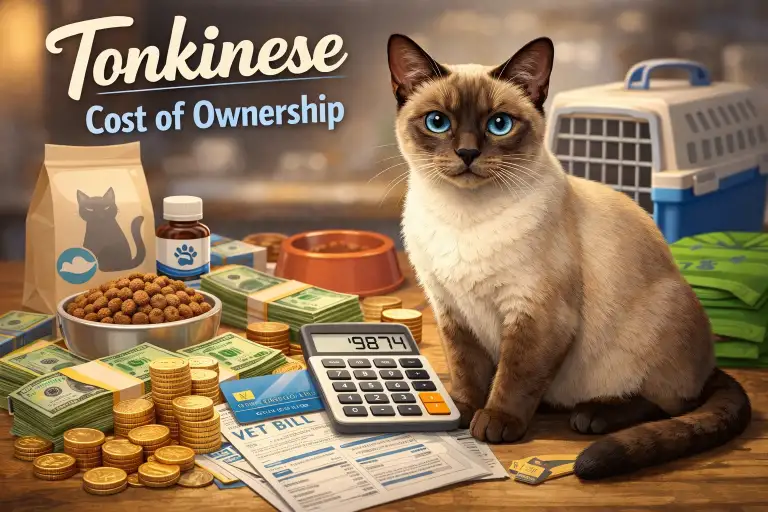
Owning a Tonkinese cat is a rewarding experience, but it comes with financial responsibilities that are important to understand before bringing one home. Tonkinese cats are active, social, and intelligent, which means they require consistent care, enrichment, and attention. These breed traits influence both one-time and recurring expenses, from high-quality food and toys to regular veterinary visits.
Understanding the cost of ownership helps you plan responsibly and avoid financial surprises. Many new cat owners underestimate expenses, particularly ongoing veterinary care and emergency costs, which can add up significantly over the years. By reviewing both expected and unexpected expenses, you can make an informed decision about whether a Tonkinese fits within your lifestyle and budget.
This guide will break down the typical costs involved, including initial setup, monthly and annual expenses, emergency care, and lifetime ownership estimates. You’ll also find tips on budgeting, cost management, and practical strategies for ensuring that your Tonkinese cat remains healthy and happy without stretching your finances.
One-Time & Initial Costs
When you first bring a Tonkinese cat home, there are some costs you will need to pay only once. These are called one-time or initial costs. Knowing these costs helps you plan your budget before adoption.
Adoption or Purchase Fees
- Buying a Tonkinese kitten from a breeder usually costs more than adopting from a rescue.
- Rescue fees are often lower, but still include some basic vet care.
Spaying or Neutering and Initial Vet Care
- Most cats need to be spayed or neutered if not already done.
- Your cat will also need a check-up, vaccinations, and possibly a microchip.
Essential Supplies
- Litter box and litter
- Cat carrier for trips to the vet
- Scratching posts or pads
- Feeding dishes for food and water
- Toys and basic enrichment
Grooming Tools and Enrichment Items
- Nail clippers, brushes, and combs
- Initial toys or play structures to keep your Tonkinese active and happy
Here’s a simple table to help you see the typical one-time costs for a Tonkinese cat:
| Item | Low Cost | Average Cost | High Cost | Notes |
|---|---|---|---|---|
| Adoption/Rescue Fee | $50 | $300 | $800 | Breeder prices can be higher |
| Spay/Neuter & Vet Check | $100 | $200 | $400 | Includes vaccinations and microchipping |
| Litter Box & Litter | $20 | $50 | $100 | Depends on size and type of litter |
| Cat Carrier | $25 | $50 | $100 | Needed for vet trips |
| Scratching Post / Toys | $20 | $50 | $150 | Initial enrichment items |
| Feeding Dishes | $10 | $30 | $60 | Bowls for food and water |
| Grooming Tools | $10 | $30 | $60 | Brushes, combs, nail clippers |
Total One-Time Costs Estimate: $235 – $1,150
This table gives you an idea of what to expect when you first get your Tonkinese cat. Planning for these costs upfront makes it easier to avoid surprises and ensures your new cat has everything they need from day one.
Monthly, Annual & Recurring Expenses
After the initial costs, owning a Tonkinese cat comes with regular expenses that happen every month or year. Planning for these costs helps you take care of your cat without stress.
Food and Treats
- Tonkinese cats are active and need quality food.
- You will spend money on dry food, wet food, and occasional treats.
Litter and Cleaning Supplies
- Cats need a clean litter box every day.
- You will buy litter regularly and cleaning products to keep the area tidy.
Routine Veterinary Care
- Regular check-ups and vaccinations keep your cat healthy.
- Parasite prevention like flea, tick, and worm treatments is also needed.
Grooming and Toys
- Tonkinese cats have short coats but still benefit from brushing.
- Toys and scratching posts should be replaced sometimes to keep your cat active and happy.
Boarding or Pet Sitting
- If you travel, you may need to pay for a pet sitter or boarding.
Here’s a table to show typical monthly and annual costs for a Tonkinese cat:
| Expense | Monthly Cost | Annual Cost | Notes |
|---|---|---|---|
| Food & Treats | $30 | $360 | Depends on brand and type |
| Litter & Cleaning | $15 | $180 | Varies by litter type |
| Routine Vet Care | $20 | $240 | Spreading annual visits monthly |
| Grooming & Toys | $10 | $120 | Replace toys and brushes as needed |
| Boarding / Pet Sitting | $0 | $200 | Only if you travel, optional |
Total Monthly Estimate: $75 – $85
Total Annual Estimate: $900 – $1,100
Knowing these recurring costs makes it easier to budget and provide a healthy, happy life for your Tonkinese cat.
Emergency, Unexpected & Lifetime Costs
Even with careful planning, Tonkinese cats can have unexpected costs. Emergencies, health problems, or aging can add extra expenses. Knowing about these costs helps you be ready and avoid stress.
Emergency Vet Visits
- Accidents or sudden illness can happen at any time.
- Emergency vet care is usually more expensive than routine visits.
Aging and Health Care
- As your Tonkinese gets older, they may develop health issues like kidney disease, dental problems, or thyroid issues.
- Older cats need more frequent vet visits and sometimes special diets.
Lifestyle Differences
- Indoor cats usually have fewer emergency costs than outdoor cats.
- Multi-cat households may have higher food and vet costs.
Here’s a table showing lifetime cost estimates for a Tonkinese cat over 15 years, including one-time, recurring, and emergency costs:
| Cost Category | Low Estimate | Average Estimate | High Estimate | Notes |
|---|---|---|---|---|
| One-Time Costs | $235 | $600 | $1,150 | Initial supplies, adoption, spay/neuter |
| Monthly/Annual Costs | $900 | $1,000 | $1,200 | Food, litter, toys, routine vet |
| Emergency & Unexpected | $500 | $1,000 | $2,500 | Accidents, illnesses, aging care |
| Lifetime Total (15 years) | $15,085 | $17,600 | $22,000 | Combines all costs, includes emergency buffer |
This table helps you see what to expect over your cat’s lifetime. Planning for both regular and unexpected costs ensures your Tonkinese stays healthy and happy without financial surprises.
Budgeting Tips, Affordability & Owner Guidance
Owning a Tonkinese cat is rewarding, but it comes with costs that add up over time. Planning ahead helps you take care of your cat without stress.
Plan for Regular Expenses
- Set aside money each month for food, litter, and routine vet care.
- Small monthly savings can cover annual costs easily.
Prepare for Emergencies
- Keep an emergency fund for accidents or sudden illnesses.
- Even indoor cats can get sick, so having extra savings is important.
Save on Supplies
- Buy high-quality food in bulk to reduce cost per meal.
- Rotate toys instead of buying too many at once.
- DIY enrichment ideas like cardboard scratchers or homemade toys can keep your cat happy.
Check if You Can Afford a Tonkinese
- Use the tables from earlier to see your total expected costs.
- Ask yourself if your budget allows for one-time, monthly, and emergency expenses.
- Owning a cat is a long-term commitment, often 15 years or more
For more detailed care and breed‑specific grooming tips for Tonkinese cats, you can also visit the Tonkinese breed health and care guide on PetMD, which covers coat characteristics and grooming recommendations from veterinary experts. Tonkinese Cat Breed Health and Care Guide – PetMD

Ata Ur Rehman is the founder of Pet Age in Human Years Calculator, an educational platform that provides age conversion charts and lifespan guides for dogs, cats, birds, and other companion animals. His work focuses on helping pet owners understand how animal ages translate into human years using commonly accepted age conversion formulas and published lifespan averages.
The website compiles breed and species lifespan data from kennel clubs, breed organizations, and general animal lifespan studies to present simple and easy-to-understand guides for pet owners worldwide.
This website was created to centralize animal age conversion charts into one easy reference platform for pet owners.