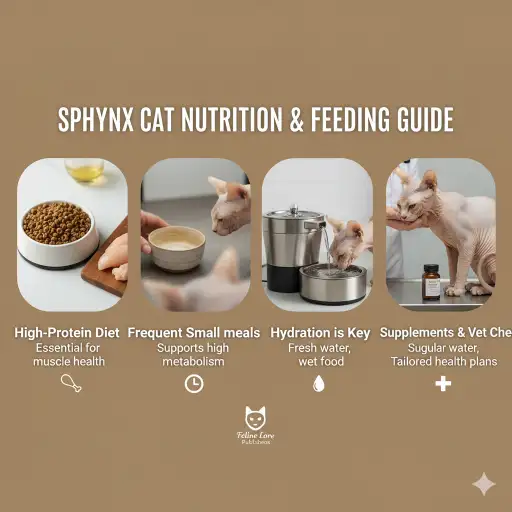
Sphynx cats look very different from most cats, and their bodies work a little differently too. Because they have no fur, they lose body heat faster. To stay warm and active, they burn more energy every day. This means many Sphynx cats need more calories than other cats of the same size. Feeding them is not about giving more food blindly, but about choosing food with the right nutrients and energy.
Like all cats, Sphynx cats are obligate carnivores. This means their bodies are built to use animal-based foods, not plants. Protein from meat is the most important part of their diet. Protein supports muscles, organs, the immune system, and daily energy. Without enough high-quality protein, a Sphynx cat may lose muscle or feel tired even if they eat often.
Fat is also very important for Sphynx cats. Fat gives concentrated energy, which helps them maintain body heat. It also supports skin health, which is especially important for a hairless breed. Healthy fats help keep the skin flexible and reduce dryness. This does not mean very fatty or greasy food is best, but balanced fat levels from good animal sources matter.
Because Sphynx cats often feel hungry, owners sometimes worry they are underfeeding. In reality, Sphynx cats do eat more often, but portions still need control. Watching body shape, weight, and energy levels matters more than how often the cat asks for food. In the next part, we will look closely at what foods and nutrients best meet these needs.
What to Feed Your Sphynx (Food Types and Nutrients)
Choosing food for a Sphynx cat starts with understanding ingredients. High-quality animal protein should be the first ingredient. Chicken, turkey, beef, lamb, and fish are common examples. Protein quality matters more than protein percentage alone. Foods with named meat sources are usually easier for cats to use.
Fat is the second key nutrient. Animal fats and fish oils provide energy and essential fatty acids. Omega-3 and omega-6 fats help support skin health, which is very important for Sphynx cats. These fats can help reduce dryness and irritation when part of a balanced diet. Carbohydrates are not a major need for cats. Small amounts are fine, but foods high in fillers like corn or wheat do not add much value.
Wet food and dry food both have a place in a Sphynx diet. Wet food contains more water, which helps hydration and supports urinary health. Dry food is more calorie-dense and convenient, but it has less moisture. Many owners use a mixed feeding style to get the benefits of both. The best choice depends on the cat’s appetite, lifestyle, and how well they drink water.
Below is a simple comparison table to help understand food types.
| Food Type | Pros | Cons | Best Use |
|---|---|---|---|
| Wet Food | High moisture, strong smell, supports hydration | Spoils faster, often costs more | Daily meals, hydration support |
| Dry Food | Easy to store, calorie-dense | Low moisture, easy to overfeed | Small portions, mixed feeding |
| Mixed Feeding | Balanced moisture and calories | Needs portion planning | Most Sphynx households |
Reading food labels can feel confusing, but you do not need to be an expert. Look for foods labeled as “complete and balanced” for cats. This means the food meets basic nutrition standards for daily feeding. In the next part, we will focus on how much and how often to feed your Sphynx.
How Much and How Often to Feed a Sphynx
How much food a Sphynx needs depends on age, size, activity level, and environment. Because they burn more energy, many Sphynx cats need slightly more calories than other cats. However, feeding too much can still lead to weight gain. The goal is steady energy without excess fat.
Sphynx cats often do well with multiple small meals. Feeding two large meals may leave them hungry between meals. Three to four smaller meals can help keep energy levels steady. Some owners use timed feeders to help manage portions while feeding often.
Portion size should be based on calories, not just volume. Dry food is very calorie-dense, so small scoops can add up fast. Wet food looks like more food, but it usually has fewer calories per serving. Checking the feeding guide on the package gives a starting point, but watching your cat’s body condition is more important.
Here is a general feeding chart to guide owners. This is for education only and not a medical plan.
| Life Stage | Meals Per Day | General Calorie Range | Notes |
|---|---|---|---|
| Kitten | 4–5 | Higher per pound | Rapid growth and play |
| Adult | 3–4 | Moderate-high | Maintain warmth and muscle |
| Senior | 2–3 | Moderate | Adjust for lower activity |
Signs that your Sphynx is eating the right amount include steady weight, visible muscle tone, and good energy. You should be able to feel ribs with light pressure but not see them sharply. In the next part, we will talk about treats, human food, and common feeding mistakes.
Treats, Supplements, and Common Feeding Mistakes
Treats can be part of a Sphynx cat’s life, but they should stay a small part of the diet. Treats should make up no more than about ten percent of daily calories. Meat-based treats are usually the best choice. Avoid treats with a lot of sugar or starch.
Many human foods are unsafe for cats. Foods like onions, garlic, chocolate, grapes, and raisins should never be given. Even foods that are not toxic can upset digestion if fed often. When in doubt, it is safer to skip human food and use cat-safe treats.
Supplements are not always needed if a cat eats a complete and balanced food. Adding supplements without guidance can upset nutrient balance. For Sphynx cats, omega fatty acids are often discussed for skin health, but many good foods already contain them. More is not always better.
Common feeding mistakes include overfeeding dry food, ignoring water intake, and changing foods too quickly. Sudden food changes can cause stomach upset. New foods should be introduced slowly over several days. Another mistake is feeding only based on begging behavior. Sphynx cats are social and vocal, and begging does not always mean hunger.
Here is a quick do and don’t table for easy review.
| Do | Don’t |
|---|---|
| Feed high-protein animal-based food | Feed large amounts of fillers |
| Measure portions | Free-pour dry food |
| Offer fresh water daily | Ignore low water intake |
| Use treats in moderation | Share unsafe human foods |
Monitoring, Adjusting, and When to Seek Veterinary Advice
Feeding a Sphynx cat is not a one-time decision. Needs change with age, activity, and health. Regularly checking weight and body condition helps you know if the diet still works. Small changes over time are normal, but sudden weight gain or loss should not be ignored.
Skin condition can also give clues about diet. Very dry, flaky, or irritated skin may signal that something needs adjustment. This could relate to fat intake, hydration, or overall balance. Observing changes early helps prevent bigger problems later.
If you have more than one cat, feeding can get tricky. Some cats may eat faster or steal food. Separate feeding areas or timed feeders can help make sure each cat gets the right amount. Indoor Sphynx cats may need slightly fewer calories than very active ones, even though they still have higher needs than average.
This guide is meant for education and general care. If your Sphynx shows ongoing digestive problems, major skin changes, or strong appetite changes, a veterinarian should be consulted. A vet can rule out health issues and give personalized advice. With careful observation and balanced feeding, most Sphynx cats can thrive and stay energetic.
For more information on general feline nutrition standards, you can visit the Association of American Feed Control Officials at https://www.aafco.org.

Ata Ur Rehman is the founder of Pet Age in Human Years Calculator, an educational platform that provides age conversion charts and lifespan guides for dogs, cats, birds, and other companion animals. His work focuses on helping pet owners understand how animal ages translate into human years using commonly accepted age conversion formulas and published lifespan averages.
The website compiles breed and species lifespan data from kennel clubs, breed organizations, and general animal lifespan studies to present simple and easy-to-understand guides for pet owners worldwide.
This website was created to centralize animal age conversion charts into one easy reference platform for pet owners.