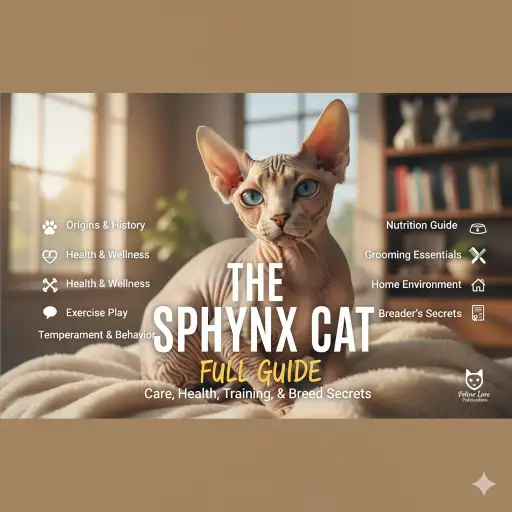
The Sphynx cat is one of the most unique and recognizable cat breeds in the world, known for its hairless body, large ears, and expressive eyes. While it may look unusual at first, this breed is admired for its friendly and outgoing personality. Sphynx cats are social, intelligent, and love to be the center of attention. They often form strong bonds with their owners and enjoy being involved in daily household activities.
The breed’s origins trace back to the 1960s in Canada, when a natural genetic mutation produced hairless kittens. Breeders recognized the uniqueness of these cats and began selective breeding to stabilize the hairless trait while maintaining good health and temperament. The name “Sphynx” comes from the cat’s resemblance to the ancient Egyptian statues, though the breed itself has no direct ties to Egypt.
Sphynx cats were officially recognized by major cat registries like The International Cat Association (TICA) and the Cat Fanciers’ Association (CFA) by the late 1970s and early 1980s. Over the decades, they have become popular worldwide for their affectionate nature and playful behavior. Despite their hairless appearance, Sphynx cats are extremely soft and warm to the touch, making them surprisingly cuddly companions.
One of the reasons Sphynx cats stand out is their combination of physical uniqueness and personality. Their large ears, wrinkled skin, and slender yet muscular body give them a striking look. At the same time, their curiosity, intelligence, and social energy make them highly interactive pets. Many Sphynx owners describe their cats as being almost dog-like in behavior because they follow you around the house, greet visitors, and enjoy games and attention.
| Trait | Details |
|---|---|
| Origin | Canada, 1960s |
| Recognition | CFA, TICA |
| Size | Medium (6–12 lbs average) |
| Coat | Hairless with fine peach fuzz |
| Lifespan | 8–14 years |
| Temperament | Affectionate, social, intelligent |
| Activity Level | Moderate to high |
Sphynx Cat Temperament & Behavior
Sphynx cats are known for being extremely social and affectionate. They thrive on human companionship and rarely like to be left alone for long periods. If you spend most of your day away from home, a Sphynx may become lonely and even stressed. They enjoy curling up in laps, snuggling under blankets, and following their owners from room to room. Their affectionate nature makes them excellent pets for people who want a cat that is more like a constant companion than a distant observer.
These cats are also very intelligent and curious. They like exploring new places, climbing furniture, and investigating every corner of the house. Because of their energy and curiosity, Sphynx cats need mental stimulation, such as puzzle toys, interactive games, or safe exploration areas. Boredom can lead to mischievous behavior, so keeping them engaged is essential.
Sphynx cats have a playful and sometimes mischievous personality. They are known for their “monkey-like” behavior, jumping, climbing, and playing fetch. They also enjoy interacting with other pets. When introduced properly, Sphynx cats usually get along well with other cats and even dogs. Their playful and gentle nature makes them suitable for families with children, but supervision is recommended for very young kids because of the cat’s delicate skin.
Another notable trait is their vocalization. Sphynx cats are chatty and often communicate with their owners through meows, chirps, and purrs. They use their voice to request attention, food, or playtime. Owners often describe them as “talkative lap cats” because they combine affectionate behavior with frequent communication.
| Behavior Trait | Details |
|---|---|
| Affection | Very high, enjoys lap time and snuggles |
| Independence | Low, prefers company |
| Playfulness | High, enjoys interactive toys |
| Vocalization | Talkative, chirping and meowing |
| Compatibility | Good with children, cats, and dogs |
| Curiosity | Very high, loves exploring |
Care, Grooming & Health Essentials
Although Sphynx cats are hairless, they are not low-maintenance. Their skin produces natural oils that would normally be absorbed by fur, so regular bathing is required to prevent oil buildup and skin problems. Most Sphynx cats need a gentle bath every one to two weeks. Special attention should be given to cleaning the folds and wrinkles on their skin, as dirt and oil can accumulate there. Mild, cat-safe shampoos are recommended, and it’s important to rinse thoroughly to avoid irritation.
Their ears also need regular cleaning because hairless cats produce more earwax than coated breeds. Nail trimming and dental care are essential as well, especially because Sphynx cats are prone to gum disease if oral hygiene is neglected. Unlike many other cats, they do not self-regulate grooming through licking as effectively, so owners must be proactive in skin and ear care.
Health-wise, Sphynx cats are generally healthy but are prone to certain conditions. The most common is hypertrophic cardiomyopathy (HCM), a heart condition seen in many purebred cats. Regular veterinary checkups, including heart scans, are highly recommended. Skin sensitivity and sunburn are also concerns, so Sphynx cats should be protected from prolonged sun exposure. Temperature regulation is another consideration; they can get cold easily due to the lack of fur, so a warm environment, blankets, and even pet clothing can help keep them comfortable.
Despite these challenges, many owners find the care routine rewarding because it allows them to bond closely with their cat. Sphynx cats often enjoy bath time and handling, turning grooming sessions into interactive experiences. They also respond well to gentle massages and regular petting, which can enhance both their physical and emotional health.
| Care Aspect | Recommendation |
|---|---|
| Bathing | Every 1–2 weeks with mild cat shampoo |
| Skin Care | Clean wrinkles and folds regularly |
| Ear Cleaning | Weekly to prevent wax buildup |
| Nail Trimming | Every 2–3 weeks |
| Dental Care | Brush teeth 2–3 times per week |
| Sun Protection | Limit direct sunlight, use protective clothing |
| Temperature | Keep indoors, provide warm bedding |
Training, Activity & Environment
Sphynx cats are highly trainable because of their intelligence and desire for interaction. They respond well to positive reinforcement, such as treats, praise, or play, and can learn tricks like fetching toys, opening doors, or using puzzle feeders. However, because of their energetic and social nature, they need consistent attention to prevent boredom-related behaviors like scratching furniture or knocking objects over.
Activity levels are moderate to high. Sphynx cats enjoy climbing, exploring, and playing interactive games. Providing vertical spaces like cat trees, shelves, or climbing posts helps satisfy their natural curiosity. Interactive toys that challenge them mentally are also beneficial. Many owners report that Sphynx cats enjoy fetch and hide-and-seek games, making them highly entertaining and engaging companions.
When it comes to environment, Sphynx cats are indoor cats by necessity. Their hairless skin makes them vulnerable to sunburn, temperature extremes, and skin injuries. They thrive in homes where they can remain warm and comfortable year-round. Because they are social, a Sphynx is happiest in a home where someone is around for most of the day or where there are other pets to provide companionship.
| Activity & Environment | Details |
|---|---|
| Play Needs | High, interactive and daily play |
| Climbing | Requires cat trees, shelves, or perches |
| Mental Stimulation | Puzzle toys, treat games, exploration |
| Training | Positive reinforcement, treat-based |
| Living Environment | Indoor only, warm and safe |
| Social Needs | Prefer human companionship or another pet |
| Boredom Prevention | Rotate toys, interactive games |
Costs, Pros & Cons & FAQs
Owning a Sphynx cat comes with certain financial and lifestyle considerations. Sphynx kittens can cost between $1,500 and $3,000 depending on breeder reputation and pedigree. Grooming supplies, such as gentle shampoos, nail clippers, and dental care items, are ongoing costs. Veterinary checkups, vaccinations, and possible heart screenings are additional expenses. Despite the initial and ongoing costs, many owners find Sphynx cats highly rewarding due to their affectionate and entertaining nature.
Pros of the breed include strong social bonds, playful personalities, intelligence, and minimal shedding. Cons include the need for regular grooming, sensitivity to temperature, potential skin problems, and susceptibility to certain health issues. They are not ideal for owners who prefer low-maintenance, independent cats or who are frequently away from home.
Some frequently asked questions about Sphynx cats include:
- Do Sphynx cats get cold? Yes, they need a warm indoor environment and often enjoy sweaters or blankets.
- Are Sphynx cats hypoallergenic? They are not truly hypoallergenic, but they produce less hair and may cause fewer reactions in some allergy sufferers.
- How often should a Sphynx be bathed? About every 1–2 weeks to remove excess oils.
- Are Sphynx cats good with children and other pets? Yes, they are playful and social but supervision with very young children is recommended.
- Do Sphynx cats sleep a lot? They sleep similarly to other cats, usually 12–16 hours per day, but are active and playful when awake.
| Pros | Cons |
|---|---|
| Highly affectionate | Needs frequent grooming |
| Intelligent and trainable | Can get cold easily |
| Playful and social | Prone to certain health issues (HCM, skin sensitivity) |
| Minimal shedding | Requires indoor environment |
| Good with other pets | Can be expensive |
| Cost Aspect | Estimated Range |
|---|---|
| Kitten Purchase | $1,500–$3,000 |
| Grooming Supplies | $20–$50/month |
| Vet Checkups | $100–$300/year |
| Preventive Health Screening | $200–$500/year |
Owning a Sphynx cat is an investment of both time and care, but many owners consider it worthwhile because of the breed’s loyalty, charm, and playful nature. Their warmth and affection make them ideal for families, singles, and seniors who are ready to provide attention and care. For more in-depth guidance on caring for Sphynx cats, visit The International Cat Association.

Ata Ur Rehman is the founder of Pet Age in Human Years Calculator, an educational platform that provides age conversion charts and lifespan guides for dogs, cats, birds, and other companion animals. His work focuses on helping pet owners understand how animal ages translate into human years using commonly accepted age conversion formulas and published lifespan averages.
The website compiles breed and species lifespan data from kennel clubs, breed organizations, and general animal lifespan studies to present simple and easy-to-understand guides for pet owners worldwide.
This website was created to centralize animal age conversion charts into one easy reference platform for pet owners.