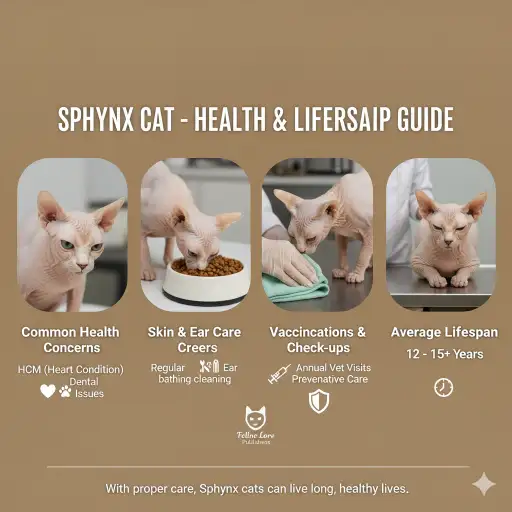
Sphynx cats are known for their striking, hairless appearance and their warm, affectionate nature. Many people who fall in love with this breed quickly ask an important question: how long do Sphynx cats live? The answer is not always simple, because lifespan can vary from one cat to another. Still, understanding typical life expectancy can help owners set realistic expectations and make better care choices.
On average, a healthy Sphynx cat living indoors may live around 8 to 14 years. Some Sphynx cats live longer, while others may have shorter lives due to genetic or health-related factors. Like all cats, individual outcomes depend on many things, including genetics, diet, lifestyle, and preventive veterinary care. It is important to remember that lifespan numbers are only general estimates, not guarantees.
Recent studies on feline longevity suggest that certain purebred cats, including the Sphynx, may have slightly shorter average lifespans compared to mixed-breed cats. This does not mean that Sphynx cats are “unhealthy,” but rather that some inherited conditions are more common in the breed. Responsible breeding, early health screening, and attentive care can all play a major role in improving outcomes.
For most owners, the key takeaway is this: while Sphynx cats may have some known risks, many live happy, active lives when given proper care. Focusing on daily habits, regular checkups, and early detection often matters more than worrying about statistics alone.
Common Health Issues in Sphynx Cats
Like all breeds, Sphynx cats can be prone to certain health concerns. Knowing about these risks does not mean expecting problems, but it can help owners stay aware and prepared. Early recognition and preventive care often make a big difference.
One of the most discussed conditions in Sphynx cats is hypertrophic cardiomyopathy (HCM). This is a heart condition that affects the thickness of the heart muscle. HCM can occur in many cat breeds, but it is more commonly associated with some purebred lines. Because early stages may not show clear signs, routine heart screening is often recommended by veterinarians for at-risk breeds.
Skin-related issues are another common topic for Sphynx owners. Without a coat, the skin produces oils that would normally be absorbed by fur. This can lead to greasy skin, irritation, or infections if not managed properly. Sphynx cats may also be more sensitive to temperature changes and sun exposure.
Dental disease is frequently overlooked but very important. Sphynx cats are not unique in this risk, yet many owners focus so much on skin care that oral health gets less attention. Gum disease, plaque buildup, and tooth problems can affect comfort, appetite, and overall wellbeing.
Weight management is also worth mentioning. Sphynx cats often have a strong appetite and fast metabolism, which can be confusing for owners. Some cats stay lean, while others gain weight if diet and activity are not balanced.
Here is a simple overview of common concerns:
| Health Concern | Why It Matters | What Owners Should Know |
|---|---|---|
| Heart Conditions (HCM) | Can affect heart function | Often requires routine screening |
| Skin Issues | Linked to oil buildup & sensitivity | Regular cleaning helps |
| Dental Disease | Can impact eating & comfort | Oral care is important |
| Weight Changes | May affect long-term health | Balanced diet & activity matter |
| Respiratory Sensitivity | Some cats show mild issues | Monitor breathing changes |
Many Sphynx cats never develop serious problems, but awareness allows owners to act early if needed.
Preventive Care & Daily Health Habits
Daily care routines can have a strong influence on a Sphynx cat’s long-term health. Preventive care is not about treating illness, but about supporting overall wellbeing and spotting changes early.
Regular veterinary visits are one of the most important habits. Routine checkups allow professionals to monitor heart health, dental condition, weight, and general physical status. These visits often detect small changes before they become larger concerns.
Skin care is a unique part of Sphynx ownership. Because oils are not absorbed by fur, gentle bathing may be needed. The ideal frequency varies between cats. Some need weekly baths, while others do well with less frequent cleaning. The goal is to keep the skin comfortable, not to over-clean.
Ear cleaning is also important. Sphynx cats may build up wax more quickly. Gentle, veterinarian-approved cleaning methods can help prevent irritation. As with skin care, balance is key.
Nutrition plays a major role in health and lifespan. A balanced, high-quality diet supports weight control, energy levels, and organ function. Overfeeding, even in active cats, may lead to gradual weight gain.
Dental care should be part of routine health habits. Simple steps such as dental-friendly diets, treats, or brushing (when tolerated) may support oral comfort. Many owners underestimate how strongly dental health affects overall quality of life.
Helpful preventive habits:
| Care Habit | Why It Helps |
|---|---|
| Routine Vet Checkups | Supports early detection |
| Skin Cleaning | Reduces irritation & buildup |
| Ear Hygiene | Helps prevent discomfort |
| Balanced Diet | Supports healthy weight |
| Dental Care | Protects comfort & appetite |
Preventive care is often the most effective long-term strategy for any cat breed.
Early Signs and When to Seek Veterinary Care
Cats are very skilled at hiding discomfort. Because of this, subtle changes in behavior or routine can be important signals for owners.
Changes in appetite are often one of the first things people notice. Eating much less, eating much more, or showing difficulty while eating may all deserve attention. These changes do not always mean serious illness, but they should not be ignored.
Energy level shifts are also common indicators. A normally playful cat becoming unusually quiet, or a calm cat becoming restless, may signal that something has changed. Owners know their cats best, so even small differences can matter.
Skin changes are especially important for Sphynx cats. Redness, sores, unusual spots, or persistent irritation may require professional evaluation. Because the skin is fully visible, owners often have an advantage in spotting early signs.
Breathing changes should always be taken seriously. Labored breathing, frequent coughing, or noticeable effort while breathing may indicate the need for veterinary care.
Bathroom habit changes can also provide clues. Differences in urination, litter box use, or stool patterns may reflect underlying issues.
General signs to watch:
- Sudden appetite changes
- Noticeable weight loss or gain
- Unusual tiredness
- Skin irritation or sores
- Breathing difficulty
- Changes in litter box behavior
When in doubt, contacting a veterinarian is usually the safest choice. Early evaluation often leads to simpler solutions.
Practical Tips to Support a Long, Healthy Life
While genetics play a role in lifespan, daily environment and lifestyle also have a major impact. Many small choices add up over time.
Keeping a Sphynx cat indoors is one of the most protective decisions. Without fur, these cats are more sensitive to temperature extremes, sun exposure, and physical injury. Indoor living reduces many avoidable risks.
Temperature comfort is especially important. Sphynx cats may seek warmth more often than other breeds. Providing cozy bedding, safe heated spots, or warm blankets can improve comfort.
Mental stimulation also supports wellbeing. Interactive toys, climbing spaces, and regular playtime help maintain both physical and emotional health. Boredom can affect behavior and activity levels.
Stress reduction is another key factor. Stable routines, gentle handling, and a predictable home environment often help cats feel secure. Chronic stress may influence long-term health.
Grooming routines, including skin and ear care, are part of long-term comfort. Consistent, gentle care helps avoid irritation and supports overall hygiene.
Helpful lifestyle habits:
| Lifestyle Factor | Positive Impact |
|---|---|
| Indoor Living | Reduces environmental risks |
| Warm Environment | Supports comfort |
| Regular Play | Encourages activity |
| Stable Routine | Helps reduce stress |
| Gentle Grooming | Supports skin health |
Many Sphynx cats thrive when owners focus on comfort, observation, and preventive care rather than fear of potential problems.
For additional breed information from a veterinary-focused source, you may find this helpful:
https://catvets.com/guidelines/practice-guidelines/sphynx-cat-care

Ata Ur Rehman is the founder of Pet Age in Human Years Calculator, an educational platform that provides age conversion charts and lifespan guides for dogs, cats, birds, and other companion animals. His work focuses on helping pet owners understand how animal ages translate into human years using commonly accepted age conversion formulas and published lifespan averages.
The website compiles breed and species lifespan data from kennel clubs, breed organizations, and general animal lifespan studies to present simple and easy-to-understand guides for pet owners worldwide.
This website was created to centralize animal age conversion charts into one easy reference platform for pet owners.