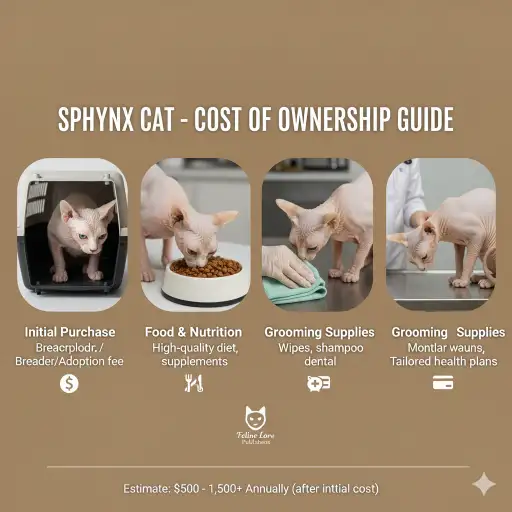
Owning a Sphynx cat is a special experience, but it comes with unique financial responsibilities. Unlike many other cat breeds, Sphynx cats require extra attention to their skin, temperature needs, and general health. Their lack of fur makes them prone to skin issues, which can increase both routine and unexpected costs over time. Understanding the full cost of ownership is essential before deciding to bring a Sphynx into your home.
The first cost to consider is the initial price of acquiring the cat. Sphynx cats are rare and are often sold by specialized breeders, which makes the upfront purchase price higher than most other cats. Adoption fees from rescues or shelters are typically lower, but they may not include the same level of breed-specific health screening that breeders provide. It’s important to factor in this initial investment alongside the ongoing costs you’ll face each month and year.
Beyond the acquisition cost, Sphynx cats need special home accommodations. Since they don’t have fur, they are more sensitive to cold and drafts. Many owners invest in heated beds, blankets, or clothing for their cat. They may also need special skin care products to prevent oil buildup and infections. These initial home setup items can quickly add up and should be considered part of the true cost of ownership.
Another major factor is veterinary care. Sphynx cats can be prone to heart conditions, skin problems, and digestive sensitivities. While routine vaccinations and check-ups are standard for all cats, Sphynx cats may require extra tests or preventive treatments that other cats do not. Planning for these additional healthcare needs is critical for both the cat’s well-being and your budget.
Quick Cost Snapshot for Sphynx Cat Ownership
| Cost Type | Low Estimate | Average Estimate | High Estimate |
|---|---|---|---|
| Initial purchase/adoption | $800 | $1,500 | $3,000 |
| Initial veterinary & supplies | $300 | $600 | $1,000 |
| Monthly food & litter | $50 | $100 | $200 |
| Monthly grooming & skincare | $10 | $30 | $60 |
| Annual veterinary | $200 | $500 | $1,200 |
| Emergency/health cushion | $500 | $1,000 | $3,000 |
| Lifetime estimate (10–15 yrs) | $15,000 | $25,000 | $50,000 |
One-Time & Initial Expenses
The initial expenses for owning a Sphynx cat include everything you need to prepare your home and care for the cat in its first few months. The most obvious cost is the adoption or purchase fee. If you choose a breeder, you might pay anywhere from $1,500 to $3,000 depending on the cat’s pedigree, age, and health certification. Adoption fees from a rescue can be significantly lower, usually between $200 and $800, but may not include breed-specific medical testing.
After bringing your cat home, you’ll need to purchase supplies. This includes items like a litter box, litter, scratching posts, food and water dishes, bedding, and toys. Because Sphynx cats are hairless, they also require clothing or blankets to stay warm, especially in colder climates. Skin care products, like gentle wipes or specialized shampoos, are also necessary to prevent oil buildup and infections.
Initial veterinary care is another significant one-time expense. Most kittens require spaying or neutering, a set of vaccinations, microchipping, and a full physical exam. Some Sphynx cats may also need breed-specific screenings for heart and skin conditions. These procedures can cost anywhere from $300 to $1,000 depending on the clinic and region.
One-time costs also include creating a safe environment. Sphynx cats are curious and active, so securing windows, cords, and fragile items is important. Additionally, investing in a heating pad or small space heater for their sleeping area can prevent them from becoming cold, which can cause stress or illness. All of these elements should be included in the initial cost calculation.
Initial Cost Breakdown
| Item | Low Estimate | Average Estimate | High Estimate |
|---|---|---|---|
| Purchase/adoption | $200 | $1,500 | $3,000 |
| Spay/neuter & vaccinations | $150 | $400 | $800 |
| Microchip & vet exam | $50 | $200 | $400 |
| Bedding & heating items | $50 | $150 | $300 |
| Litter box, litter, dishes, toys | $50 | $200 | $400 |
| Clothing & skincare products | $50 | $200 | $500 |
| Home safety adjustments | $50 | $100 | $200 |
| Total Initial Costs | $600 | $2,750 | $5,600 |
Monthly & Annual Cost Breakdown
Once the initial setup is complete, you will face ongoing monthly and annual costs. Food is a primary recurring expense. Sphynx cats are active and have higher metabolism than some other cats, so they may require high-quality wet or dry food along with supplements. Monthly food costs typically range from $50 to $200 depending on the brand and feeding habits.
Litter and hygiene are another consistent monthly cost. A Sphynx cat may need more frequent litter changes due to its active nature, and you’ll also need gentle wipes and occasional baths to maintain skin health. Monthly litter and hygiene costs usually range from $10 to $50, but can increase if you use premium products or more frequent cleaning routines.
Routine veterinary care is generally annual but can also become a monthly budget consideration if you set aside funds for check-ups. Annual exams, vaccinations, and preventive medications often cost between $200 and $500 per year, but this can increase for breed-specific screenings, heart health tests, and parasite prevention.
Utilities and household impacts are less obvious but still real. Heating the home or providing heated bedding in winter, extra electricity for humidifiers or lights, and occasional replacement of toys and furniture are all small but recurring costs. Over the course of a year, these may add up to $100–$500 depending on the home and lifestyle.
Monthly vs Annual Expenses
| Expense Type | Monthly Low | Monthly High | Annual Low | Annual High |
|---|---|---|---|---|
| Food | $50 | $200 | $600 | $2,400 |
| Litter & hygiene | $10 | $50 | $120 | $600 |
| Grooming & skincare | $10 | $30 | $120 | $360 |
| Routine vet & preventive care | $20 | $50 | $200 | $500 |
| Utilities & home care | $10 | $40 | $120 | $480 |
| Total Monthly / Annual | $100 | $370 | $1,160 | $4,340 |
Unexpected, Emergency & Lifespan Costs
Even with careful planning, Sphynx cats can experience unexpected medical needs. Emergencies like injuries, sudden illnesses, or skin infections can occur at any age. These situations often require veterinary visits, lab tests, medications, or even surgery. The cost for an emergency visit can range from $200 to $1,000 or more depending on severity.
Sphynx cats are also prone to specific health conditions such as hypertrophic cardiomyopathy (HCM), skin rashes, or digestive sensitivities. Preventing and managing these conditions can require extra check-ups, medications, or specialist consultations. Many owners budget $500 to $3,000 over the cat’s lifetime for these breed-specific health risks.
As cats age, their medical and care needs usually increase. Older Sphynx cats may need more frequent vet visits, senior supplements, and potentially mobility aids or special bedding. Factoring in these costs over a 10–15 year lifespan is critical for an accurate lifetime cost estimate.
Creating a financial cushion for unexpected costs is highly recommended. This ensures you can provide proper care without financial stress. Even with careful budgeting, it is common for Sphynx owners to spend an extra $500 to $1,500 on unexpected events each year.
Lifetime Cost Estimate (10–15 Years)
| Cost Category | Low Estimate | Average Estimate | High Estimate |
|---|---|---|---|
| Initial purchase & setup | $600 | $2,750 | $5,600 |
| Monthly recurring costs | $12,000 | $22,000 | $35,000 |
| Annual vet & preventive care | $2,000 | $5,000 | $12,000 |
| Emergency & health cushion | $5,000 | $10,000 | $25,000 |
| Total Lifetime Cost (10–15 yrs) | $19,600 | $39,750 | $77,600 |
Realistic Budgeting Tips & Owner Decision Guide
Planning a budget before bringing home a Sphynx cat is one of the most responsible decisions you can make. Start by reviewing both the one-time and recurring costs. Use the tables above to estimate a low, average, and high budget for your household. This helps identify whether your current finances can support long-term ownership.
Practical ways to manage costs include purchasing supplies in bulk, choosing high-quality but affordable food, and scheduling preventive care to avoid expensive emergencies. Clothing and skin care items can also be rotated or replaced gradually rather than all at once to reduce initial spending.
Another strategy is to set aside a small emergency fund each month. Even saving $25–$50 monthly can build a $300–$600 cushion annually for unexpected vet visits. This approach allows you to provide the best care without financial stress and ensures your Sphynx cat remains healthy throughout its life.
Finally, ask yourself some important questions before committing to a Sphynx. Can you afford the ongoing care? Are you prepared for potential emergency costs? Do you have time to manage grooming, bathing, and monitoring skin health? Honest answers to these questions will help you decide if owning a Sphynx is the right choice for your household.
Budget Planning Checklist
| Question | Yes/No |
|---|---|
| Can I cover initial purchase & setup costs? | Yes |
| Do I have funds for monthly food & litter? | Yes |
| Can I manage grooming & skin care routines? | Yes |
| Am I prepared for annual vet visits? | Yes |
| Do I have an emergency fund for unexpected care? | Yes |
| Can I commit to long-term (10–15 yrs) care? | Yes |
Owning a Sphynx cat is a rewarding but costly experience. By understanding all costs—from purchase to lifetime care—you can make a responsible decision that ensures both you and your cat enjoy a happy, healthy life together. For more detailed guidance on budgeting for your pet, you can explore resources like the American Society for the Prevention of Cruelty to Animals (ASPCA).

Ata Ur Rehman is the founder of Pet Age in Human Years Calculator, an educational platform that provides age conversion charts and lifespan guides for dogs, cats, birds, and other companion animals. His work focuses on helping pet owners understand how animal ages translate into human years using commonly accepted age conversion formulas and published lifespan averages.
The website compiles breed and species lifespan data from kennel clubs, breed organizations, and general animal lifespan studies to present simple and easy-to-understand guides for pet owners worldwide.
This website was created to centralize animal age conversion charts into one easy reference platform for pet owners.