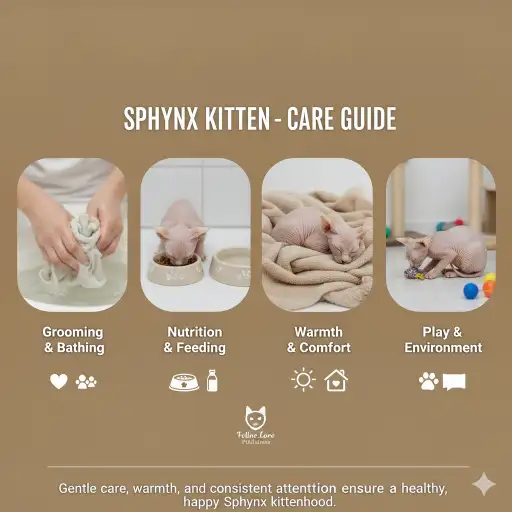
Welcoming a Sphynx kitten into your home is an exciting and special experience. Sphynx kittens are known for their hairless bodies, big ears, and bright, curious eyes. They may look very different from other kittens, but underneath that smooth skin is a playful, loving little cat that craves attention and warmth. Unlike most cats, Sphynx kittens need a bit more hands‑on care, especially when it comes to feeding, skin care, and staying warm. This guide will help you understand their basic needs in simple, clear ways so you can take great care of your new friend.
One of the first things many new owners notice is how soft and warm a Sphynx kitten feels. Even though they do not have fur, their skin stays warm to the touch because kittens have high metabolisms. This means they burn energy fast and may seem hungry more often than other cats. You will learn how to feed them the right amount of food at the right times. Their playful and affectionate personality makes them wonderful companions. Most Sphynx kittens love to climb into your lap, sleep under blankets, and follow you around the house like a small shadow.
Because they are hairless, Sphynx kittens need special attention to their skin to prevent oil buildup, dryness, or irritation. You will need to give them gentle baths on a regular schedule. They also need their ears cleaned often and their nails trimmed. While this sounds like a lot at first, many owners find that grooming becomes a bonding activity, and their kitten even looks forward to it over time. Understanding these needs early on helps you build a routine that keeps your kitten happy and healthy.
Sphynx kittens are very social and do best when they get plenty of attention from you or other pets in the home. If left alone for long periods, they can feel lonely or bored. Setting up playtime, cuddles, and simple training routines will keep them engaged and well behaved. This introduction is just the start of your learning journey. The sections that follow break down what your Sphynx kitten needs in easy‑to‑read steps so you feel confident from day one.
Nutrition & Feeding Your Sphynx Kitten
Feeding your Sphynx kitten the right food is one of the most important things you can do to help them grow strong. Sphynx kittens have a fast metabolism, which means they use energy quickly and need high‑quality food that gives them plenty of calories and nutrients. Most veterinarians recommend feeding kittens food that is made just for growing cats because it has more protein, fat, and essential vitamins than adult cat food. You can choose dry food, wet food, or a mix of both, as long as it meets all their needs and is labeled for kittens.
When your kitten is very young, you will likely feed them small meals several times a day. This helps keep their energy steady and supports healthy growth. As they get older, you can reduce how often you feed them, but still give enough so they never feel too hungry. Never leave food out all the time, because this can lead to overeating or make it harder to notice if your kitten is eating less than usual. If you see that they are always looking for more food, you may need to adjust how much you feed them.
Kittens also need access to fresh water all day long. Clean water helps their digestion and keeps their skin hydrated. Even if your kitten drinks from a pet water fountain or bowl, make sure it is cleaned every day so bacteria does not build up. Some kittens prefer running water from a drinking fountain. If your home is warm, your Sphynx kitten may drink more than you expect. Pay attention to how much they drink, and change the water often to keep it fresh and cool.
Here is a suggested feeding schedule to follow. This table shows you how many meals to offer and how often based on your kitten’s age:
| Age Range | Meals per Day | Portion Notes |
|---|---|---|
| 8–12 weeks | 4 meals | Kitten food high in calories and protein |
| 3–6 months | 3–4 meals | Slightly larger portions as growth continues |
| 6–12 months | 3 meals | Keep feeding kitten food until about one year |
As your kitten gets closer to one year old, you can start to talk with your veterinarian about moving to adult food. But until then, sticking closely to a kitten diet helps ensure they get the nutrients they need for healthy bones, muscles, and immune system development. Always check that the food has real meat (like chicken or fish) at the top of the ingredients list, because kittens need real protein to thrive.
Grooming, Skin & Hygiene Essentials
One of the biggest differences between Sphynx kittens and other cats is that they do not have fur. This means their skin needs extra care to stay clean and healthy. Without fur to absorb natural oils, those oils build up on the Sphynx kitten’s skin. If you do not clean them often, their skin can get greasy or even smell a bit. For this reason, you will need to give your kitten a gentle bath about once every one to two weeks. Use a mild, kitten‑safe shampoo made for hairless cats or sensitive skin. Make sure the water is warm, but not hot, and dry your kitten thoroughly after the bath so they do not get cold.
In addition to bathing, you should pay attention to your kitten’s ears. Sphynx kittens tend to have more earwax than other cats because dirt and oil collect more easily without fur around the ears. Check their ears each week and clean them with a soft cotton pad or cloth and a gentle ear cleaning solution made for cats. Do not use cotton swabs deep inside the ear, as this can hurt them. Ask your veterinarian to show you the first time so you feel comfortable doing it yourself.
Nails also need regular trimming. Since Sphynx kittens have higher energy and love to play, their nails can grow quickly. If nails are left too long, they can catch on carpet, bedding, or even your skin during play. Use a pair of good cat nail clippers and gently trim just the tips every ten days or so. If your kitten has light‑colored nails, it is easier to see the quick (the pink part inside the nail) that you should avoid cutting.
Here is a grooming checklist you can use every week:
| Grooming Task | How Often | Why It Matters |
|---|---|---|
| Bathing | Every 1–2 weeks | Removes skin oil buildup and keeps skin healthy |
| Ear Cleaning | Weekly | Prevents wax buildup and irritation |
| Nail Trimming | Every 1–2 weeks | Keeps paws comfortable and prevents scratches |
| Eye Wipe | Daily/As needed | Helps remove dirt and prevent irritation |
These grooming tasks will become easier with time, and your kitten may even learn to enjoy them as moments of quiet attention with you. Remember to speak softly and give a treat after grooming so your kitten feels safe and happy during each step.
Bathroom Habits & Litter Training
Teaching your Sphynx kitten where and how to use the bathroom is one of the first skills they learn. Thankfully, most kittens pick this up very quickly when you give them the right tools and patience. Choose a litter box that is easy for a small kitten to get in and out of. Some kittens prefer uncovered boxes at first, because they are easier to enter. Later, you can switch to a covered box if that is your preference. Pour a soft, unscented litter into the box. Scented or dusty litter can irritate your kitten’s sensitive skin and nose.
Start by placing your kitten in the litter box after meals, play sessions, and naps. These are the times they are most likely to need to go. If you see them sniffing around or circling, gently pick them up and place them in the box so they learn where it is. Most kittens will start digging and doing their business quickly. When they do, praise them quietly or offer a small treat so they associate the litter box with something good and positive.
Keep the litter box clean by scooping waste at least once a day and fully changing the litter often. A clean box encourages your kitten to keep using it. If you notice them going outside the box, check to make sure the litter box is not too dirty, that it is in a quiet place, and that it is easy to reach. Sometimes moving the box to a calmer location helps. Also make sure there are enough litter boxes in the home — a good rule is one box per cat plus one extra.
Your kitten may have an accident now and then, especially during the very first weeks. Do not punish them. Instead, clean the area with an enzyme cleaner to remove scent and place them in the box more often. With consistency and patience, your Sphynx kitten will understand where they should go.
Health, Environment & Everyday Care
Taking care of your Sphynx kitten’s overall health and environment helps them live a long, happy life. Because they have no fur, keeping your home at a comfortable temperature is very important. If the house feels cool to you, it is probably cool for your kitten too. Many owners use soft blankets, cat beds, or even kitten sweaters to help keep their little bodies warm. Make sure your kitten always has a warm place to sleep, out of drafts and away from cold floors.
Regular play and gentle attention help keep your kitten active and build strong muscles. Sphynx kittens are curious and love to explore. Offer a variety of toys that are safe and made for cats. Toys that move or make noise can keep them entertained for longer. Set aside quiet play times every day so you and your kitten can bond. Play also helps reduce boredom and prevent behavior problems.
Your kitten needs regular visits to the veterinarian to check growth, health, and vaccinations. The first vet visit should happen soon after you bring your kitten home. During this visit, your vet will check their weight, overall body condition, and set up a schedule for vaccines and wellness checks. Your vet can also help you learn how to trim nails, brush teeth, and look for any skin issues. While this guide is meant to help you learn everyday care, any time you notice something unusual, such as changes in eating, drinking, bathroom habits, or energy levels, reach out to a veterinarian for guidance.
Knowing what is normal for your kitten helps you notice when something might not be right. Healthy Sphynx kittens eat regularly, play often, sleep deeply, and use their litter box every day. They should have clear eyes and ears, and their skin should be soft without dry patches, redness, or bad smell. If your kitten seems uncomfortable, itchy, or unusually tired, contact your vet. These early check‑ins set the foundation for lifelong health.
Thank you for reading this guide on caring for a Sphynx kitten. For more detailed tips from breeders and experts who work with Sphynx cats every day, you can visit the Sphynx care resource at https://www.sphynxkittensbreeder.com/careguide?utm_source=chatgpt.com

Ata Ur Rehman is the founder of Pet Age in Human Years Calculator, an educational platform that provides age conversion charts and lifespan guides for dogs, cats, birds, and other companion animals. His work focuses on helping pet owners understand how animal ages translate into human years using commonly accepted age conversion formulas and published lifespan averages.
The website compiles breed and species lifespan data from kennel clubs, breed organizations, and general animal lifespan studies to present simple and easy-to-understand guides for pet owners worldwide.
This website was created to centralize animal age conversion charts into one easy reference platform for pet owners.