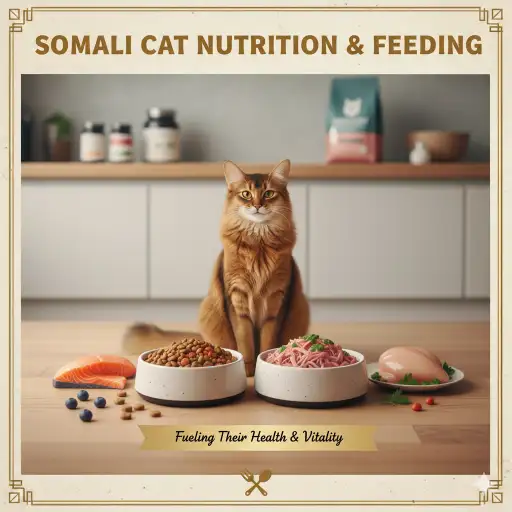
Somali cats are beautiful, active, and playful cats. What you feed them matters a lot for their health and happiness. Good nutrition helps them stay energetic, keep a shiny coat, and avoid health problems like obesity or digestive issues. Because Somali cats are very active and have lean bodies, they do best on a diet that supports their muscle needs and energy use. Learning the basics of feline nutrition will help you make better food choices and keep your Somali cat in great shape.
Cats, including Somalis, are obligate carnivores. This means their bodies are designed to use protein and fat from animal sources as fuel. They cannot get all the nutrients they need from plants. Their digestive systems are different from dogs and humans. For example, they need taurine, an amino acid found only in animal tissues. Without enough taurine, cats can develop serious health problems, such as heart and eye disease. Good cat foods are made with meats that supply taurine and other essential nutrients your Somali cat needs every day.
Protein is one of the most important parts of a Somali cat’s diet. It helps build and maintain muscles and supports the immune system. Since Somali cats are active and muscular, they need higher protein compared to many other cats. Fat is also very important. Fat provides energy and helps with the absorption of some vitamins. Healthy fats from animal sources also help your cat’s skin and coat stay healthy and soft. Carbohydrates, while not harmful in small amounts, do not play a major role in a cat’s diet because cats are not built to digest lots of starches.
Understanding your cat’s nutritional needs is the first step toward choosing the right food. Your Somali cat should eat food that lists a high‑quality animal protein as the first ingredient. Ingredients like chicken, turkey, rabbit, or fish are good sources of protein. Also look for foods balanced for all life stages or appropriate for your cat’s current life stage. Feeding the right food supports your cat’s growth, immune system, and long‑term health.
What to Feed Your Somali Cat
Choosing the right food for your Somali cat can feel overwhelming, but it doesn’t have to be. The goal is to give food that closely matches what cats would eat in nature: high in animal protein and moisture. You can offer wet food, dry food, or a mix of both. Each option has positives and small drawbacks. Knowing these can help you decide what works best for your cat and your lifestyle.
Wet food is usually higher in moisture and protein. This means your Somali cat gets more water along with nutrients in every bite. Moisture in wet food can help support urinary health, which is especially important for many cats. Dry food is easier to measure and can be less expensive per serving. Some cats also like dry food’s crunchy texture. Many owners choose a mix of wet and dry so their cat gets the benefits of both. Just make sure the food you choose is complete and balanced for cats.
Below is a simple comparison to help you understand the differences between wet and dry foods:
Food Type Comparison
| Food Type | Moisture | Protein Level | Benefits | Challenges |
|---|---|---|---|---|
| Wet Food | High | Often High | Good hydration, often higher quality protein | Can be more costly, needs refrigeration after opening |
| Dry Food | Low | Varies | Easy to store, can help dental tartar | Lower moisture, sometimes lower protein |
| Mixed Feeding | Medium | Variable | Helps hydration and convenience | Needs careful portion control |
When choosing food, read the label carefully. The first ingredient should be a named meat source like “chicken” or “salmon.” Avoid foods that list “meat by‑products” without detail or that rely heavily on grains. Good commercial foods follow standards set by organizations like AAFCO (Association of American Feed Control Officials). AAFCO sets minimum nutrient standards for cats, so seeing an AAFCO statement on the package is one sign the food can meet your cat’s needs.
Treats and snacks are fine in small amounts, but they should not make up more than 10% of your cat’s daily calories. Too many treats can unbalance the diet and lead to weight gain. Always check that treats are made for cats and avoid feeding dog treats or human snacks. Some human foods like onions, garlic, chocolate, and grapes are toxic to cats and should never be given under any circumstances.
Feeding Schedule & Portion Guidelines
Feeding your Somali cat the right amount of food is just as important as choosing the right type of food. How much and how often you feed depends on your cat’s age, activity level, and weight. Somali cats are usually active, so they may need slightly more calories than a less active cat. But too much food can lead to weight gain and health problems.
Kittens have different needs than adults. They are growing fast and need more frequent meals. A general guideline is to feed kittens three to four small meals a day until they are about six months old. After that, you can gradually move to two meals a day. Adult cats usually do well on two meals daily. Senior cats might eat smaller portions more often, especially if they have dental issues or slower digestion.
The table below shows example portion ranges for Somali cats. This is just a guide — you should adjust based on your cat’s body condition and activity. A veterinarian can help you fine‑tune exact amounts.
Portion Guidelines by Age and Activity
| Age Group | Typical Daily Calories | Feeding Frequency | Notes |
|---|---|---|---|
| Kitten (2–6 months) | 250–350 kcal | 3–4 meals | High energy needs |
| Junior (6–12 months) | 200–300 kcal | 2–3 meals | Growth still happening |
| Adult (1–7 years) | 180–280 kcal | 2 meals | Adjust for activity |
| Senior (7+ years) | 160–250 kcal | 2 meals | Monitor weight changes |
Always watch your cat’s body condition. If the ribs are easily felt with a light layer of fat, and your cat has a waist when viewed from above, those are signs of good body condition. If you can’t feel the ribs easily or your cat looks rounded, it may be overweight. If ribs are very easy to see or feel with little muscle, your cat may be underweight. Adjust portions slowly and check again in a few weeks.
Hydration, Treats & Common Feeding Mistakes
Hydration is often overlooked but is critical for Somali cats. Because cats evolved to get water from their prey, they naturally drink less water than dogs. If your Somali eats only dry food, make sure fresh water is always available. You can encourage more drinking by placing bowls in different parts of the house or using a pet water fountain, which many cats enjoy.
Understanding treats and snacks is important to prevent overfeeding. Treats should be given sparingly. Even healthy cat treats add calories, and too many can lead to obesity. Below is a simple guide to common treats and human foods to avoid.
Safe vs Unsafe Treats and Human Foods
| Safe Treat Ideas | Foods to Avoid |
|---|---|
| Small commercial cat treats | Onions and garlic |
| Freeze‑dried meat treats | Chocolate |
| Small pieces of cooked chicken | Grapes and raisins |
| Cat‑safe dental chews | Alcohol |
Never feed your cat dog food, as it does not contain the right balance of nutrients cats need. Also avoid feeding raw meat or raw egg unless you understand safety risks — raw foods can carry bacteria like Salmonella, which can make both you and your cat sick.
Some common feeding mistakes include:
Feeding too much dry food without enough water
Mixing many different foods at once, which can cause stomach upset
Giving human food regularly, which can lead to nutrient imbalance
Not adjusting portions as the cat ages or changes weight
Being mindful of these mistakes can help you keep your Somali cat healthy and prevent common problems like obesity and digestive upset.
Monitoring, Weight Management & When to Talk to a Vet
Keeping an eye on your Somali cat’s weight and overall health is essential. Regularly check your cat’s body condition and weight. If you notice sudden weight loss, a dull coat, lack of energy, vomiting, diarrhea, or excessive thirst, it’s important to talk to a vet. These signs can indicate a health issue that may require professional care.
Some Somali cats can be prone to weight gain if they don’t get enough exercise or if they are fed too many calories. Providing toys, climbing areas, and regular playtime helps keep your cat active and supports a healthy weight. If your cat needs to lose weight, your veterinarian can help you create a safe plan. Never put your cat on a diet without veterinary guidance, as too rapid weight loss can be dangerous for cats.
Another thing to watch is dental health. Dental problems can make chewing painful and can lead to reduced appetite. Regular dental checkups and cleanings can help keep your Somali cat eating well and enjoying mealtime.
Remember that any change in diet should be done gradually over 7–10 days. Sudden switches can cause vomiting or diarrhea. Start by mixing a small amount of the new food with the old and slowly increase the new food amount each day until the switch is complete.
Your Somali cat’s diet is one of the biggest factors in its health and well‑being. Feeding high‑quality food, watching portions, and keeping hydrated will help your cat live a long, happy life. Observing your cat’s behavior and body condition will tell you a lot about whether the diet is working. When in doubt, work with a trusted veterinarian.
If you want a deeper look at how cat foods are evaluated and what nutrients are essential, you can read more on the American Association of Feed Control Officials website: https://www.aafco.org/

Ata Ur Rehman is the founder of Pet Age in Human Years Calculator, an educational platform that provides age conversion charts and lifespan guides for dogs, cats, birds, and other companion animals. His work focuses on helping pet owners understand how animal ages translate into human years using commonly accepted age conversion formulas and published lifespan averages.
The website compiles breed and species lifespan data from kennel clubs, breed organizations, and general animal lifespan studies to present simple and easy-to-understand guides for pet owners worldwide.
This website was created to centralize animal age conversion charts into one easy reference platform for pet owners.