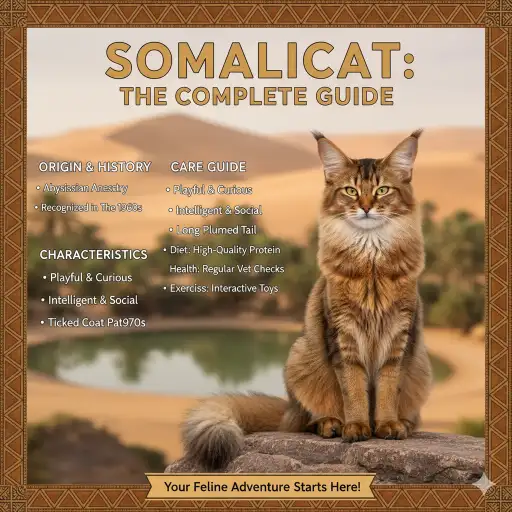
The Somali cat is a beautiful and energetic breed that is often described as a “fox cat” because of its bushy tail, large ears, and striking almond-shaped eyes. They are known for their ticked coat, which gives them a shimmering, multi-toned appearance. This breed is highly intelligent and playful, making them one of the most entertaining cat breeds to watch and interact with. Somali cats are also affectionate, forming strong bonds with their owners while maintaining a sense of independence that makes them easy to live with.
Somali cats are closely related to the Abyssinian, which is one of the oldest known domestic cat breeds. However, the Somali developed when Abyssinians with longer coats were selectively bred, giving rise to a medium-haired version of this active and curious cat. Their unique appearance and lively personality have made them a favorite among cat enthusiasts who enjoy interactive and playful pets.
These cats are ideal for families or individuals who can provide them with plenty of attention and mental stimulation. They love exploring their environment, climbing, and playing interactive games. They can easily adapt to apartment living if given enough toys and space to climb. Somali cats are also very social, enjoying interaction with other pets and family members.
Because of their high energy levels and curiosity, Somali cats may not be suited for owners who want a low-maintenance, sedentary pet. They thrive in homes where their intelligence and playfulness are encouraged. Despite their energy, they are affectionate lap cats at the right moment and often follow their owners from room to room.
Quick Facts Table
| Trait | Details |
|---|---|
| Origin | Descendant of Abyssinian cats, recognized as Somali in the 1960s |
| Lifespan | 12–16 years |
| Size | Medium, 4–8 lbs |
| Coat | Medium length, bushy tail, ticked fur |
| Temperament | Intelligent, playful, affectionate, curious |
Appearance & Physical Traits
Somali cats are medium-sized cats with a slender, muscular build. Their bodies are agile, making them excellent jumpers and climbers. They typically weigh between 4 to 8 pounds, with males usually larger than females. Their bones are fine but strong, and their long legs and neck give them a graceful and elegant appearance. Their bushy tail is one of the most distinctive features, often described as a plume that adds to their fox-like look.
The coat of a Somali is soft and fine but dense enough to provide warmth. The ticked pattern is the hallmark of the breed, meaning each hair has multiple bands of color. This gives the coat a rich, glowing effect in sunlight. Common colors include ruddy, sorrel, red, fawn, and blue. Each color has a slightly different tone but all showcase the breed’s unique shimmering appearance. Seasonal changes may make the coat lighter or darker, but Somali cats usually maintain their vibrant coloring year-round.
The head is wedge-shaped with large, almond-shaped eyes that are usually green or gold. Their large ears are set wide apart and are alert, contributing to their expressive and intelligent look. Facial markings often include darker lines on the forehead and around the eyes, which enhance their wild, alert expression. These features make Somali cats instantly recognizable and highly photogenic.
Because of their distinctive appearance, Somali cats often stand out in cat shows and breed competitions. Their combination of muscular agility, elegant structure, and sparkling coat makes them both beautiful and athletic. Owners often find themselves admiring not only their personality but also their graceful movements and expressive looks.
Color Variations Table
| Color | Description |
|---|---|
| Ruddy | Golden-brown base with black ticking |
| Sorrel | Warm copper tones with black ticking |
| Red | Vibrant reddish shade with soft ticking |
| Fawn | Pale beige with subtle ticking |
| Blue | Soft smoky gray-blue with darker ticking |
Personality & Behavior
Somali cats are highly intelligent and curious, often exploring every corner of the home. They are playful and enjoy interactive games, puzzles, and climbing structures. Their energy level is high, which means they need plenty of stimulation to avoid boredom. They can entertain themselves for hours with toys that mimic hunting behaviors, such as feather wands or balls.
Despite their active nature, Somali cats are very affectionate and form strong bonds with their owners. They are known to follow their humans around the house, sitting on laps or shoulders when invited. Their playful nature is often combined with gentle affection, making them ideal companions for those who enjoy interacting with their pets throughout the day.
Somali cats are social animals and usually get along well with other cats and even dogs. They are tolerant of children, but play sessions should be supervised to ensure gentle handling. These cats enjoy environments where they can climb, hide, and explore, so cat trees and interactive toys are highly recommended.
Vocalization is moderate; they often communicate with soft meows or chirps rather than loud yowls. They are expressive but not overly demanding, which makes them enjoyable for families who appreciate quiet communication.
Personality & Compatibility Table
| Trait | Description | Ideal for |
|---|---|---|
| Playfulness | High, enjoys interactive games | Active families |
| Affection | Moderate to high, lap-time potential | Owners seeking bonding |
| Independence | Likes exploration but tolerates alone time | Experienced cat owners |
| Vocalization | Soft meows, chirps | Homes comfortable with chatter |
Care, Health & Grooming
Grooming Somali cats is relatively easy due to their medium-length coats. They shed moderately and benefit from brushing two to three times per week. Regular grooming helps prevent mats and distributes natural oils, keeping the coat shiny. Nail trimming should be done monthly, and ears should be checked weekly for signs of wax buildup or infection. Dental care is also important, as Somali cats can be prone to dental issues.
Diet and exercise are key to keeping a Somali cat healthy and happy. Because they are highly active, they need a high-protein diet to support their energy levels. Interactive play is essential every day to prevent boredom and destructive behaviors. Mental stimulation is just as important as physical activity; puzzle feeders and climbing toys help satisfy their natural curiosity.
Somali cats are generally healthy but can be prone to certain hereditary conditions, including kidney disease and dental problems. Annual veterinary exams and breed-specific screenings are recommended to catch any issues early. With proper care, Somali cats can live 12–16 years or more.
Health & Care Summary Table
| Aspect | Recommendation | Notes |
|---|---|---|
| Grooming | Brush 2–3x/week | Seasonal coat changes may need extra attention |
| Diet | High-protein, quality cat food | Supports energy and muscle |
| Exercise | Daily interactive play | Mental & physical stimulation |
| Health Checks | Annual vet exams + screenings | Monitor kidneys and teeth |
Costs, Pros & Cons, & Comparisons
Somali kittens can cost between $800 to $2,000 depending on breeder, pedigree, and location. In addition to the initial purchase price, owners should budget for food, toys, vet visits, and preventive care. Grooming costs are relatively low but may increase if professional grooming is preferred. Health insurance is optional but recommended, given potential hereditary issues.
Somali cats are playful, intelligent, and affectionate, which makes them highly rewarding pets. Their pros include social behavior, unique appearance, and adaptability. On the downside, they require attention, mental stimulation, and daily interactive play. They are not suitable for owners seeking a low-energy or hands-off pet.
Comparison with similar breeds helps prospective owners choose the right cat. Somali cats share traits with Abyssinians, Bengal, and Oriental Shorthairs, but they stand out due to their bushy coat, playful intelligence, and affectionate yet independent nature.
Pros & Cons Table
| Pros | Cons |
|---|---|
| Intelligent and playful | High energy needs |
| Affectionate and social | Can be mischievous |
| Beautiful, unique coat | Grooming attention required |
| Adaptable | Not ideal for very low-activity owners |
Breed Comparison Table
| Breed | Size | Activity | Temperament | Grooming |
|---|---|---|---|---|
| Somali | Medium | High | Intelligent, playful | Moderate |
| Abyssinian | Medium | High | Curious, active | Low |
| Bengal | Medium-Large | Very high | Energetic, bold | Moderate |
| Oriental Shorthair | Medium | Medium-High | Social, vocal | Low |
Somali cats are ideal for active families, first-time cat owners who enjoy playful interaction, and individuals who want a companion that is intelligent, affectionate, and curious. They are best suited to households that can provide mental stimulation, climbing opportunities, and plenty of love.
For more detailed care tips and breed information, visit The International Cat Association.

Ata Ur Rehman is the founder of Pet Age in Human Years Calculator, an educational platform that provides age conversion charts and lifespan guides for dogs, cats, birds, and other companion animals. His work focuses on helping pet owners understand how animal ages translate into human years using commonly accepted age conversion formulas and published lifespan averages.
The website compiles breed and species lifespan data from kennel clubs, breed organizations, and general animal lifespan studies to present simple and easy-to-understand guides for pet owners worldwide.
This website was created to centralize animal age conversion charts into one easy reference platform for pet owners.