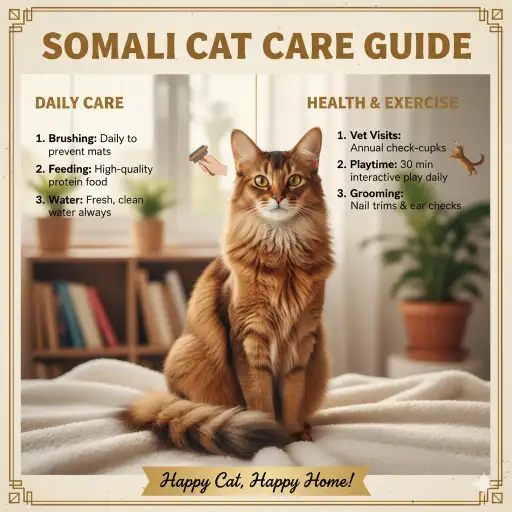
Somali cats are a unique and beautiful breed that many people love. They are known for their long, soft fur and lively personalities. If you are thinking about getting a Somali cat or you already have one, learning how to care for them properly is very important. This guide will help you understand their basic needs in a way that is easy to follow.
Somali cats are active, curious, and very smart. They enjoy playing, exploring, and being part of the family. Because of their lively nature, they need more than just food and shelter. They need attention, playtime, and mental challenges. Without these, they can become bored or frustrated. This guide will explain each part of caring for a Somali cat so that you can keep your cat happy and healthy.
One of the most special things about Somali cats is their coat. Their fur is long, silky, and soft. While it does not mat as easily as some other long‑haired breeds, it still needs regular care. Brushing your Somali’s coat often will help prevent tangles and reduce shedding. It also gives you a chance to check for skin problems or lumps that may need a vet’s attention.
Somali cats are also social animals. They love being around people and other pets. They may follow you around the house or want to sleep near you at night. Understanding their personality will help you give them the care and love they need. In the next parts of this article, we will go into all the daily care tasks, health needs, behavior, and special tips for different life stages.
Daily Care Essentials (Feeding, Grooming, Litter & Activity)
Feeding your Somali cat the right food and the right amount each day is one of the most important parts of care. Somali cats are active, which means they burn a lot of energy. A balanced diet with high‑quality protein helps keep their muscles strong and their energy high. You should follow the feeding instructions on the cat food bag and adjust based on your cat’s age, weight, and activity level. Always make fresh water available. Some cats prefer running water, and a cat water fountain can help encourage them to drink more.
Grooming your Somali cat should be part of your daily routine. Even though their fur does not tangle easily, regular brushing helps reduce loose hair and keeps their coat shiny and clean. Use a soft brush designed for long‑haired cats. Start brushing from your cat’s head and move down to the tail, gently reaching into the undercoat. Not only does this help with shedding, but it also gives you a chance to bond with your cat and check for any unusual bumps, bumps, or skin irritation.
A clean litter box is very important for your cat’s health and comfort. Somali cats usually prefer a clean and quiet place to use their litter box. Scoop out waste at least once a day, and change the litter completely at least once a week. If you have more than one cat, you should have one litter box per cat, plus one extra. This helps avoid accidents and stress.
Somali cats are very playful and active, so daily exercise is needed to keep them healthy. Spend time playing with toys that encourage your cat to jump, chase, and explore. Wand toys, laser pointers, and puzzle feeders are great choices. These toys help your cat stay mentally and physically active. A tired Somali cat is usually a well‑behaved cat.
Daily vs Weekly Care Checklist
| Task | Daily | Weekly |
|---|---|---|
| Brushing coat | ✓ | Optional extra |
| Litter cleaning | ✓ | Deep clean |
| Play sessions | ✓ | Rotate toys |
| Check ears/teeth | ✓ | |
| Nail trim | ✓ (as needed) |
Health, Nutrition & Common Issues
Keeping your Somali cat healthy means understanding their nutritional needs and watching for signs of common health problems. A balanced diet is the foundation of good health. Look for cat food that lists meat as the first ingredient and avoids too many fillers like corn or wheat. High‑quality food supports good digestion and healthy muscle development. Some cats may do best with wet food because it adds extra moisture to their diet, which can help reduce urinary problems.
Weight management is very important for Somali cats because they can easily gain weight if they eat too much and do not play enough. Too much weight can lead to joint problems, diabetes, and other health issues. You should weigh your cat regularly and check their body condition. You should be able to feel their ribs without pressing hard, but you should not see them sticking out. If your cat starts to gain weight, cut back a little on treats and increase playtime.
Somali cats can have some common health problems you should watch for. One of these is dental disease. Poor dental health can lead to bad breath, loss of appetite, and pain. Brushing your cat’s teeth a few times a week with a cat toothbrush and toothpaste can help prevent tooth and gum problems. Some cats may not like brushing at first, so go slowly and use treats to make it a positive experience.
Another issue to watch for is hairballs. Because Somali cats have long fur, they may swallow hair when they groom themselves. Hairballs can cause vomiting or constipation. Regular brushing helps reduce the amount of hair your cat swallows. You can also talk to your vet about hairball‑control foods or gels that help your cat pass hair more easily.
Somali Cat Health Quick Guide
| Sign | Possible Meaning | Action |
|---|---|---|
| Excessive shedding | Normal or seasonal | Brush more often |
| Lethargy | Health issue | Consult vet |
| Poor appetite | Dental/illness | Vet check |
| Vomiting | Hairballs or illness | Monitor / vet |
| Weight gain | Overfeeding | Adjust diet & play |
Behavior and Enrichment Needs
Somali cats have big personalities. They are curious, intelligent, and energetic. Understanding their behavior needs will help you create a home where they feel happy and safe. One common trait of Somali cats is that they love interacting with people. They may want to sit with you, hop on your lap, or play games with you. Spending time with your cat every day builds a strong bond and keeps them mentally healthy.
Training your Somali can be fun and rewarding. These cats are smart and learn quickly. Simple training like teaching them to come when called or to sit for treats can help keep their brain active. Use positive reinforcement, like treats or praise, to reward good behavior. Training sessions should be short and fun, never frustrating.
Providing a variety of toys and play areas is very important. Somali cats enjoy toys that move or make noise. Wand toys with feathers, small balls they can chase, and puzzle feeders all help keep your cat engaged. Puzzle feeders make your cat work for treats or kibble, which provides both physical and mental exercise.
Somali cats also love climbing and watching the world from high places. Cat trees, shelves, and window perches give them safe places to climb and explore. When placing these items, choose stable spots where your cat can jump safely. A window perch gives your cat a view outside, which can keep them entertained for long periods.
Because Somali cats are active, many owners choose to give them supervised outdoor time. This can be done with a harness and leash or a secure outdoor enclosure called a “catio.” Always watch your cat when they are outside, and make sure the area is safe from cars, dogs, or dangerous plants.
Care Across Life Stages and Safety
Taking care of your Somali cat changes a bit as they grow older. Kittens are full of energy and need lots of attention, play, and learning time. They should have small, frequent meals because they grow fast and burn a lot of energy. Kittens also need safe places to explore. Remove small objects they could swallow and block off areas where they could get stuck.
Adult Somali cats are usually in the strongest and most active stage of life. They need a good balance of play, rest, and proper food. At this stage, it is easy to forget that they still need mental stimulation. Rotating toys and introducing new play ideas helps them stay happy. Adults should visit the vet once a year for a checkup, vaccinations, and dental exams.
Senior Somali cats may slow down and need a gentler routine. Older cats sometimes have joint pain or may not jump as high. Soft beds, low steps, and easy access to food and water help them stay comfortable. Senior cats should have more frequent vet visits. Your vet may recommend special diets that help with aging joints or digestion. If your senior cat starts avoiding the litter box or shows signs of pain, contact your vet right away.
Keeping your home safe for your Somali cat is very important. Remove toxic plants like lilies, azaleas, and tulips. These are harmful and can make your cat very sick. Many foods that are safe for people can hurt cats, such as chocolate, onions, garlic, grapes, and raisins. Keep these items out of reach. Also, make sure electrical cords are tucked away or protected so your cat does not chew them.
If you have more than one pet, introduce them slowly. Somali cats can be social, but sudden changes can stress them. Give each pet their own space at first and let them get used to each other’s scents before face‑to‑face introductions. Treats and praise help build positive connections.
For more trusted feline health and care information, you can always check the American Association of Feline Practitioners at https://catfriendly.com.

Ata Ur Rehman is the founder of Pet Age in Human Years Calculator, an educational platform that provides age conversion charts and lifespan guides for dogs, cats, birds, and other companion animals. His work focuses on helping pet owners understand how animal ages translate into human years using commonly accepted age conversion formulas and published lifespan averages.
The website compiles breed and species lifespan data from kennel clubs, breed organizations, and general animal lifespan studies to present simple and easy-to-understand guides for pet owners worldwide.
This website was created to centralize animal age conversion charts into one easy reference platform for pet owners.