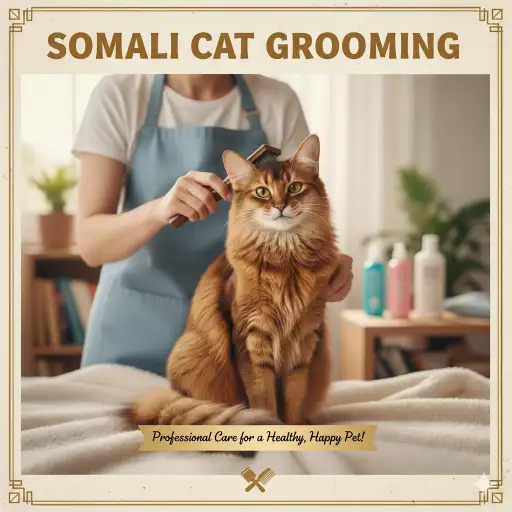
Somali cats are known for their beautiful, soft, fox-like coats. Their fur is medium-long, light, and silky. Because of this special coat, grooming is not just about looks. Grooming helps keep your Somali healthy, clean, and comfortable.
Even though Somali cats are good at cleaning themselves, they still need help from their owners. Their fine fur can trap loose hair, dust, and small tangles. Without regular care, this can lead to mats, extra shedding, and hairballs.
Grooming also helps you check your cat’s health. While brushing or trimming nails, you may notice skin changes, lumps, ear dirt, or other small problems. Finding these early can prevent bigger health issues later.
Another important benefit is bonding. Many Somali cats enjoy gentle grooming once they get used to it. It becomes a calm routine that builds trust between you and your cat.
Essential Grooming Tasks & How Often to Do Them
Somali cats are not high-maintenance, but they do need steady care. A simple grooming routine keeps their coat smooth and reduces common problems.
Brushing is the most important task. Somali fur is soft and fine, which means it can tangle if ignored. Regular brushing removes loose hair, spreads natural oils, and keeps the coat shiny.
When brushing your Somali cat:
- Use a soft slicker brush or metal comb
- Brush gently in the direction of hair growth
- Focus on areas where tangles form easily (behind ears, chest, belly, tail)
- Stop if your cat becomes stressed
Most Somali cats do well with brushing one to three times per week. During shedding seasons, you may need to brush more often.
Nail trimming is another key task. Indoor cats especially need nail care because their claws do not wear down naturally. Long nails can cause discomfort and scratching problems.
Basic nail trimming tips:
- Use cat-specific nail clippers
- Trim only the sharp tip
- Avoid the pink area (the quick)
- Work slowly and calmly
Ear care should be gentle and simple. Somali cats do not usually have heavy ear issues, but checking weekly helps prevent infections. Look for dirt, bad smell, or redness.
Dental care is often forgotten but very important. Cats can develop plaque and gum disease. Brushing teeth a few times per week supports long-term health.
Bathing is rarely needed for Somali cats. They stay clean on their own. Baths are only helpful if your cat is very dirty, has skin problems, or gets into something sticky.
Here is a simple grooming frequency guide:
| Grooming Task | Recommended Frequency |
|---|---|
| Brushing | 1–3 times per week |
| Nail Trimming | Every 2–4 weeks |
| Ear Check | Weekly |
| Dental Care | Several times per week |
| Bathing | Only when needed |
Using the right tools makes grooming easier:
| Grooming Task | Best Tool | Purpose |
|---|---|---|
| Brushing | Slicker brush / Comb | Remove loose hair, prevent tangles |
| Nail Care | Cat nail clippers | Keep nails safe length |
| Ear Care | Cat ear cleaner | Remove dirt safely |
| Dental Care | Cat toothbrush & paste | Reduce plaque |
Somali Coat & Seasonal Considerations
Somali cats have a coat that changes with seasons. Many owners notice heavier shedding in spring and fall. This is normal and part of the natural hair cycle.
During shedding seasons:
- Brush more often (up to daily if needed)
- Expect more loose hair around the home
- Watch for small tangles forming faster
If you brush regularly, shedding becomes easier to manage. Brushing removes loose fur before it spreads everywhere.
Indoor Somali cats may shed more evenly throughout the year. Outdoor cats often follow stronger seasonal cycles because of temperature and light changes.
Age also affects grooming needs. Kittens usually have softer, lighter coats. They are great to train early for grooming routines. Short, gentle sessions help build positive habits.
Adult Somali cats have fuller coats. This stage needs consistent brushing and nail care. Most grooming routines stay stable during adulthood.
Senior Somali cats may need extra help. Older cats sometimes groom themselves less due to joint stiffness or health issues. Owners may need to brush more often and monitor coat condition closely.
Pay attention to coat changes:
- Dull fur may signal poor grooming or health issues
- Greasy fur can suggest skin problems
- Sudden hair loss should be checked by a vet
Grooming Safety, Stress Signals & Handling Tips
Safety is the most important rule of grooming. Even calm cats can become stressed or scared during grooming sessions.
Always watch your Somali cat’s body language. Cats communicate stress through small signals.
Common stress signs include:
- Tail flicking or fast tail movement
- Flattened ears
- Growling or hissing
- Trying to escape
- Sudden biting or swatting
If you see these signs, pause grooming. Forcing the process can damage trust and make future grooming harder.
Helpful handling tips:
- Groom when your cat is relaxed or sleepy
- Use calm, soft movements
- Speak gently
- Offer breaks
- Use treats for positive reinforcement
Never hold your cat too tightly. Gentle support is better than firm restraint. Cats feel safer when they can move slightly.
Important safety reminders:
- Never cut deep into nails
- Never insert objects deep into ears
- Never pull mats aggressively
- Never use human grooming products
If grooming becomes difficult, shorter sessions often work better. Even one-minute sessions can build tolerance over time.
Common Grooming Issues & Practical Solutions
Even with regular care, some grooming challenges may appear. Somali cats are generally easy to groom, but small problems can still happen.
Tangles and mats are common concerns. Somali fur is fine, so small knots can develop, especially in hidden areas.
To manage tangles:
- Brush regularly
- Use a comb to detect small knots
- Separate hair gently with fingers
- Work slowly
Never cut mats close to the skin without proper knowledge. Cat skin is thin and easy to injure. If mats are large or tight, a professional groomer or vet is safer.
Excessive shedding can worry owners. Shedding is normal, but heavy shedding may need attention.
Possible causes:
- Seasonal coat changes
- Stress
- Diet changes
- Health issues
Regular brushing usually helps control loose hair. If shedding seems unusual, consult a vet.
Reluctant grooming behavior is another challenge. Some Somali cats dislike grooming at first.
Helpful solutions:
- Start slowly
- Use very short sessions
- Pair grooming with treats
- Groom during calm moments
Patience is key. Many cats improve with routine and positive experiences.
Nail trimming resistance is also common. Try trimming one nail at a time if needed. Gradual progress works better than long, stressful sessions.
When to seek professional help:
- Severe mats
- Aggressive reactions
- Skin problems
- Ear infections
- Dental concerns
Frequently asked questions:
How often should I brush my Somali cat?
Most Somali cats do well with brushing one to three times per week. Increase frequency during shedding seasons.
Do Somali cats need haircuts?
No. Somali coats should not be cut unless advised by a vet for medical reasons.
Do Somali cats need baths?
Rarely. Baths are only needed if your cat is very dirty or has specific skin issues.
What if my Somali cat hates grooming?
Use shorter sessions, gentle handling, and treats. Build positive associations slowly.
How can grooming reduce hairballs?
Brushing removes loose hair before your cat swallows it, helping reduce hairball formation.
Grooming is not about perfection. It is about steady, gentle care that supports your cat’s comfort and health. A simple routine, patience, and calm handling make grooming easier for both you and your Somali cat.
For more general cat care guidance, you can visit:
https://www.petmd.com/cat/care

Ata Ur Rehman is the founder of Pet Age in Human Years Calculator, an educational platform that provides age conversion charts and lifespan guides for dogs, cats, birds, and other companion animals. His work focuses on helping pet owners understand how animal ages translate into human years using commonly accepted age conversion formulas and published lifespan averages.
The website compiles breed and species lifespan data from kennel clubs, breed organizations, and general animal lifespan studies to present simple and easy-to-understand guides for pet owners worldwide.
This website was created to centralize animal age conversion charts into one easy reference platform for pet owners.