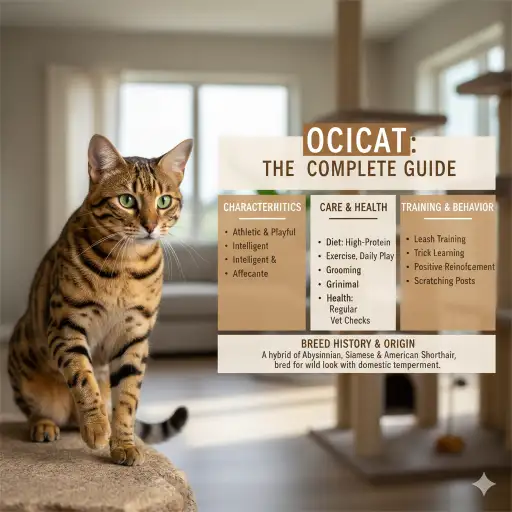
The Ocicat is a striking and lively domestic cat that looks like a wild feline but has a sweet, friendly personality. It is named after the ocelot because of its distinctive spotted coat, but unlike wild cats, Ocicats are entirely domestic and loving companions. With their elegant body, large ears, and expressive eyes, they are often mistaken for exotic cats, but their behavior and temperament are very much suited for family life.
Ocicats are known for their intelligence, energy, and playful nature. They are highly social and often form strong bonds with their human family members. While they enjoy affection, they are not overly clingy, making them a good fit for homes where people are out during the day. Their curious and active personality means they thrive in environments where they can explore, play, and engage with both toys and people.
This breed is also very adaptable. Ocicats can live comfortably in apartments or large homes, and they usually get along well with other cats and even dogs. They enjoy interactive play and mental challenges, which makes them excellent companions for families with children or first-time cat owners who want a friendly and entertaining pet.
One of the reasons Ocicats are so appealing is their low-maintenance coat. While their spotted pattern draws attention, their short hair is easy to care for, requiring only occasional brushing. With a combination of beauty, brains, and a playful spirit, the Ocicat is a breed that offers both companionship and personality for cat lovers who want a little adventure in their home.
Appearance
Ocicats are medium to large cats with a muscular and athletic build. Adult males typically weigh between 10 to 15 pounds, while females weigh slightly less, around 8 to 12 pounds. They have long, sleek bodies with strong legs and a graceful posture, giving them a poised and agile look. Their tails are long and tapered, complementing their spotted coat, which enhances their wild appearance.
The coat of an Ocicat is short, glossy, and soft to touch. Their most distinguishing feature is the spotted pattern, which can resemble a miniature leopard. The spots are well-defined and evenly distributed across the body. The coat comes in several color varieties, including tawny, chocolate, cinnamon, silver, and fawn, with each shade giving the cat a unique personality. Eye color can range from amber to green, often matching or complementing the coat.
Facial features are also striking. Large, alert ears, almond-shaped eyes, and a strong muzzle give Ocicats a distinctive look. They have prominent cheekbones and a well-defined jawline. The combination of these features makes the Ocicat a visually appealing breed that draws attention wherever they go.
Their appearance isn’t just about beauty; it’s also functional. The strong, muscular body supports their active lifestyle, allowing them to jump, climb, and run with agility. Their coat is low-maintenance, but it is shiny and healthy when they receive proper nutrition and care. Overall, Ocicats are a blend of elegance, athleticism, and exotic charm.
| Feature | Details |
|---|---|
| Size | Medium to large |
| Weight | Males: 10–15 lbs, Females: 8–12 lbs |
| Coat | Short, glossy, spotted |
| Colors | Tawny, chocolate, cinnamon, silver, fawn |
| Eyes | Amber to green |
| Ears | Large and alert |
| Tail | Long, tapered |
Temperament and Personality
Ocicats are outgoing, friendly, and intelligent cats that enjoy being part of family life. They are playful and energetic, often engaging in interactive play with toys or other pets. Their curiosity drives them to explore their environment, and they often enjoy high vantage points like shelves or cat trees. This makes them ideal for owners who are willing to provide stimulation and enrichment.
These cats form strong bonds with their human companions. They often enjoy sitting on laps, following owners around the house, and participating in daily activities. Unlike some breeds that demand constant attention, Ocicats balance affection with independence, making them adaptable to various household routines. They are also highly responsive to training and can learn tricks, fetch, or even walk on a leash if taught gradually.
Ocicats are also known for their intelligence. They quickly learn patterns in their environment and enjoy problem-solving toys. This mental stimulation helps prevent boredom and destructive behaviors. Their sociable nature allows them to get along well with children, other cats, and even dogs when introduced properly. They thrive in households where they receive attention, playtime, and consistent interaction.
Vocalization in Ocicats is moderate. They can communicate through soft meows, chirps, and purrs, expressing contentment, curiosity, or a desire for attention. Unlike some overly vocal breeds, Ocicats use their voice purposefully, which many owners find pleasant. Their behavior shows a combination of alertness, playfulness, and affection, making them an engaging and entertaining companion.
| Trait | Description |
|---|---|
| Social | Very friendly, enjoys family interaction |
| Playfulness | High, loves toys and climbing |
| Intelligence | High, responds well to training |
| Affection | Moderate to high, balances independence |
| Vocalization | Moderate, expressive but not overwhelming |
| Compatibility | Good with children, cats, and dogs |
Activity and Exercise Needs
Ocicats are highly active cats that require both physical and mental stimulation. They enjoy climbing, jumping, and running, which makes cat trees, shelves, and interactive toys essential in their environment. Daily play sessions of at least 20–30 minutes are recommended to keep them physically fit and mentally engaged. Puzzle feeders and treat-dispensing toys are also great for preventing boredom.
This breed thrives when given opportunities to explore and satisfy its natural curiosity. They enjoy games that mimic hunting behaviors, such as chasing laser pointers or feather toys. Mental stimulation is just as important as physical activity, and Ocicats can benefit from training exercises that challenge their problem-solving skills.
Interactive play is particularly important if the cat lives in an apartment or has limited outdoor access. Providing vertical spaces, tunnels, and toys can help replicate the stimulation they would get in a larger environment. While they are energetic, Ocicats also know how to relax and enjoy quiet moments with their owners, making them adaptable to both busy and calmer households.
Their activity needs also extend to social interaction. These cats enjoy playing with other pets and thrive in multi-cat households. They are alert and agile, often joining in family games or following owners around the house. Providing a variety of toys and interactive experiences is key to maintaining their happiness and preventing destructive behavior.
| Activity | Recommendations |
|---|---|
| Daily Play | 20–30 minutes interactive play |
| Mental Stimulation | Puzzle toys, treat dispensers |
| Climbing | Cat trees, shelves, vertical spaces |
| Outdoor Access | Supervised walks or enclosed spaces |
| Multi-Pet Interaction | Encouraged for social stimulation |
Grooming, Health, and Lifespan
Ocicats are relatively low-maintenance when it comes to grooming. Their short, smooth coat only requires occasional brushing to remove loose hair and maintain shine. Bathing is rarely necessary unless the cat gets particularly dirty. Nail trimming, dental care, and ear cleaning should be part of the regular grooming routine to ensure overall health.
The breed is generally healthy, but like all cats, Ocicats can be prone to certain hereditary conditions. Hypertrophic cardiomyopathy (heart disease) and renal issues have been observed in some lines. Regular veterinary checkups, early screening, and preventive care are essential. Vaccinations, parasite control, and routine bloodwork help maintain long-term health.
Ocicats have a typical lifespan of 12 to 15 years, although with proper care, some can live longer. Maintaining a healthy diet, providing regular exercise, and offering mental stimulation contribute to both physical and emotional wellbeing. Understanding their health risks and preventive measures ensures they remain vibrant and active well into adulthood.
| Care Aspect | Recommendations |
|---|---|
| Grooming | Occasional brushing, nail trimming, dental care |
| Bathing | Rarely required |
| Health Risks | Hypertrophic cardiomyopathy, renal issues |
| Vet Care | Annual checkups, vaccinations, bloodwork |
| Lifespan | 12–15 years |
Cost and Suitability
Ocicats are moderately priced compared to other exotic-looking breeds. A kitten from a reputable breeder typically costs between $600 to $1,200 depending on lineage, color, and markings. In addition to the initial purchase, owners should budget for veterinary care, toys, scratching posts, and other essentials. Preventive medical costs and occasional grooming expenses should also be considered.
This breed is suitable for a wide range of households. Families with children appreciate their playful and social nature. First-time cat owners find them responsive and trainable, making the transition to pet ownership smoother. Apartment dwellers can also enjoy Ocicats as long as they provide adequate stimulation, climbing spaces, and interactive play. Seniors or low-activity households may need to engage them daily to satisfy their energy levels.
While they are social, Ocicats can adapt to indoor-only living, though they enjoy safe outdoor experiences in enclosed areas or supervised walks. Their temperament, intelligence, and moderate grooming requirements make them versatile companions for families, singles, and multi-pet homes alike.
| Cost Aspect | Estimated Range |
|---|---|
| Kitten Price | $600–$1,200 |
| Annual Vet Care | $150–$400 |
| Food & Supplies | $500–$700/year |
| Toys & Enrichment | $50–$200/year |
| Insurance | Optional, $200–$500/year |
Pros and Cons
Ocicats have many advantages but also a few considerations for potential owners. They are social, intelligent, playful, and visually striking. They bond well with families, get along with other pets, and are relatively easy to groom. On the other hand, they require daily mental and physical stimulation, which may not suit owners with very busy schedules. Their high energy and curiosity mean they need safe environments to explore and climb.
| Pros | Cons |
|---|---|
| Playful and active | Needs daily stimulation |
| Highly social | Can get bored if left alone |
| Intelligent and trainable | May jump/climb on furniture |
| Low-maintenance coat | Moderate cost |
| Gets along with kids and pets | Requires interactive play |
Similar Breeds and Comparisons
Ocicats are often compared to other spotted or active breeds like Abyssinians, Bengals, and Siamese cats. While Bengals have a more pronounced wild appearance and higher energy levels, Ocicats offer a balance of exotic looks and domestic temperament. Abyssinians share similar intelligence and curiosity but lack the distinctive spotted coat. Siamese cats are more vocal and demanding, whereas Ocicats are playful but moderately vocal.
| Breed | Appearance | Personality | Energy Level | Grooming | Compatibility |
|---|---|---|---|---|---|
| Ocicat | Spotted, medium | Playful, social | High | Low | Good with kids and pets |
| Bengal | Spotted, wild look | Energetic, curious | Very high | Low | Active households |
| Abyssinian | Ticked coat | Intelligent, playful | High | Low | Compatible with other pets |
| Siamese | Short coat, sleek | Vocal, affectionate | Medium | Low | Requires attention |
Ocicats are an ideal choice for owners who want a striking, active, and affectionate cat without the demanding needs of truly wild-looking breeds. Their versatility and temperament make them suitable for many types of households.
FAQs
Are Ocicats good with children?
Yes, they are playful and patient, making them excellent companions for families.
Do Ocicats get along with dogs?
Most Ocicats adapt well to dogs if properly introduced and socialized.
How much exercise do Ocicats need?
They need at least 20–30 minutes of interactive play daily, plus mental stimulation.
Are Ocicats good for apartments?
Yes, as long as they have climbing spaces and toys to keep them engaged.
How long do Ocicats live?
12 to 15 years on average, with proper care and nutrition.
Do Ocicats shed a lot?
No, they have short, low-maintenance coats that shed minimally.
Are Ocicats expensive?
Kitten prices range from $600 to $1,200, with ongoing costs for food, vet care, and enrichment.
Can Ocicats be trained?
Yes, they are intelligent and can learn tricks, fetch, and leash walking with patience.
Do Ocicats like to cuddle?
They enjoy affection and lap time but are not overly demanding.
Are Ocicats healthy?
Generally healthy, but regular vet checkups are recommended to monitor for heart and kidney issues.
Final Thoughts
Ocicats are an exceptional breed for families, first-time cat owners, and anyone looking for a lively, intelligent, and affectionate companion. Their striking spotted coat, playful personality, and social nature make them one of the most engaging domestic cats. While they require daily mental and physical stimulation, they are adaptable and form strong bonds with humans and other pets. For owners willing to provide interactive play and love, the Ocicat is a rewarding and loyal feline friend.
For more expert insights about Ocicats and other cat breeds, visit The International Cat Association.

Ata Ur Rehman is the founder of Pet Age in Human Years Calculator, an educational platform that provides age conversion charts and lifespan guides for dogs, cats, birds, and other companion animals. His work focuses on helping pet owners understand how animal ages translate into human years using commonly accepted age conversion formulas and published lifespan averages.
The website compiles breed and species lifespan data from kennel clubs, breed organizations, and general animal lifespan studies to present simple and easy-to-understand guides for pet owners worldwide.
This website was created to centralize animal age conversion charts into one easy reference platform for pet owners.