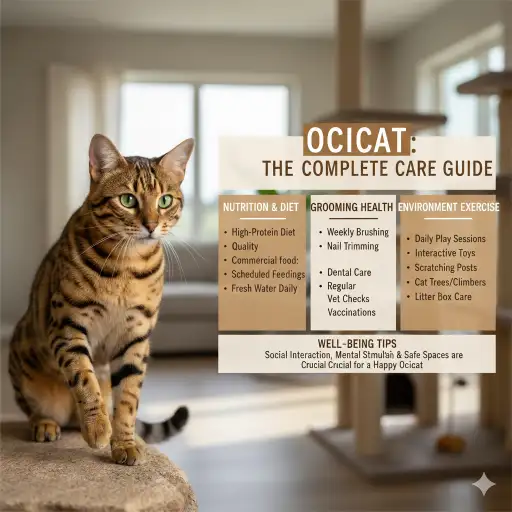
The Ocicat is a unique and striking cat breed. It looks wild, with its spotted coat resembling a small ocelot, but it is completely domestic. These cats are active, social, and very intelligent. They love attention, play, and exploring their environment. Because of their high energy, Ocicats require more engagement and mental stimulation than many other cat breeds. Understanding their needs is the first step to keeping them happy and healthy.
Ocicats are often described as “dog-like” because they enjoy following their owners around, playing fetch, and even learning simple tricks. They are friendly and usually get along well with other pets and children, but they do need consistent interaction. Without proper attention and enrichment, Ocicats can become bored, which may lead to destructive behavior or anxiety. Knowing how to provide mental and physical stimulation is key to their care.
These cats have a medium-to-large build, with strong muscles and a sleek coat. Their coat patterns are not just beautiful—they also make their grooming easier since their short hair does not mat easily. However, Ocicats shed seasonally, and regular brushing will help keep their fur shiny and reduce hairballs. Grooming is not just about looks; it’s also a bonding opportunity between you and your cat.
Understanding the Ocicat’s personality and behavior is important for first-time owners. They are intelligent problem-solvers and can get into mischief if left alone for long periods. Owners need to provide safe spaces, plenty of toys, scratching posts, and opportunities for climbing. Socialization from a young age will help Ocicats adapt well to new environments, visitors, and other pets. By learning their needs early, you can create a strong, trusting bond that lasts their entire life.
Daily & Weekly Care Routine
Taking care of an Ocicat involves consistent daily and weekly routines. Their health, happiness, and behavior depend heavily on how structured and predictable their care is. One of the most important aspects is feeding. Ocicats need a balanced diet rich in protein to support their active lifestyle. You should feed them measured portions two to three times a day. Fresh water must always be available, and bowls should be cleaned daily to prevent bacteria.
Litter box maintenance is another critical daily task. Ocicats are clean cats and prefer a well-kept litter box. Scoop waste at least once a day and completely change the litter weekly. Using an unscented, clumping litter often works best for this breed. Having one litter box per cat, plus one extra, helps reduce stress in multi-cat households.
Play and enrichment are essential for Ocicats. Spend at least 20–30 minutes a day engaging in interactive play using toys like wand teasers, balls, or puzzle feeders. This keeps them mentally stimulated and prevents boredom. Provide climbing spaces, scratching posts, and cozy hiding spots around the house. These environmental enrichments allow Ocicats to express natural behaviors safely.
Weekly care tasks include brushing their coat, checking ears, trimming nails, and brushing teeth. Brushing once or twice a week is usually enough for Ocicats, but during seasonal shedding, extra brushing may be necessary. Use a soft brush and gentle motions. Nail trims should be done carefully to avoid cutting the quick. Dental health is often overlooked, but brushing teeth several times a week helps prevent tartar buildup and gum disease.
Daily vs Weekly vs Occasional Tasks
| Task | Daily | Weekly | Occasional |
|---|---|---|---|
| Feeding | ✔ | ||
| Fresh water | ✔ | ||
| Litter box cleaning | ✔ | ✔ | |
| Play / enrichment | ✔ | ||
| Coat brushing | ✔ | ||
| Nail trimming | ✔ | ||
| Dental care | ✔ | ||
| Toy rotation | ✔ | ||
| Deep cleaning litter area | ✔ |
Health, Safety & Warning Signs
Ocicats are generally healthy, but owners must watch for signs of illness. Common health issues include dental disease, obesity, urinary problems, and heart conditions. Preventive care, including regular vet checkups and vaccinations, is essential. Early detection is key, as many illnesses can progress quickly if unnoticed.
Red flags to watch for include changes in appetite, weight loss or gain, lethargy, vomiting, diarrhea, or difficulty urinating. Behavioral changes, such as hiding, aggression, excessive vocalization, or grooming changes, can also indicate underlying health problems. Monitoring their behavior daily helps catch problems before they become serious.
Safety in the home is equally important. Ocicats are curious and active, so keep harmful substances, toxic plants, and small objects out of reach. Avoid giving human foods that are unsafe for cats, like chocolate, onions, and grapes. Ensure windows are secure, especially for high-rise homes, to prevent accidental falls. Safe indoor enrichment helps prevent accidents while satisfying their exploratory instincts.
Vaccinations and regular vet visits are crucial for overall health. A vet can recommend parasite prevention, dental care, and nutritional adjustments based on age and activity level. For emergency situations, knowing the nearest veterinary clinic is important. Providing a safe, clean, and enriched environment helps prevent stress-related health problems and supports longevity.
Common Warning Signs & Actions
| Warning Sign | Possible Cause | Action |
|---|---|---|
| Loss of appetite | Dental, illness | Vet check |
| Vomiting frequently | GI issues, toxins | Vet check |
| Sudden weight loss | Illness, thyroid | Vet check |
| Lethargy | Infection, pain | Monitor & vet |
| Excessive scratching | Skin issues, fleas | Inspect & treat |
| Changes in litter habits | Urinary or kidney issues | Vet check |
| Aggression or hiding | Stress, pain | Observe & vet |
Special Considerations
Ocicat care differs slightly depending on life stage. Kittens need more frequent feeding, socialization, and play. They also require vaccinations and early vet checks. Creating safe spaces for kittens prevents accidents and allows them to explore without risk. Introduce toys, climbing areas, and scratching posts early to develop good habits.
Adult Ocicats need consistent routines, proper diet, and enrichment to maintain health and mental stimulation. Regular play, climbing opportunities, and scratching posts prevent boredom and maintain their muscle tone. Adults may be calmer than kittens but still require daily interactive play and mental challenges.
Senior Ocicats may need softer diets, joint support, and more frequent vet monitoring. Mobility may decrease, so provide ramps or steps to access favorite resting areas. Regular health screenings help detect conditions like kidney disease, arthritis, or heart issues early. Adjusting enrichment to suit energy levels ensures continued engagement without overexertion.
Indoor vs outdoor life also matters. Indoor Ocicats are safe from traffic, predators, and disease. To satisfy their curiosity, provide window perches, climbing towers, and interactive toys. If outdoor access is desired, a secure catio or supervised leash walks is safest. Multi-cat households need careful management: separate litter boxes, multiple feeding stations, and enough space prevent stress and competition.
Life Stage Care Comparison
| Life Stage | Feeding | Play & Enrichment | Vet Care | Special Tips |
|---|---|---|---|---|
| Kitten | 3–4 meals/day | High play, socialization | Vaccinations, checkups | Safe exploration areas |
| Adult | 2–3 meals/day | Interactive daily play | Annual vet exam | Maintain routine, mental stimulation |
| Senior | 2 smaller meals/day | Gentle play, moderate activity | Bi-annual vet check | Support joints, monitor health |
Owner Tips, FAQs & Quick Reference
Many owners make common mistakes, such as overfeeding, neglecting play, or skipping grooming. Avoid these to keep your Ocicat healthy. Make a daily routine and stick to it. Provide a variety of toys and rotate them regularly. Monitor weight, coat condition, and behavior consistently. Building a bond through play and gentle interaction strengthens trust.
Some frequently asked questions include:
- How often should I groom my Ocicat? Brushing once or twice a week is enough, extra during shedding.
- Can Ocicats live happily indoors? Yes, with enough enrichment, climbing spaces, and interaction.
- How much play does an Ocicat need daily? At least 20–30 minutes of interactive play is recommended.
- What are common stress signs? Hiding, over-grooming, aggression, or excessive vocalization.
- How can I prevent obesity? Measure food portions, provide daily play, and avoid frequent treats.
Quick daily checklist:
| Task | Done? |
|---|---|
| Feed measured meals | |
| Fresh water | |
| Litter box scoop | |
| Play / interaction | |
| Check coat, eyes, ears |
By following these routines and paying attention to their needs, Ocicats will thrive in your home. Consistency, enrichment, and love are the keys to raising a happy and healthy Ocicat.
For more detailed care information and enrichment ideas, visit the American Association of Feline Practitioners.

Ata Ur Rehman is the founder of Pet Age in Human Years Calculator, an educational platform that provides age conversion charts and lifespan guides for dogs, cats, birds, and other companion animals. His work focuses on helping pet owners understand how animal ages translate into human years using commonly accepted age conversion formulas and published lifespan averages.
The website compiles breed and species lifespan data from kennel clubs, breed organizations, and general animal lifespan studies to present simple and easy-to-understand guides for pet owners worldwide.
This website was created to centralize animal age conversion charts into one easy reference platform for pet owners.