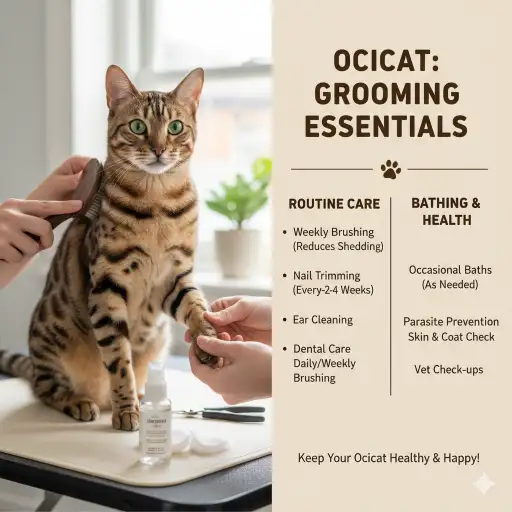
Grooming is more than just keeping your Ocicat looking nice. It is an important part of keeping them healthy, happy, and comfortable. Regular grooming helps prevent hairballs, reduces shedding around your home, and keeps their skin and coat in top condition. For Ocicats, who have short, dense, and shiny coats, grooming is usually easy, but it still requires attention to detail and understanding of their behavior.
Grooming is also a great way to bond with your cat. Spending time brushing or checking your Ocicat’s nails, ears, and teeth allows you to notice small health issues early. Skin irritations, lumps, or signs of parasites are easier to detect when you handle your cat gently and regularly. Ocicats, with their playful and alert personalities, often enjoy a short grooming session when it is done calmly and consistently.
Another reason grooming is important is stress reduction. Cats can become anxious if their coat is matted, nails are overgrown, or ears are dirty. A well-maintained cat is generally calmer and less likely to show aggression. Grooming also gives your Ocicat a sense of routine and safety. Even though they groom themselves naturally, human assistance ensures they stay fully healthy and comfortable.
Finally, grooming prepares your Ocicat for life in a household where interactions with people and other pets occur. Handling them gently during grooming makes trips to the vet or professional groomer less stressful. Regular care builds trust, helping your cat stay confident and relaxed during routine checks, baths, or nail trims. For first-time Ocicat owners, understanding the importance of grooming is the foundation for a happy and healthy cat.
Daily & Weekly Grooming Tasks
Brushing your Ocicat is the simplest and most effective way to care for their coat. Even though Ocicats have short hair, regular brushing removes loose fur, dirt, and dander. A soft-bristle brush or grooming mitt works well. Daily brushing is ideal during shedding season, while two to three times per week is enough for most other times. Start brushing gently from the neck down, following the direction of hair growth. Avoid tugging on tangles, and stop if your cat shows signs of stress such as twitching tail or flattened ears.
Checking your cat’s skin and coat during brushing is important. Look for signs of irritation, redness, or unusual lumps. Short-haired cats like Ocicats may rarely develop mats, but small tangles can still appear behind the ears or under the legs. If you notice any mats forming, gently work them out with your fingers or a comb, taking care not to pull the skin. Regular inspection also allows you to notice fleas or ticks early.
Daily grooming is also about observing your cat’s behavior and stress signals. A relaxed Ocicat may purr, knead, or remain still during brushing. A stressed cat may flatten ears, flick the tail rapidly, or try to escape. Recognizing these signals lets you pause, pet, or comfort your cat, making grooming a positive experience. Gradually, your cat will associate grooming with relaxation and attention rather than discomfort.
Weekly tasks include trimming nails, checking ears, wiping eyes, and occasionally brushing teeth. These tasks prevent long-term problems and reduce the need for emergency vet visits. For nail trimming, check each paw for overgrown or sharp claws. For ears, inspect for wax buildup or unusual odor. Eye care involves gently wiping any discharge with a damp cloth. Dental hygiene helps prevent gum disease, which is common in cats. Keeping a weekly routine makes these tasks simple and predictable.
Essential Grooming Techniques
Nail trimming is an essential skill for Ocicat owners. Use a proper cat nail clipper and trim only the sharp tip. Avoid cutting too close to the quick, the pink part inside the nail, as it will cause pain and bleeding. If your Ocicat resists, try trimming one or two nails at a time, giving treats and praise. Gradually, your cat will become more comfortable with this process.
Bathing Ocicats is rarely necessary because their short coat is naturally clean. Only bathe when your cat is very dirty, has oily fur, or for medical reasons. Use lukewarm water and a cat-safe shampoo. Support your cat gently and avoid getting water in the ears or eyes. Dry your cat thoroughly with a towel, and use calm, reassuring tones to reduce stress. Frequent baths can dry the skin and damage the coat, so they should be avoided unless truly necessary.
Ear cleaning helps prevent infections. Use a soft cotton ball or gauze with a vet-approved ear cleaner. Do not insert anything deep into the ear canal. Look for wax buildup or unusual odor, which may indicate infection. Eye care involves gently wiping away discharge with a damp cloth, moving from the inner corner outward. Dental care is also essential. Brushing teeth two to three times per week using a cat-specific toothbrush and toothpaste prevents plaque and gum problems.
Using the right tools makes all grooming tasks easier. Below is a table comparing common tools for Ocicat grooming:
| Tool | Purpose | Notes |
|---|---|---|
| Soft-bristle brush | Removes loose fur | Ideal for daily brushing |
| Grooming mitt | Massage and remove dander | Good for shy or nervous cats |
| Nail clippers | Trim nails safely | Avoid cutting quick |
| Cat-safe shampoo | Bathing | Only use when necessary |
| Cotton ball/gauze | Ear cleaning | Use vet-approved solution |
| Cat toothbrush & toothpaste | Dental care | Use feline-specific products |
Grooming Safety, Stress Management & Mistakes to Avoid
Understanding your Ocicat’s stress signals is critical. Signs like flattened ears, flicking tail, hissing, or trying to escape indicate your cat needs a break. Never force grooming, as it can damage trust and create long-term fear. Calm, gentle handling combined with treats and praise makes grooming less stressful.
Common mistakes include over-bathing, using human shampoo, cutting nails too short, or brushing roughly. Over-bathing dries the skin and strips natural oils, while rough brushing can cause pain and skin irritation. Cutting nails too short can cause bleeding and fear of future trims. Ignoring minor tangles or mats can turn small problems into larger, painful issues.
Safety is also about positioning your cat correctly. Keep your Ocicat on a non-slip surface during grooming. For nail trimming, hold the paw gently but firmly. During baths, support the body and keep water shallow. These precautions prevent accidents and reduce stress for both you and your cat.
Grooming mistakes are easily avoided by following a routine and observing behavior. Begin grooming at a young age to establish trust, gradually introducing each task. If your Ocicat becomes stressed, pause and resume later. Using gentle, cat-safe tools and products ensures health and comfort while protecting the bond between cat and owner.
Practical Grooming Frequency & Quick Reference
Creating a grooming routine helps keep your Ocicat healthy and reduces emergencies. A simple table can guide daily, weekly, and monthly tasks:
| Task | Frequency | Notes |
|---|---|---|
| Brushing | 2-3 times per week | Daily during shedding season |
| Nail trimming | Every 2-3 weeks | Trim only sharp tips |
| Bathing | As needed | Rarely required for Ocicats |
| Ear cleaning | Every 2-4 weeks | Only if wax or odor present |
| Eye care | Weekly | Wipe discharge gently |
| Dental care | 2-3 times per week | Use cat-safe toothpaste |
Daily brushing keeps loose hair under control. Weekly checks for nails, ears, eyes, and teeth prevent minor issues from becoming serious. Monthly, examine your cat’s skin for lumps, bumps, or parasites. Adjust frequency based on age, lifestyle, and health. Kittens may need more frequent handling to get used to grooming, while seniors may require gentler, slower routines.
A grooming checklist simplifies care and ensures nothing is forgotten: brush, check nails, wipe eyes, clean ears, dental care, and observe behavior. Using this simple system builds confidence for both owner and cat. Regular grooming also improves coat shine, reduces hairballs, and keeps your Ocicat active and comfortable.
For more tips on cat grooming and health care routines, you can visit The Humane Society’s cat care guide

Ata Ur Rehman is the founder of Pet Age in Human Years Calculator, an educational platform that provides age conversion charts and lifespan guides for dogs, cats, birds, and other companion animals. His work focuses on helping pet owners understand how animal ages translate into human years using commonly accepted age conversion formulas and published lifespan averages.
The website compiles breed and species lifespan data from kennel clubs, breed organizations, and general animal lifespan studies to present simple and easy-to-understand guides for pet owners worldwide.
This website was created to centralize animal age conversion charts into one easy reference platform for pet owners.