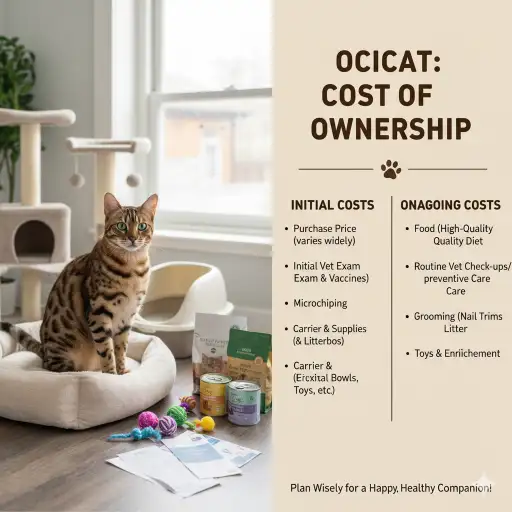
Owning an Ocicat can be a wonderful experience, but it comes with financial responsibilities that should not be underestimated. These cats are energetic, playful, and social, which means they need regular care, proper nutrition, and lots of attention. Understanding the true cost of ownership before bringing an Ocicat home can help you plan your budget and avoid unexpected financial stress. Many people focus only on the initial adoption fee, but there are ongoing and lifetime expenses that are just as important.
Ocicats are often purchased from breeders or adopted from rescues. Breeder prices can vary widely depending on the cat’s age, pedigree, and location. Adoption fees from shelters are usually lower but may still include initial vaccinations and spay/neuter. Beyond the purchase price, you also need to account for the basic setup of your home for a cat. This includes food, litter, toys, scratching posts, beds, and carriers. Without proper preparation, you might find yourself spending more later to catch up on these essential items.
Lifestyle choices also impact costs. An indoor Ocicat will typically have lower veterinary risks than an outdoor cat but may require more toys, climbing spaces, and interactive enrichment to stay active and healthy. Multiple-cat households will naturally see increased expenses for food, litter, and veterinary care. Understanding how your lifestyle and your cat’s needs affect cost is critical for planning responsibly.
Financial planning is not just about money. Time and attention are part of the cost of owning an Ocicat. These cats thrive on interaction and play, which means you need to allocate time for daily engagement. Owners who underestimate these needs may find themselves spending more on toys, enrichment tools, or professional pet sitting services. Considering both monetary and time commitments is essential for a realistic view of Ocicat ownership.
One-Time and Initial Expenses
Bringing an Ocicat into your home involves several one-time expenses that set the foundation for their care. The first is the adoption or purchase cost. Rescues generally charge a lower fee, often including vaccinations and spay/neuter. Breeders typically have higher prices, especially for pedigreed or show-quality cats. It is important to choose a reputable source to ensure your Ocicat is healthy and well-socialized.
Initial veterinary care is another essential cost. Even if your cat comes with vaccinations, you may need to schedule a wellness exam, spay or neuter surgery, and microchipping. Some owners also include basic lab tests to check for common conditions. These initial vet visits can be costly but provide a critical baseline for your cat’s long-term health.
Supplies for the first month are another unavoidable expense. You will need at least one litter box, a scratching post, a bed, food and water bowls, toys, and a carrier. Enrichment is especially important for Ocicats because they are active and intelligent. A cat without stimulation can develop behavioral issues, so investing in climbing structures and interactive toys early can save money and stress later.
Other small initial costs include grooming tools, collars, and first-month supplies such as food and litter. While these costs are often overlooked, they are necessary to ensure your cat is comfortable and safe. Planning ahead for these expenses helps avoid last-minute purchases at higher prices.
Typical One-Time Ocicat Costs
| Expense Category | Low Estimate | Average Estimate | High Estimate |
|---|---|---|---|
| Adoption/Purchase | $50 (Rescue) | $400 (Breeder) | $1,200 (Show-quality breeder) |
| Initial Vet Care | $100 | $250 | $500 |
| Spay/Neuter & Microchip | $100 | $200 | $350 |
| Starter Supplies | $150 | $300 | $600 |
| First-Month Essentials | $50 | $100 | $150 |
| Total One-Time Costs | $450 | $1,250 | $2,800 |
Ongoing Monthly and Annual Expenses
After the initial setup, Ocicat owners face ongoing monthly and annual expenses. Food is the largest recurring cost. These cats are active and need high-quality nutrition, often including a mix of wet and dry food. Premium diets cost more but can reduce health issues over time. You should also plan for treats and occasional supplements to support overall wellness.
Litter and litter accessories are another monthly expense. Most Ocicats use clumping litter, and multiple boxes are recommended for multi-cat households. Expect to replace litter regularly and clean boxes frequently to maintain hygiene. Other recurring costs include preventive medications for fleas, ticks, and parasites. These products help avoid costly health problems and are essential for indoor and outdoor cats alike.
Routine veterinary care adds to the budget. Wellness exams, vaccines, and dental care occur annually or semi-annually. Preventive care is cheaper than emergency care, so including it in your monthly planning is a smart investment. Grooming is generally minimal for Ocicats since they have short coats, but brushing, nail trimming, and occasional baths may be needed, especially for highly active or indoor cats.
Enrichment, toys, and replacement of worn-out supplies are part of monthly or annual costs. Interactive toys, scratching posts, and climbing furniture keep your Ocicat mentally stimulated and physically fit. Multi-cat households naturally require more food, litter, and supplies, so plan for incremental increases in these categories.
Monthly & Annual Ocicat Expenses
| Expense | Monthly Cost | Annual Cost |
|---|---|---|
| Food | $40 – $100 | $480 – $1,200 |
| Litter & Accessories | $15 – $50 | $180 – $600 |
| Preventive Medications | $10 – $30 | $120 – $360 |
| Routine Vet Care | $0 – $50 (monthly average) | $200 – $600 |
| Grooming & Supplies | $5 – $20 | $60 – $240 |
| Enrichment & Toys | $10 – $40 | $120 – $480 |
| Total Monthly / Annual | $80 – $290 | $1,160 – $3,480 |
Unexpected & Lifetime Costs to Plan For
Owning an Ocicat also comes with unexpected costs that can be significant. Illnesses, injuries, and aging-related health problems can arise at any time. Emergency veterinary visits and surgeries are often expensive and unpredictable. Even with preventive care, accidents and genetic conditions may occur, so setting aside an emergency fund is crucial.
Aging-related expenses increase as your cat grows older. Senior cats may need specialized diets, supplements, more frequent veterinary checkups, and potentially treatment for conditions like kidney disease or arthritis. These costs can add hundreds or even thousands of dollars to your lifetime budget. Planning for long-term health care is an important part of responsible ownership.
Lifestyle choices also affect lifetime costs. Indoor Ocicats typically face lower veterinary risks and fewer emergency expenses but need more enrichment and mental stimulation. Outdoor or partially outdoor cats are at higher risk of accidents, parasites, and infections, which increases medical costs. Multi-cat households also multiply expenses, as food, litter, and medical care are required for each additional cat.
It is important to consider hidden or forgotten costs. These can include boarding fees during travel, pet sitting, replacement of furniture or carpets damaged by scratching or play, and occasional upgrades to toys and climbing structures. Planning for these items in advance ensures that owning an Ocicat remains manageable and enjoyable throughout its life.
Lifetime Cost Estimates for an Ocicat (12-18 years)
| Cost Type | Low Estimate | Average Estimate | High Estimate |
|---|---|---|---|
| One-Time Costs | $450 | $1,250 | $2,800 |
| Monthly/Annual Costs | $1,160 | $2,320 | $3,480 |
| Unexpected / Emergencies | $500 | $2,000 | $5,000 |
| Total Lifetime Cost | $15,000 | $25,000 | $40,000 |
Practical Tips and Final Cost Summary
Managing Ocicat ownership costs responsibly requires careful planning and realistic budgeting. Tracking monthly expenses can help identify areas where money can be saved without compromising care. Buying food and litter in bulk, rotating toys instead of buying new constantly, and maintaining a preventative care schedule are effective strategies to keep costs predictable.
Budgeting for emergencies is just as important as routine expenses. Setting aside a dedicated fund for unexpected veterinary care or travel-related needs can prevent financial stress and ensure your cat receives timely medical attention when required. Owners should also research local veterinary costs and consider potential travel or boarding needs, especially if they live far from clinics.
The following table provides a one-page summary of all Ocicat ownership costs for quick reference. It can help potential owners quickly understand the financial commitment required.
Ocicat Ownership Cost Overview
| Cost Category | Low | Average | High |
|---|---|---|---|
| One-Time Costs | $450 | $1,250 | $2,800 |
| Monthly Expenses | $80 | $180 | $290 |
| Annual Costs | $1,160 | $2,320 | $3,480 |
| Lifetime Costs | $15,000 | $25,000 | $40,000 |
Owning an Ocicat can be a joyful and rewarding experience, but it is not without financial responsibilities. By understanding the full range of costs — from adoption to ongoing care and unexpected emergencies — you can make informed decisions and ensure your cat lives a happy, healthy life. Responsible planning ensures that both you and your Ocicat enjoy many years together without financial strain.
For more detailed guidance on Ocicat health and care, you can visit The International Cat Association for breed-specific resources and tips.

Ata Ur Rehman is the founder of Pet Age in Human Years Calculator, an educational platform that provides age conversion charts and lifespan guides for dogs, cats, birds, and other companion animals. His work focuses on helping pet owners understand how animal ages translate into human years using commonly accepted age conversion formulas and published lifespan averages.
The website compiles breed and species lifespan data from kennel clubs, breed organizations, and general animal lifespan studies to present simple and easy-to-understand guides for pet owners worldwide.
This website was created to centralize animal age conversion charts into one easy reference platform for pet owners.