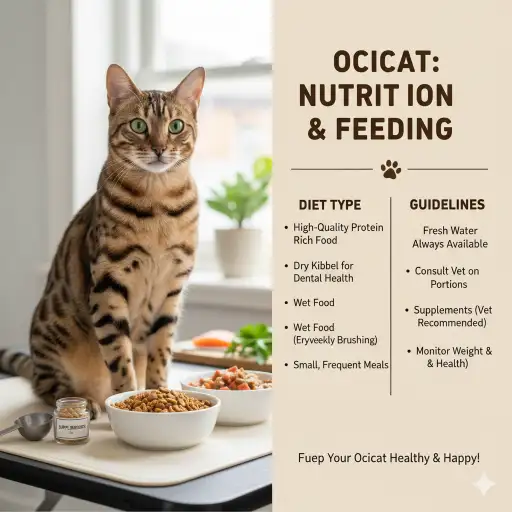
Ocicats are active, energetic cats that need a diet designed to support their muscular bodies and high metabolism. Like all cats, they are obligate carnivores, which means they rely on animal-based proteins for nearly all of their nutritional needs. Protein provides the building blocks for strong muscles, healthy skin, and a shiny coat. For Ocicats, high-quality protein sources such as chicken, turkey, fish, and beef are ideal. Protein not only helps with growth and maintenance but also keeps their energy levels stable throughout the day.
Fats are another critical part of an Ocicat’s diet. They provide energy and help absorb essential vitamins such as A, D, E, and K. Omega-3 and omega-6 fatty acids also support healthy skin and fur, which is important for a breed like the Ocicat that has a short, smooth, and shiny coat. However, fat must be balanced with protein and calories to prevent obesity, especially in indoor cats or those who are less active. High-quality animal fats are preferred over plant oils, which do not provide the same benefits for cats.
Carbohydrates are not essential for cats, but small amounts can be included in their diet. They are mainly used as a source of energy and fiber, which helps digestion. Ocicats generally do well with moderate carbs, but avoid feeding large amounts of grains or fillers, as these can lead to weight gain and digestive issues. The key is to choose foods where protein and fat remain the primary ingredients, while carbs serve a supporting role.
Micronutrients like taurine, arginine, and essential vitamins are critical for Ocicat health. Taurine, for example, is an amino acid that supports heart function, vision, and reproduction. Unlike some other species, cats cannot make taurine on their own, so it must be included in their diet. Vitamins and minerals, including calcium, phosphorus, and B-complex vitamins, are also vital to maintain strong bones, energy production, and overall health. Providing a diet formulated to meet these needs ensures that Ocicats remain healthy and active throughout their lives.
Choosing the Right Food for Your Ocicat
Choosing the right food for an Ocicat involves understanding the differences between wet, dry, and mixed feeding. Wet food has a high moisture content, which is excellent for hydration and urinary tract health. It is usually rich in protein and lower in carbohydrates, which matches the natural diet of cats. Dry food is convenient, can help keep teeth cleaner, and is easy to store. However, it often has higher carbohydrate content and lower moisture, so you may need to encourage water intake. Many owners find that combining wet and dry food provides the benefits of both types.
Reading food labels is a critical skill for Ocicat owners. Look for foods that list a high-quality animal protein as the first ingredient. Avoid foods with fillers such as corn, wheat, or soy at the top of the list, as these do not contribute much nutrition and can lead to weight gain. Check for added taurine and other essential vitamins and minerals to ensure a balanced diet. Foods formulated to meet AAFCO (Association of American Feed Control Officials) standards provide a reliable guideline for complete nutrition.
Life stage also matters when selecting food. Kittens need diets higher in protein and calories to support rapid growth, while adult Ocicats require maintenance diets to keep their lean body mass. Senior cats may need foods that are easier to digest and lower in calories to prevent weight gain. Always choose foods labeled for the appropriate life stage, and if your Ocicat has specific health issues, consult your veterinarian before making changes.
Treats can be a part of an Ocicat’s diet, but they should never replace balanced meals. Use them sparingly and choose treats that are low in carbohydrates and rich in protein. Treats should account for no more than 5–10% of daily caloric intake to prevent obesity. Remember that human foods like chocolate, onions, garlic, and grapes are toxic to cats and should never be given.
| Food Type | Moisture Content | Protein Content | Carb Content | Pros | Cons |
|---|---|---|---|---|---|
| Wet Food | 75–85% | High | Low | Hydrating, high protein, supports urinary health | Can be more expensive, needs refrigeration after opening |
| Dry Food | 6–10% | Moderate | Higher | Convenient, longer shelf life, may help with dental | Low moisture, higher carbs, risk of overeating |
| Mixed Feeding | Varies | Balanced | Balanced | Combines benefits of wet and dry | Requires portion control to avoid overfeeding |
Feeding Schedule & Portion Sizes
Ocicats do best with structured feeding schedules rather than free-feeding. Kittens usually need three to four meals a day because of their smaller stomachs and higher energy needs. Adults can often be fed twice a day, morning and evening, which helps maintain energy levels and prevents overeating. Senior cats may require smaller, more frequent meals, depending on their appetite and digestive health. Consistency is key, as cats thrive on routine.
Portion sizes depend on weight, activity level, and age. A highly active Ocicat may need more calories, while a less active or indoor cat requires less to maintain a healthy weight. Monitoring your cat’s body condition score is a practical way to adjust portions. Signs of overfeeding include a protruding belly or difficulty feeling the ribs, while underfeeding can lead to weight loss and dull coat. Adjust food gradually and observe changes in weight and energy.
It is important to understand calorie density. Some premium foods are very calorie-dense, meaning a small amount provides a lot of energy. Always follow feeding guidelines on the package as a starting point, but adjust based on your cat’s individual needs. Kittens may require double the caloric intake of an adult Ocicat, while older cats may need 20–30% fewer calories than younger adults.
Life stage affects both frequency and portion size. Kittens need higher protein and calorie intake, adults need maintenance, and seniors may require more easily digestible proteins and moderate calories. Avoid sudden changes in food quantity or type, as cats can be sensitive to abrupt diet changes, which may cause digestive upset.
| Life Stage | Meals Per Day | Typical Portion | Notes |
|---|---|---|---|
| Kitten (0–6 mo) | 3–4 | ¼–½ cup per meal (wet or dry equivalent) | High protein, high calorie |
| Adult (1–7 yr) | 2 | ½–¾ cup per meal | Maintenance diet, monitor weight |
| Senior (7+ yr) | 2–3 smaller meals | Adjust based on appetite | Easier-to-digest proteins, moderate calories |
Hydration & Special Feeding Considerations
Water is essential for all cats, including Ocicats. Proper hydration supports kidney and urinary tract health and helps digestion. While wet food contributes to water intake, many cats do not drink enough on their own. Providing multiple water bowls or using a cat water fountain encourages drinking. Observe your cat’s hydration by checking for moist gums and normal urination.
Indoor cats may need fewer calories than outdoor or highly active cats, so portion control is important to prevent weight gain. Spayed or neutered Ocicats often have slower metabolism, which also requires careful monitoring of food intake. Multi-cat households may require individual feeding stations to prevent competition and ensure each cat receives the proper amount of food.
Treats should be used carefully. Low-carb, protein-rich treats are ideal, and they should be included in the daily caloric count. Avoid human foods that can be toxic to cats, such as chocolate, garlic, onions, and alcohol. If your Ocicat has health concerns such as diabetes, kidney issues, or digestive sensitivities, consult your veterinarian for tailored advice.
| Special Consideration | Feeding Tip |
|---|---|
| Indoor cat | Reduce calorie-dense foods, monitor weight |
| Spayed/neutered | Adjust portions due to slower metabolism |
| Multi-cat household | Use separate feeding stations |
| Senior cat | Provide easily digestible protein, smaller meals |
Common Feeding Mistakes & Practical Tips
Many Ocicat owners make simple mistakes that can affect their cat’s health. Overfeeding is one of the most common issues, especially with free-feeding dry food. This can lead to obesity, joint stress, and other health problems. Underfeeding or relying solely on low-quality foods can lead to nutrient deficiencies, dull coat, and low energy. Avoid drastic diet changes without gradual transition, as cats have sensitive digestive systems.
Ignoring the importance of hydration is another frequent mistake. Cats may appear healthy but can develop urinary or kidney problems if they do not get enough water. Combining wet and dry foods, providing fresh water, and monitoring intake helps prevent this. Over-reliance on treats can also add extra calories without nutrition, so treats should remain occasional.
Skimming food labels is another common problem. Always choose foods with high-quality animal protein as the first ingredient and ensure taurine and essential nutrients are included. Avoid foods that rely on fillers, by-products, or high-carb ingredients. Premium, balanced cat foods formulated for Ocicats or active adult cats are ideal.
Practical tips for owners include observing your Ocicat’s body condition, energy levels, and coat quality. Regularly weighing your cat, adjusting portions as needed, and keeping a consistent feeding schedule promotes health. When in doubt, consult a veterinarian to ensure your cat’s diet meets all nutritional needs.
| Common Mistake | Practical Tip |
|---|---|
| Overfeeding | Measure portions, avoid free-feeding |
| Underfeeding / poor nutrition | Choose high-protein, balanced foods |
| Ignoring water intake | Provide wet food and multiple water sources |
| Treat overuse | Keep treats under 10% of daily calories |
| Skipping life-stage adjustments | Feed age-appropriate foods for kittens, adults, seniors |
For more detailed feeding guidelines and cat nutrition advice, visit WSAVA Global Nutrition Guidelines.

Ata Ur Rehman is the founder of Pet Age in Human Years Calculator, an educational platform that provides age conversion charts and lifespan guides for dogs, cats, birds, and other companion animals. His work focuses on helping pet owners understand how animal ages translate into human years using commonly accepted age conversion formulas and published lifespan averages.
The website compiles breed and species lifespan data from kennel clubs, breed organizations, and general animal lifespan studies to present simple and easy-to-understand guides for pet owners worldwide.
This website was created to centralize animal age conversion charts into one easy reference platform for pet owners.