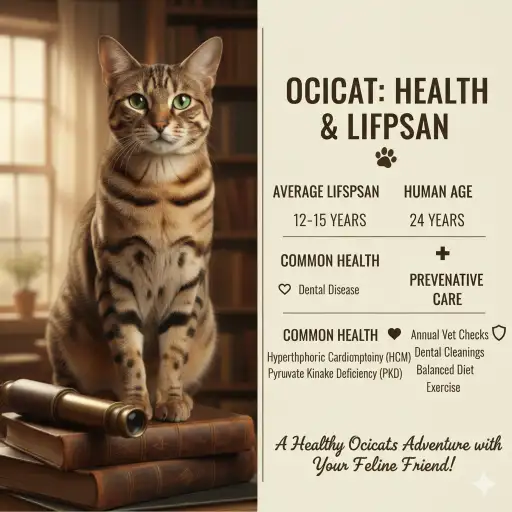
Ocicats are a lively and social breed known for their spotted coat and playful personality. While they look exotic, their temperament is friendly and affectionate, making them excellent companions for families and single owners alike. Understanding the health and lifespan of Ocicats helps owners provide the best care and ensure a long, happy life for their pet. This guide covers common health concerns, preventive care, warning signs, and lifestyle practices to help your Ocicat thrive. It is meant for educational purposes and should not replace professional veterinary advice.
On average, an indoor Ocicat can live between 12 and 16 years, although some cats may reach 18 years or more with proper care. Outdoor cats generally have shorter lifespans due to accidents, infections, and environmental risks. Life expectancy depends on several factors, including genetics, diet, activity level, preventive care, and early detection of health issues. Understanding these factors helps owners set realistic expectations and plan for their cat’s long-term wellbeing.
The lifespan of an Ocicat can also vary depending on their life stage. Kittens require careful nutrition and socialization, while adults need balanced diets and regular exercise. Senior cats may face age-related changes such as reduced mobility, dental wear, and declining organ function. Recognizing these life stages and adapting care accordingly can improve quality of life and longevity.
Genetics play a role in lifespan as well. While Ocicats are generally healthy, some may inherit conditions like heart disease or kidney concerns. Keeping track of your cat’s family history, if known, and maintaining regular veterinary checkups can help detect issues early. Environmental safety, mental stimulation, and preventive measures like vaccinations and parasite control are equally important in supporting a long, healthy life.
Common Health Issues in Ocicats
Ocicats are usually robust, but there are some health conditions that owners should be aware of. The most common concerns include heart disease, kidney problems, dental disease, obesity, and certain genetic conditions. Understanding these issues helps owners take proactive steps to maintain their cat’s wellbeing.
Heart disease, particularly hypertrophic cardiomyopathy (HCM), is one of the main concerns in Ocicats. This condition involves thickening of the heart muscles, which can affect blood flow. Early detection through routine veterinary exams can help manage the condition and support a healthier life. Kidney disease, including renal amyloidosis, is another age-related concern that can impact an Ocicat’s overall health. Monitoring water intake, litter box habits, and regular blood work are key preventive measures.
Dental and oral health are often overlooked but are crucial for longevity. Ocicats are prone to periodontal disease, which can cause pain, difficulty eating, and secondary health problems. Regular dental checkups, proper oral hygiene, and monitoring for bad breath or gum inflammation can prevent more serious issues. Obesity is another common concern. Overweight cats are more likely to develop diabetes, arthritis, and heart problems. Maintaining a healthy weight through portion control, a balanced diet, and active play is essential.
Genetic conditions such as Progressive Retinal Atrophy (PRA) and Pyruvate Kinase (PK) Deficiency can also affect Ocicats, although they are less common. These conditions may impact vision or red blood cell function, and knowledge of family history can help owners monitor for early signs. The table below summarizes common Ocicat health concerns.
| Condition | Typical Onset Age | Key Points for Owners | Preventive Tips |
|---|---|---|---|
| Hypertrophic Cardiomyopathy (HCM) | 3–7 years | Heart muscle thickening, may be silent | Regular vet exams, echocardiogram if recommended |
| Kidney Disease / Renal Amyloidosis | 7+ years | Reduced kidney function, increased thirst | Monitor water intake, routine blood tests |
| Dental / Periodontal Disease | Any age | Pain, bad breath, tooth loss | Regular dental checkups, brushing if tolerated |
| Obesity / Metabolic Issues | Any age | Increased risk of diabetes, arthritis | Portion control, balanced diet, playtime |
| Progressive Retinal Atrophy (PRA) | Early adulthood | Vision decline over time | Eye exams, monitor for changes |
| Pyruvate Kinase (PK) Deficiency | Variable | Red blood cell problems, anemia | Vet monitoring, awareness of genetic history |
Preventive Care and Daily Health Practices
Preventive care is the cornerstone of a long and healthy life for Ocicats. Routine veterinary visits allow early detection of potential issues before they become serious. Vaccinations protect against common infections, while parasite prevention safeguards against fleas, ticks, and intestinal worms. Regular wellness exams are especially important as your cat enters adult and senior life stages.
Diet and weight management are equally crucial. Ocicats are active cats that require high-quality nutrition to maintain lean muscle and energy. Portion control and monitoring for gradual weight changes help prevent obesity and related health problems. Including a mix of wet and dry food can support hydration and dental health, though preferences may vary by individual cat.
Daily health practices also include mental and physical enrichment. Ocicats are intelligent and curious, and lack of stimulation can lead to stress and obesity. Interactive toys, climbing structures, and short play sessions support mental health, exercise, and overall wellbeing. Grooming is another preventive step. Brushing the coat helps prevent matting and allows early detection of skin changes, lumps, or parasites.
The table below outlines routine preventive actions for Ocicat owners.
| Health Action | Recommended Frequency | Notes |
|---|---|---|
| Veterinary wellness exam | Every 6–12 months | More frequent for seniors |
| Vaccinations | As recommended by vet | Core vaccines and lifestyle-based boosters |
| Dental checkup | Once per year | Brushing at home if possible |
| Parasite prevention | Year-round | Flea, tick, worm control |
| Weight monitoring | Monthly | Track for gradual gains or losses |
| Coat brushing | Weekly | Inspect skin for abnormalities |
| Play / mental stimulation | Daily | At least 15–30 min sessions |
Signs of Health Problems in Your Ocicat
Recognizing early signs of health issues can improve outcomes and reduce complications. Ocicats may show subtle changes in behavior or physical appearance before a condition becomes serious. Observing these changes closely helps owners decide when to contact a veterinarian.
Changes in appetite or water intake can indicate digestive, kidney, or metabolic issues. Lethargy or hiding may signal discomfort, pain, or illness. Mobility changes, such as limping or stiffness, can be signs of arthritis or injury. Oral health issues may manifest as difficulty eating, drooling, or bad breath. Even minor skin changes, like redness, hair loss, or lumps, should be monitored.
A simple checklist can help owners track warning signs:
- Appetite changes (increase or decrease)
- Excessive thirst or urination
- Lethargy or unusual sleeping patterns
- Difficulty jumping or climbing
- Grooming less frequently or coat deterioration
- Bad breath, drooling, or pawing at the mouth
- Behavioral changes such as irritability or hiding
| Warning Sign | Possible Concern | Suggested Action |
|---|---|---|
| Increased thirst | Kidney disease, diabetes | Monitor water intake, vet check |
| Loss of appetite | Digestive, dental, systemic issues | Track food intake, consult vet |
| Lethargy / hiding | Pain, illness, stress | Observe closely, schedule exam |
| Limping / stiffness | Arthritis, injury | Minimize activity, vet evaluation |
| Bad breath / drooling | Dental disease | Dental checkup |
| Coat or skin changes | Parasites, allergies | Grooming, vet visit if persistent |
Maximizing Ocicat Health and Longevity
Lifestyle, diet, and environment are critical factors in extending an Ocicat’s healthy years. Providing a stimulating and safe environment supports both physical and mental wellbeing. Interactive play, climbing structures, and puzzle feeders can keep your cat active and engaged.
Balanced nutrition tailored to life stage supports energy needs and maintains a healthy weight. Wet food can help with hydration, while high-quality protein supports muscle tone. Portion control prevents obesity and associated conditions like diabetes and arthritis. Treats should be limited and factored into daily calorie intake.
Regular veterinary care is essential. Routine exams, vaccinations, parasite control, and dental care allow early detection of problems. Senior cats benefit from more frequent monitoring as age-related changes can be subtle. Keeping detailed observations about appetite, weight, behavior, and litter box habits helps veterinarians identify issues quickly.
Environmental enrichment and social interaction are also important. Ocicats are social and thrive on companionship and attention. A combination of mental stimulation, play, and calm resting areas reduces stress, supports immune function, and contributes to a longer, happier life.
| Longevity Factor | Tips for Ocicat Owners |
|---|---|
| Nutrition | High-quality, balanced diet, monitor weight |
| Exercise | Daily play, climbing toys, interactive games |
| Veterinary Care | Wellness exams, vaccines, parasite control |
| Oral Health | Annual dental checkups, brushing if tolerated |
| Mental Enrichment | Toys, puzzle feeders, social interaction |
| Safe Environment | Indoor or supervised outdoor access, hazard prevention |
By following preventive care routines, monitoring for subtle warning signs, providing mental and physical stimulation, and maintaining regular veterinary contact, owners can help their Ocicats live a long and fulfilling life. Even minor lifestyle adjustments can have a major impact on health and happiness. Every Ocicat is unique, and attentive care tailored to your cat’s personality, age, and activity level is the most effective way to support longevity.
For further detailed information about Ocicat care, health, and breed-specific considerations, visit WebMD Pets – Ocicat Overview.

Ata Ur Rehman is the founder of Pet Age in Human Years Calculator, an educational platform that provides age conversion charts and lifespan guides for dogs, cats, birds, and other companion animals. His work focuses on helping pet owners understand how animal ages translate into human years using commonly accepted age conversion formulas and published lifespan averages.
The website compiles breed and species lifespan data from kennel clubs, breed organizations, and general animal lifespan studies to present simple and easy-to-understand guides for pet owners worldwide.
This website was created to centralize animal age conversion charts into one easy reference platform for pet owners.