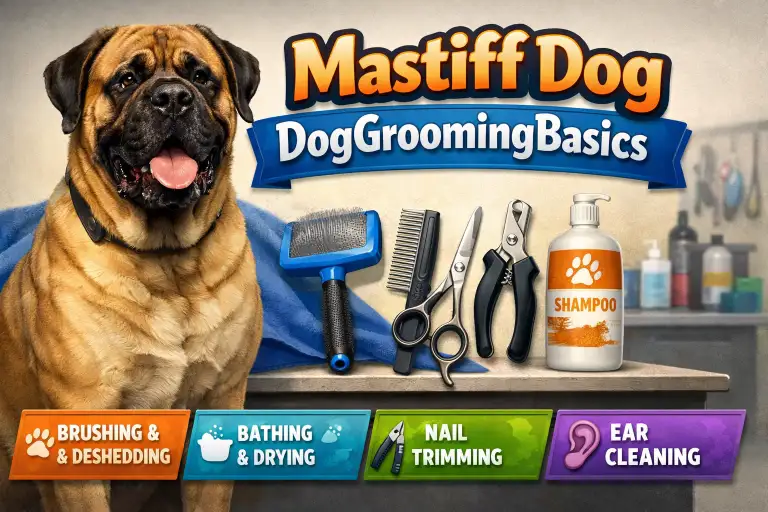
Mastiffs may have short coats, but that does not mean they are low-maintenance dogs. Their massive size, dense coat, loose skin, droopy features, and tendency to drool create grooming needs that are very different from smaller or lighter-built breeds. Understanding why grooming matters is the first step to keeping a Mastiff comfortable, healthy, and manageable at home.
This guide is designed to help Mastiff owners build a realistic grooming routine that fits the breed’s physical structure and skin needs. Whether you are new to Mastiffs or upgrading your current routine, proper grooming goes far beyond appearance—it directly affects hygiene, skin health, joint comfort, and even behavior.
Mastiffs produce natural skin oils that spread across a short but dense coat. When these oils are not managed through regular brushing and bathing, they can lead to odor, clogged pores, dandruff, and skin irritation. Their heavy bodies also create friction points at the elbows, chest, and armpits, areas that are prone to calluses, thinning hair, and hot spots if grooming is neglected.
Another major factor is skin folds. Many Mastiffs have loose facial skin, neck folds, and wrinkles that trap moisture, saliva, and debris. Without routine cleaning, these areas become ideal environments for yeast and bacterial overgrowth. Grooming helps keep these sensitive zones dry, clean, and healthy.
Grooming also plays a key role in early health detection. While brushing, bathing, or trimming nails, owners often notice changes such as lumps, rashes, sores, excessive shedding, or sensitivity that might otherwise go unnoticed. Catching these issues early can prevent painful skin infections or more serious veterinary problems.
Finally, grooming supports a Mastiff’s comfort and mobility. Overgrown nails put extra strain on joints in an already heavy breed, while dirty ears and poor dental hygiene can contribute to chronic infections. A consistent grooming routine reduces stress, improves handling tolerance, and makes professional grooming or veterinary visits much easier over time.
Mastiff Coat Type, Shedding, and Grooming Frequency
Mastiffs have a short coat, but it is thick and heavy for their size. This coat protects their skin, but it also sheds more than many owners expect. Because Mastiffs are large dogs, even normal shedding can feel like a lot of hair around the house. Knowing how their coat works makes grooming much easier and more effective.
Most Mastiffs have a short, dense coat with a soft underlayer. This means they shed lightly all year and more heavily during seasonal coat changes, usually in spring and fall. Short hair also shows dirt, oil, and odor faster than long hair, especially on such a big body. Regular grooming helps control shedding, keeps the skin clean, and reduces smell.
Many owners think short-coated dogs do not need much grooming. This is one of the biggest mistakes with Mastiffs. Without brushing and basic care, dead hair builds up, skin oils become uneven, and irritation can start under the coat.
Below are two quick tables to help you understand how often to groom your Mastiff and what to expect during shedding seasons.
Mastiff Grooming Frequency Guide
| Grooming Task | How Often | Why It Matters for Mastiffs | Common Owner Mistake |
|---|---|---|---|
| Brushing | 1–2 times per week | Removes loose hair and spreads skin oils | Brushing only during heavy shedding |
| Bathing | Every 6–8 weeks | Controls odor without drying skin | Bathing too often |
| Nail trimming | Every 3–4 weeks | Prevents joint strain in heavy dogs | Waiting until nails are very long |
| Ear cleaning | Every 2–4 weeks | Reduces risk of infection | Cleaning only when ears smell |
| Teeth cleaning | 2–3 times per week | Supports oral health in large breeds | Ignoring dental care completely |
This schedule works for most healthy adult Mastiffs. Puppies, seniors, and dogs with skin problems may need small changes, which we will cover later.
Mastiff Shedding Patterns by Season
| Season | Shedding Level | What Owners Usually Notice | What Helps Most |
|---|---|---|---|
| Spring | High | Large amounts of loose hair | More brushing |
| Summer | Low to moderate | Short hairs on floors | Weekly brushing |
| Fall | High | Coat feels thicker again | Brushing plus baths |
| Winter | Low | Less shedding indoors | Basic maintenance |
Seasonal shedding is normal and healthy. It does not mean something is wrong. Regular brushing during these times keeps hair under control and helps the new coat grow in evenly.
Understanding your Mastiff’s coat and grooming needs makes the rest of grooming much easier. When you follow the right schedule, grooming feels faster, cleaner, and less stressful for both you and your dog.
How to Groom a Mastiff at Home: Brushing, Bathing, and Tools
Grooming a Mastiff at home can be simple if you use the right tools and follow an easy routine. Because Mastiffs are large and strong, it is best to keep grooming calm and short. Slow, gentle steps work better than rushing.
Brushing is the most important part of Mastiff grooming. It removes loose hair, spreads natural skin oils, and helps reduce odor. Most Mastiffs enjoy brushing when it is done gently. Brush in the direction the hair grows and take extra care around the chest, shoulders, and hips, where hair often builds up.
Bathing should not be done too often. Mastiff skin can dry out if bathed too much. A bath every 6 to 8 weeks is enough for most dogs. Use warm water, not hot. Make sure the coat is fully wet before adding shampoo. Rinse very well, because leftover soap can cause itching. Dry your Mastiff completely with towels, and let them air dry in a warm space.
Drying is important for such a big dog. Wet skin folds and thick areas can trap moisture and lead to skin problems. Always dry the neck, chest, and under the legs carefully.
Using the correct tools makes grooming easier and safer. You do not need many items, but each one should be the right type for a Mastiff.
Best Grooming Tools for Mastiffs
| Tool | What It Is Used For | Why It Works Well for Mastiffs | How Often to Use |
|---|---|---|---|
| Rubber brush | Removes loose hair | Gentle on short coats | 1–2 times per week |
| Bristle brush | Smooths coat and spreads oils | Helps with shine and odor | Weekly |
| Mild dog shampoo | Cleans skin and coat | Protects skin oils | Every 6–8 weeks |
| Large towels | Drying after baths | Absorbs water fast | After every bath |
| Nail clippers or grinder | Nail trimming | Handles thick nails | Every 3–4 weeks |
Avoid human shampoos or harsh soaps. Dog skin is more sensitive, and the wrong product can cause dryness or itching.
When grooming at home, always watch your Mastiff’s behavior. If they seem nervous or tired, take a break. Calm grooming builds trust and makes future sessions easier.
Mastiff Nail Trimming, Ear Cleaning, Dental Care, and Skin Health
This part of grooming is often skipped, but it is very important for Mastiffs. Because they are heavy dogs, small problems can turn into painful issues if ignored. A little care every month can prevent big health troubles later.
Nail trimming helps Mastiffs walk and stand comfortably. Long nails push the toes back and put stress on the joints. You may hear clicking sounds on the floor when nails are too long. Trim a small amount at a time, or use a nail grinder if your dog is nervous. If you are unsure, a groomer or vet can show you how to do it safely.
Ear cleaning helps prevent infections. Mastiff ears can trap dirt and moisture, especially if they drool a lot or play outside often. Clean ears gently with a dog-safe ear cleaner. Never push cotton swabs deep into the ear. If you notice a strong smell, redness, or dark discharge, stop cleaning and contact a vet.
Dental care is also important for Mastiffs. Large breeds are prone to plaque and gum disease. Brushing your dog’s teeth a few times a week helps keep the mouth healthy and reduces bad breath. Use only dog toothpaste, never human toothpaste.
Skin care matters because Mastiffs often have loose skin and folds. These areas can stay damp and collect dirt. Clean and dry skin folds during regular grooming. Watch for redness, sores, or a bad smell, which can be early signs of infection.
The table below shows common warning signs Mastiff owners should watch for during grooming.
Mastiff Grooming Warning Signs
| Area | Normal Signs | Warning Signs | What It May Mean |
|---|---|---|---|
| Nails | Short, smooth tips | Clicking, curling | Nails too long |
| Ears | Light smell, clean | Strong odor, redness | Ear infection |
| Teeth | Pink gums | Red gums, bad breath | Dental disease |
| Skin folds | Dry and clean | Red, wet, sore | Skin infection |
| Coat | Shiny, smooth | Bald spots, itching | Skin problem |
If you see warning signs early, you can often prevent serious problems. Grooming time is a good chance to check your Mastiff’s whole body and notice small changes.
Mastiff Grooming Tips, Mistakes to Avoid, and When to See a Professional
Mastiffs are calm dogs, but their size makes grooming mistakes more serious than with smaller breeds. Simple errors can lead to pain, skin problems, or stress for your dog. Knowing what to avoid is just as important as knowing what to do.
One common mistake is bathing too often. Frequent baths remove natural skin oils and can cause dry, itchy skin. Another mistake is skipping brushing because the coat is short. Loose hair, dirt, and oil still build up and need regular removal. Many owners also delay nail trimming, which can cause joint pain in such a heavy dog.
Some Mastiffs do not enjoy grooming at first. Pulling, rushing, or forcing grooming can make this worse. Calm handling, short sessions, and rewards help your dog stay relaxed. Grooming should feel safe and predictable.
There are times when home grooming is not enough. Very thick nails, severe shedding, skin infections, or heavy drooling around skin folds may need professional help. Groomers have strong tools and experience with large dogs. Vets are needed if you notice pain, swelling, sores, or strong smells that do not go away.
The table below shows common Mastiff grooming mistakes and the better choice.
Common Mastiff Grooming Mistakes
| Mistake | Why It Is a Problem | Better Choice |
|---|---|---|
| Bathing every week | Dries out skin | Bathe every 6–8 weeks |
| Not brushing | Loose hair builds up | Brush weekly |
| Skipping nail trims | Joint pain and posture issues | Trim every 3–4 weeks |
| Using human shampoo | Skin irritation | Use dog shampoo only |
| Ignoring skin folds | Infection risk | Clean and dry folds |
Mastiff puppies need gentle grooming to build trust. Senior Mastiffs may need shorter sessions and more joint support. Seasonal shedding also means brushing more often in spring and fall.
For more detailed guidance on canine skin health and grooming tips, visit the American Kennel Club’s official grooming page: https://www.akc.org/dog-care/grooming/

Ata Ur Rehman is the founder of Pet Age in Human Years Calculator, an educational platform that provides age conversion charts and lifespan guides for dogs, cats, birds, and other companion animals. His work focuses on helping pet owners understand how animal ages translate into human years using commonly accepted age conversion formulas and published lifespan averages.
The website compiles breed and species lifespan data from kennel clubs, breed organizations, and general animal lifespan studies to present simple and easy-to-understand guides for pet owners worldwide.
This website was created to centralize animal age conversion charts into one easy reference platform for pet owners.