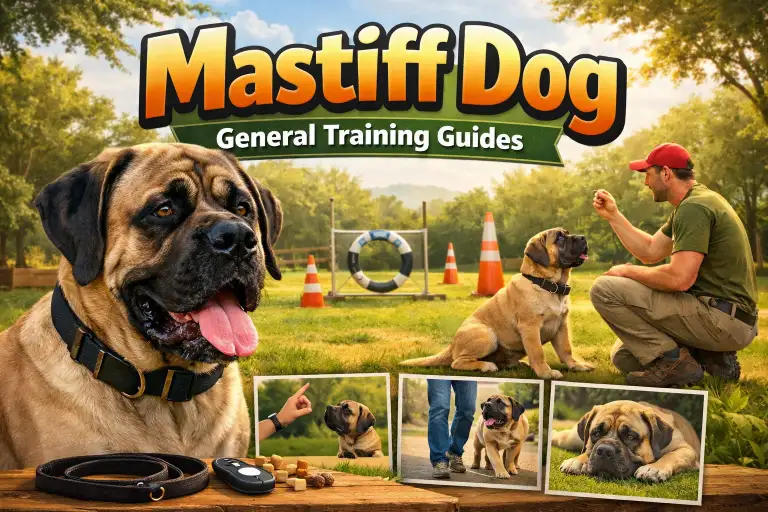
Mastiff dog training is not about speed, dominance, or forcing obedience—it’s about guiding a powerful, thoughtful, and emotionally sensitive giant into calm, reliable behavior. Mastiffs mature slowly, think deeply before acting, and rely heavily on trust in their handler. When training is done correctly, they become some of the most stable, well-mannered family dogs you can live with. When it’s rushed or inconsistent, even small behavior gaps can turn into serious problems simply because of their size.
This guide is designed for real Mastiff owners—whether you’re raising a Mastiff puppy, working with an adolescent testing boundaries, or training an adult Mastiff who never had proper structure. The principles here apply to English Mastiffs, Bullmastiffs, Tibetan Mastiffs, and other Mastiff-type breeds that share similar temperament traits: calm but powerful, loyal yet independent, gentle but physically overwhelming if untrained.
Unlike high-energy working breeds, Mastiffs don’t respond well to repetitive drilling, harsh corrections, or emotional training styles. They need clear rules, short focused sessions, and calm consistency. Training success comes from teaching them how to move through the world politely—not from trying to overpower or rush them.
If you approach Mastiff training with patience, structure, and realistic expectations, you’ll build a dog that is confident at home, controlled in public, and safe to handle in any situation. This guide will show you how to do exactly that—step by step, without gimmicks, shortcuts, or unsafe advice
Understanding Mastiff Behavior and Temperament
To train a Mastiff well, you must first understand how they think and feel. Many training problems happen not because the dog is “bad,” but because owners expect Mastiffs to behave like faster, high-energy breeds. Mastiffs are calm, slow-moving, and very observant. They often pause before responding, which can look like stubbornness, but in most cases, they are simply processing what you asked.
Mastiffs are also very sensitive dogs. Loud voices, harsh corrections, or angry body language can make them shut down or lose trust. Once trust is damaged, training becomes much harder. These dogs learn best when the owner stays calm, clear, and steady.
Another important trait is their protective nature. Mastiffs are not aggressive by default, but they are naturally alert and loyal to their family. Without proper guidance, this can turn into guarding behavior or fear-based reactions, especially around strangers or new places. Good training helps them learn what is normal and what is not.
Behavior also changes with age. Mastiff puppies are curious but clumsy. Adolescents may test limits and ignore commands they already know. Adult Mastiffs are usually calmer but can develop bad habits if they were never trained early. Training must match the dog’s life stage.
The table below helps explain common Mastiff traits and how they affect training.
| Mastiff Trait | What Many Owners Think | What It Really Means for Training |
|---|---|---|
| Calm and quiet | “Proactive lazy” | Saves energy, learns slowly but remembers well |
| Independent | “Stubborn” | Needs motivation, not force |
| Large and strong | “Hard to control” | Needs early body control and manners |
| Protective | “Aggressive” | Needs safe social exposure and guidance |
| Sensitive | “Hard-headed” | Responds best to calm, gentle training |
Understanding these traits helps you train with your Mastiff, not against them. When owners adjust their expectations, training becomes smoother and far less stressful for both dog and human.
Step-by-Step Mastiff Training Basics
Training a Mastiff works best when it is simple, calm, and short. These dogs do not learn faster if you repeat commands many times or train for long hours. In fact, too much training can make them tired, bored, or confused. A few good minutes done the right way is enough.
Start with clear house rules. Decide where your Mastiff is allowed to sit, sleep, and walk. Everyone in the home must follow the same rules. Mastiffs get confused if one person allows a behavior and another person corrects it.
Use food rewards and calm praise. Mastiffs respond well to treats, but timing matters. Give the reward right after the dog does the correct behavior. Speak in a normal, relaxed voice. Loud excitement can make them shut down or ignore you.
Keep training sessions short. Stop before your Mastiff gets tired. Ending early helps the dog remember training as a positive experience.
The table below shows basic training guidelines that work well for most Mastiffs.
| Training Part | What Works Best for Mastiffs |
|---|---|
| Session length | 5 to 10 minutes |
| Sessions per day | 1 to 2 |
| Best rewards | Soft treats and calm praise |
| Learning speed | Slow but steady |
| Progress timeline | Improvement in weeks, not days |
Focus first on basic skills like sit, down, stay, and coming when called. Teach loose leash walking early. A Mastiff that pulls can become hard to handle very quickly because of its size. Walk slowly, reward when the leash stays loose, and stop moving if the dog pulls.
Socialization is also important. Introduce your Mastiff to new people, places, and sounds in a controlled and calm way. Do not force greetings. Let your dog observe first, then reward calm behavior.
Training is not about control. It is about teaching your Mastiff how to behave safely and politely in everyday life.
Common Mastiff Training Problems and Fixes
Many Mastiff owners feel frustrated when their dog seems to “know” a command but does not follow it. In most cases, this is not disobedience. Mastiffs often move slowly, think before acting, and respond only when things are clear and consistent. Understanding this can prevent anger and unsafe training choices.
One common problem is pulling on the leash. Because Mastiffs are large and strong, pulling can quickly become dangerous. This usually happens when the dog has never learned leash manners or when the owner tries to correct pulling using strength. Mastiffs learn better when walking is slow and calm, and rewards are given when the leash stays loose.
Another issue is slow response or selective listening. Repeating commands again and again teaches the dog to wait instead of respond. Saying the command once, waiting, and then rewarding the correct action works much better.
Jumping and leaning are also common. Many people ignore this behavior because Mastiffs are gentle, but leaning can knock people over. Teaching body control early helps prevent accidents as the dog grows.
Some Mastiffs show guarding behavior or fear in new places. Punishing these reactions can make them worse. Calm guidance, space, and slow exposure help the dog feel safe and confident.
The table below shows common Mastiff training problems and simple fixes.
| Training Problem | Common Owner Mistake | Better Fix |
|---|---|---|
| Pulling on leash | Pulling back or yelling | Stop walking, reward loose leash |
| Not responding | Repeating commands | Say once, wait, reward response |
| Jumping or leaning | Ignoring the behavior | Teach calm greeting and body control |
| Guarding behavior | Punishment | Calm guidance and controlled exposure |
| Fear in new places | Forcing interaction | Let dog observe and reward calm |
Most training problems improve when owners slow down, stay calm, and stay consistent. Mastiffs learn best when they feel safe and understood.
When to Get Professional Help for Mastiff Training
Some training problems cannot be fixed with home training alone. Because Mastiffs are very large and powerful dogs, waiting too long can create safety risks for the dog, the owner, and other people. Getting help early is always better than trying to fix serious problems later.
If your Mastiff growls, snaps, or shows strong guarding behavior, this is not something to ignore. These signs do not mean your dog is “bad,” but they do mean the dog is stressed, afraid, or confused. A professional trainer can help find the cause and guide you safely.
Another warning sign is no progress after weeks of steady training. If you are training calmly and consistently, but behavior does not improve after about six to eight weeks, it may be time for expert support. Some Mastiffs need hands-on guidance, especially adult dogs with no early training.
It is important to choose a trainer who has experience with giant breeds. Training a Mastiff is different from training a small or fast dog. In some cases, a veterinary behaviorist may be needed, especially if fear or anxiety is involved.
The table below helps you decide when professional help is needed.
| Situation | What to Do |
|---|---|
| Growling or snapping | Contact a professional trainer immediately |
| Resource guarding | Trainer and possible behaviorist |
| Fear-based reactions | Vet behavior consultation |
| No progress after 6–8 weeks | Reassess training with an expert |
| Safety concerns due to size | Do not wait, get help early |
Professional help is not a failure. It is a responsible choice that protects your Mastiff and everyone around them.
For more detailed guidance on giant breed training techniques, you can visit the American Kennel Club’s official Mastiff page: https://www.akc.org/dog-breeds/mastiff/

Ata Ur Rehman is the founder of Pet Age in Human Years Calculator, an educational platform that provides age conversion charts and lifespan guides for dogs, cats, birds, and other companion animals. His work focuses on helping pet owners understand how animal ages translate into human years using commonly accepted age conversion formulas and published lifespan averages.
The website compiles breed and species lifespan data from kennel clubs, breed organizations, and general animal lifespan studies to present simple and easy-to-understand guides for pet owners worldwide.
This website was created to centralize animal age conversion charts into one easy reference platform for pet owners.