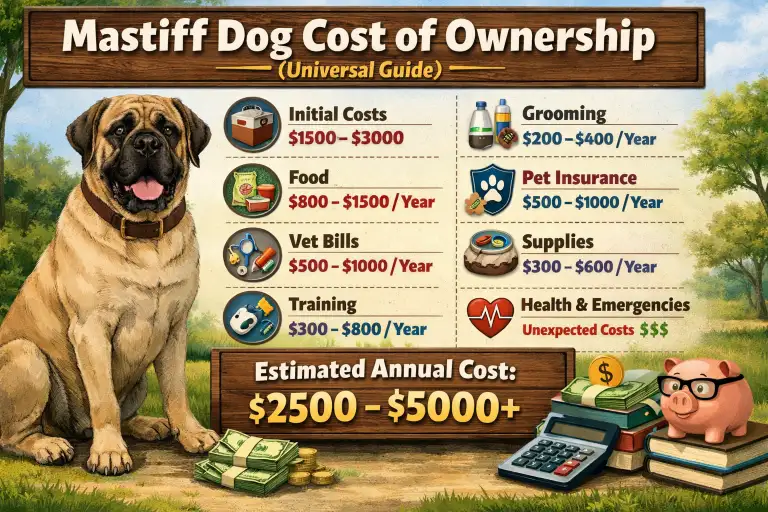
Owning a Mastiff is a major financial commitment, not just because they are large dogs, but because size multiplies every cost category—food, veterinary care, supplies, travel, and even emergencies. Many people ask, “Are Mastiffs expensive to own?” The honest answer is yes, especially compared to medium or small breeds—but how expensive depends on preparation, location, and health factors.
Most future owners underestimate Mastiff costs by focusing only on food or the purchase price. In reality, the first year is the most expensive, ongoing monthly costs are higher than average, and lifetime expenses can easily reach six figures over the dog’s lifespan.
To set clear expectations from the start, here’s a high-level financial snapshot before we break everything down in detail.
Quick Mastiff Cost Overview
| Cost Period | Typical Cost Range (USD) | What This Includes |
|---|---|---|
| First year | $5,000 – $9,000+ | Purchase/adoption, initial vet care, supplies, food, training |
| Average annual cost (after year one) | $3,000 – $6,000 | Food, routine vet care, preventatives, grooming, training |
| Estimated lifetime cost (8–10 years) | $25,000 – $50,000+ | All routine care plus emergencies and age-related health costs |
These numbers assume responsible care, not luxury spending—and they can climb significantly if your Mastiff develops joint issues, experiences bloat, or requires long-term medication.
Why Mastiffs cost more than most dogs:
- Giant-breed calorie needs dramatically increase food costs
- Veterinary procedures are more expensive due to size, anesthesia risk, and medication dosing
- Emergency care (especially bloat surgery) can cost several thousand dollars in a single visit
- Large supplies, crates, beds, and travel accommodations cost more and wear out faster
This guide is designed to show exactly where the money goes, how costs change over time, and how to budget realistically—so there are no financial surprises after bringing a Mastiff home.
First-Year Costs of Owning a Mastiff
The first year of owning a Mastiff is usually the most expensive year. This is when you pay for the dog itself, all the medical basics, and the large supplies needed for a giant breed. Many new owners are surprised by how fast these costs add up.
Whether you buy a Mastiff puppy or adopt an adult dog makes a big difference, but both options still require a serious budget.
Mastiff First-Year Cost Breakdown
| Expense Category | Typical Cost Range (USD) | Why It Costs This Much |
|---|---|---|
| Puppy price or adoption fee | $500 – $3,500 | Breeder quality, bloodline, or rescue fees |
| Initial vet visits & vaccines | $300 – $800 | Exams, shots, parasite checks |
| Spay or neuter surgery | $300 – $700 | Higher cost due to giant size and anesthesia |
| Microchip & licensing | $50 – $100 | One-time identification and legal fees |
| Food (first year) | $1,000 – $1,800 | Large portions and giant-breed formulas |
| Training & socialization | $200 – $600 | Puppy classes or basic obedience |
| Supplies & setup | $400 – $1,000 | Crate, bed, bowls, leash, toys |
| Estimated first-year total | $5,000 – $9,000+ | Can be higher with health issues |
These numbers reflect normal, responsible care, not luxury spending. Emergency vet visits or medical problems can push costs higher very quickly.
Puppy vs Adult Mastiff First-Year Cost Comparison
| Cost Area | Mastiff Puppy | Adult Mastiff |
|---|---|---|
| Purchase/adoption cost | Higher | Lower |
| Vet visits | More frequent | Fewer initially |
| Training costs | Higher | Lower (usually) |
| Food needs | Gradually increasing | High from day one |
| Total first-year cost | $6,000 – $9,000+ | $4,500 – $7,000 |
Puppies cost more because they need more vet visits, training, and supervision. Adult Mastiffs are cheaper at the start, but they still eat large amounts of food and may already have health needs.
Why the first year costs so much:
- Multiple vet visits instead of one yearly checkup
- Large, durable supplies that cost more than standard dog items
- Training is very important for such a big and powerful dog
- Food costs rise quickly as a Mastiff grows
Planning for these expenses before bringing a Mastiff home helps avoid stress and poor care choices later.
Monthly and Annual Mastiff Expenses
After the first year, Mastiff costs become more steady, but they are still higher than average because of the dog’s large size. These are the costs you will pay every month and every year for as long as you own your Mastiff.
Most owners feel these costs the most, because they affect your monthly budget.
Average Monthly Mastiff Expenses
| Expense | Typical Monthly Cost (USD) | What This Covers |
|---|---|---|
| Food | $80 – $150 | Giant-breed dry or mixed diet |
| Flea, tick, and heartworm prevention | $30 – $50 | Year-round protection |
| Supplements or medications | $20 – $60 | Joint support, allergies, digestion |
| Grooming and nail care | $15 – $40 | Nails, baths, basic hygiene |
| Training or enrichment | $10 – $50 | Refreshers, classes, mental care |
| Estimated monthly total | $155 – $350+ | Depends on health and location |
Food is the largest monthly cost. A full-grown Mastiff can eat 6–10 cups of food per day, depending on size and activity level. Cheap food may seem like a way to save money, but it often leads to health problems and higher vet bills later.
Preventative care is another cost many owners try to skip, but this can be dangerous. Treating heartworm or flea-related illness costs far more than prevention.
Annual Mastiff Cost Summary
| Expense Type | Typical Yearly Cost (USD) |
|---|---|
| Food | $1,000 – $1,800 |
| Preventatives & medications | $400 – $1,000 |
| Routine vet care | $300 – $600 |
| Grooming & hygiene | $200 – $500 |
| Training & enrichment | $150 – $600 |
| Licenses & fees | $20 – $50 |
| Estimated annual total | $3,000 – $6,000+ |
These yearly costs assume a generally healthy Mastiff. If your dog develops joint problems, skin issues, or stomach sensitivity, costs can rise quickly.
Important things owners often forget to budget for:
- Vet price increases as dogs age
- Food portions increase with weight gain
- Medications often become permanent, not temporary
- Large dogs wear out beds, toys, and crates faster
Owning a Mastiff means planning for long-term monthly spending, not just the first year.
What Drives Mastiff Costs Higher (Size, Health, Insurance)
Mastiffs are more expensive than most dogs for a few clear reasons. Their huge size, higher health risks, and costly vet care all work together to raise the total cost of ownership. Even small problems can cost more simply because the dog is big.
First, size matters. A Mastiff can weigh 150–230 pounds. Bigger dogs need:
- More food every day
- Higher medicine doses
- Larger crates, beds, and collars
- More space at home and in cars
All of these cost more than standard dog items.
Health is another big cost driver. Mastiffs are prone to certain medical problems, and many of them are serious and expensive to treat. Vet care for giant dogs also costs more because anesthesia, surgery time, and recovery are more complex.
Common Mastiff Health Issues and Typical Vet Costs
| Health Issue | Typical Treatment Cost (USD) | Why It’s Expensive |
|---|---|---|
| Bloat (GDV) | $2,500 – $7,000+ | Emergency surgery and intensive care |
| Hip or elbow dysplasia | $1,500 – $4,000+ | Imaging, surgery, long-term pain care |
| Arthritis | $300 – $1,200 per year | Lifelong medication and supplements |
| Heart conditions | $500 – $2,000 per year | Tests, scans, ongoing medication |
| Skin and allergy issues | $300 – $1,000 per year | Special diets, meds, vet visits |
A single emergency, like bloat, can cost more than an entire year of normal care. This is why many Mastiff owners choose pet insurance early.
Mastiff Insurance and Living Situation Costs
| Cost Factor | Typical Cost / Notes | Why It Matters |
|---|---|---|
| Pet insurance premiums | $60 – $120 per month | Covers emergency and serious health costs; varies by coverage, age, location |
| Apartments | Possible higher training costs, damage repair, or security deposits | Large dogs in small spaces may need extra supervision and precautions |
| Houses | Strong fencing, floor protection may be needed | Prevents damage and ensures safe containment |
| Furniture / doors | Potential repairs | Large dogs can accidentally break household items |
Estimated Mastiff Lifetime Cost
| Cost Period | Estimated Cost Range (USD) | Notes |
|---|---|---|
| First year | $5,000 – $9,000+ | Includes adoption, vet, food, supplies, training |
| Each adult year (after year one) | $3,000 – $6,000 | Food, vet care, grooming, training |
| Lifetime total (8–10 years) | $25,000 – $50,000+ | Normal care; can rise with illness or surgery |
Hidden and Often-Forgotten Mastiff Expenses
| Hidden Cost | Typical Cost Range (USD) | Why Owners Forget It |
|---|---|---|
| Emergency vet visits | $1,000 – $7,000+ | Emergencies are unpredictable |
| Dental cleanings | $400 – $1,000 | Often skipped until problems start |
| Boarding or pet sitting | $40 – $100 per day | Large dogs cost more to board |
| Home or furniture damage | $200 – $2,000+ | Big dogs cause big damage |
| Car upgrades or repairs | $300 – $2,000 | Crates, seat covers, extra space needed |
| Senior dog care | $500 – $2,000 per year | Older dogs need more vet visits |
Smart Ways to Manage Mastiff Costs
| Strategy | Notes |
|---|---|
| Set aside an emergency fund | Covers unexpected vet bills and emergencies |
| Buy pet insurance early | Premiums are lower when dog is young; protects against big bills |
| Choose quality food | Helps prevent long-term health problems and vet costs |
| Replace toys and beds before they wear out | Prevents injury and damage to home |
This format makes all cost drivers, hidden expenses, and smart strategies easy to scan in one glance for any Mastiff owner.
If you can plan for the full lifetime cost, a Mastiff can be a loyal and loving companion. If the budget feels tight, it is better to know before bringing one home.
For more detailed guidance on dog health and care costs, you can visit the ASPCA website: https://www.aspca.org

Ata Ur Rehman is the founder of Pet Age in Human Years Calculator, an educational platform that provides age conversion charts and lifespan guides for dogs, cats, birds, and other companion animals. His work focuses on helping pet owners understand how animal ages translate into human years using commonly accepted age conversion formulas and published lifespan averages.
The website compiles breed and species lifespan data from kennel clubs, breed organizations, and general animal lifespan studies to present simple and easy-to-understand guides for pet owners worldwide.
This website was created to centralize animal age conversion charts into one easy reference platform for pet owners.