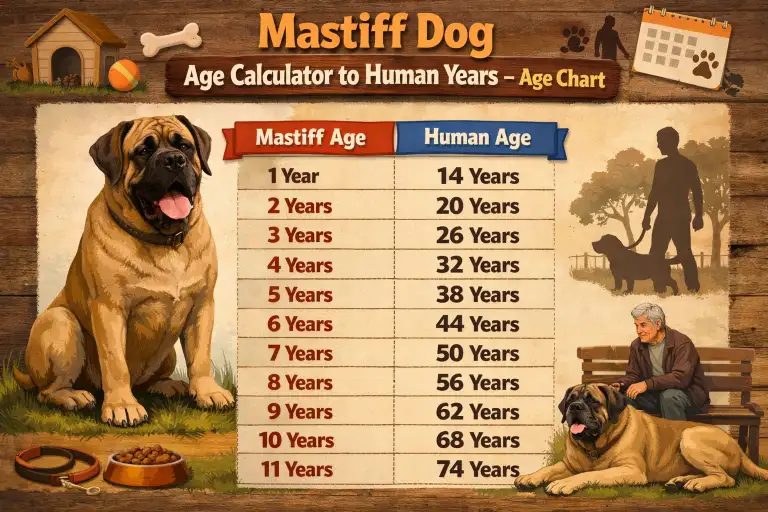
If you’ve ever wondered “How old is my Mastiff in human years?” you’re asking the right question — because giant-breed dogs like Mastiffs do not age the same way as smaller dogs or humans. Using a generic dog-age calculator (or the old 7-year rule) can seriously underestimate a Mastiff’s true biological age.
Mastiffs mature very quickly in the first few years, reach adulthood earlier than people expect, and enter their senior years sooner than most breeds. That’s why a Mastiff-specific age calculator is essential for understanding health risks, activity needs, and preventive care at each stage of life.
This guide uses giant-breed aging data, lifespan research, and modern canine aging models to estimate how a Mastiff’s calendar age translates into human-equivalent years. The goal isn’t just a number — it’s helping you make better decisions for your dog’s health and comfort.
Quick Mastiff Age to Human Age Reference
| Mastiff Age (Years) | Human Age Equivalent (Approx.) | Life Stage |
|---|---|---|
| 1 year | ~15 human years | Adolescent |
| 2 years | ~24 human years | Young adult |
| 5 years | ~45 human years | Adult |
| 7 years | ~60 human years | Senior |
| 10 years | ~75–80 human years | Geriatric |
These numbers often surprise owners — but they explain why joint care, weight control, and cardiac screening matter much earlier for Mastiffs than for many other dogs.
Mastiff Age Chart: Mastiff Dog Years to Human Years (Giant Breed)
Because Mastiffs are giant-breed dogs, they age faster than small and medium dogs, especially after the first few years. The chart below shows how each Mastiff year roughly compares to human years, based on giant-breed lifespan patterns and aging speed.
This chart is meant to be simple, scannable, and practical, so you can quickly understand where your Mastiff is in life.
Mastiff Dog Age to Human Age Chart
| Mastiff Age (Years) | Human Age Equivalent (Approx.) | Mastiff Life Stage |
|---|---|---|
| 1 | 15 | Adolescent |
| 2 | 24 | Young adult |
| 3 | 30 | Adult |
| 4 | 36 | Adult |
| 5 | 45 | Adult |
| 6 | 52 | Mature adult |
| 7 | 60 | Senior |
| 8 | 66 | Senior |
| 9 | 72 | Senior |
| 10 | 75–80 | Geriatric |
| 11 | 82–85 | Geriatric |
| 12 | 88–90 | Very old |
How to read this chart
- The first two years show fast aging because Mastiffs grow and mature very quickly.
- From 3 to 6 years, aging slows down a bit, but Mastiffs are still aging faster than humans.
- Around 6 to 7 years, most Mastiffs are already considered seniors.
- After 8 years, many Mastiffs need extra care for joints, heart health, and comfort.
These are average estimates, not exact numbers. Some Mastiffs may age a little slower or faster depending on genetics, weight, diet, exercise, and medical care.
Why Mastiffs Age Faster Than Other Dogs (Simple Science)
Many owners ask a very common question: why do Mastiffs grow old faster than other dogs?
The answer is simple — body size matters a lot in aging.
Mastiffs are giant dogs. Their bodies grow very fast when they are young, and their organs work harder over their lifetime. This faster growth and heavier body weight put more stress on the heart, joints, and cells. Because of this, Mastiffs usually have shorter lifespans than small or medium dogs.
Another reason is how dog bodies age on the inside. Studies show that large dogs age faster at the cell level, meaning their bodies reach “older” stages sooner than smaller dogs, even if they are the same number of years old.
Dog Size and Average Lifespan Comparison
| Dog Size | Typical Adult Weight | Average Lifespan |
|---|---|---|
| Small dogs | Under 20 lbs | 14–16 years |
| Medium dogs | 20–50 lbs | 12–14 years |
| Large dogs | 50–90 lbs | 10–12 years |
| Giant dogs (Mastiffs) | 90+ lbs | 6–10 years |
As you can see, the bigger the dog, the shorter the average lifespan. This is why a 7-year-old Mastiff is already a senior, while a 7-year-old small dog may still act young.
Fast early growth also plays a role. Mastiff puppies grow into massive adults in a short time. That rapid growth can affect bones, joints, and the heart later in life, especially if weight is not well managed.
This does not mean Mastiffs are unhealthy dogs. It simply means they need earlier care, smarter feeding, and closer vet checks as they age.
Mastiff Life Stages Explained: Puppy, Adult, and Senior Years
Knowing your Mastiff’s life stage is just as important as knowing their age. Mastiffs go through life stages faster than many other dogs, so understanding these stages helps you give the right care at the right time.
Mastiffs do not stay puppies for long, and they reach their senior years earlier than most breeds. This is normal for giant dogs.
Mastiff Life Stages by Age
| Mastiff Age | Life Stage | What’s Happening | What Owners Should Focus On |
|---|---|---|---|
| 0–1 year | Puppy | Very fast growth, big bones forming | Proper food, joint-safe exercise, training |
| 1–2 years | Adolescent | Body still growing, muscles developing | Weight control, gentle activity |
| 3–5 years | Adult | Full size reached, strong and active | Regular exercise, health checks |
| 6–7 years | Mature adult | Energy slowly decreases | Joint care, heart health |
| 8+ years | Senior | Slower movement, more rest needed | Comfort, pain control, vet visits |
What this means for your Mastiff
- Puppy stage is short but intense. Mastiffs grow very large very fast, which can stress bones and joints.
- Adult Mastiffs may look strong and healthy, but aging has already started inside the body.
- Most Mastiffs are considered seniors by 7 years old, even if they still seem playful.
- Senior Mastiffs may sleep more, move slower, and need help with stairs or long walks.
Watching these changes early helps prevent pain and health problems later.
Helping Your Mastiff Age Healthily and Live Longer
Mastiffs may have shorter lifespans than smaller dogs, but good daily care can make a big difference. The goal is not just a longer life, but a more comfortable and happy life, especially in the senior years.
Small changes in food, exercise, and home care can help reduce pain, support joints, and protect the heart as your Mastiff gets older.
Senior Mastiff Care Checklist
| Care Area | What to Do | Why It Matters |
|---|---|---|
| Nutrition | Feed age-appropriate, balanced food | Helps control weight and supports organs |
| Weight control | Keep your Mastiff lean | Less stress on joints and heart |
| Exercise | Short, gentle daily walks | Keeps muscles strong without strain |
| Joint support | Use soft bedding and ramps | Reduces pain and pressure on joints |
| Vet visits | Regular checkups (at least twice a year for seniors) | Catches problems early |
| Mental care | Gentle play and attention | Keeps the mind active and happy |
Simple tips that really help
- Extra weight is one of the biggest dangers for aging Mastiffs. Even a few extra pounds can cause joint pain.
- Older Mastiffs may not show pain clearly. Slower movement, less interest in walks, or trouble standing can be signs.
- Soft beds, non-slip floors, and easy access to food and water make daily life easier.
- Early vet visits for senior dogs help manage arthritis, heart disease, and breathing issues before they become serious.
Aging is natural, but suffering is not. With the right care, many Mastiffs stay loving, calm, and comfortable well into their senior years.
For more detailed information on Mastiff health and lifespan, visit the American Kennel Club’s Mastiff breed page: https://www.akc.org/dog-breeds/mastiff/.

Ata Ur Rehman is the founder of Pet Age in Human Years Calculator, an educational platform that provides age conversion charts and lifespan guides for dogs, cats, birds, and other companion animals. His work focuses on helping pet owners understand how animal ages translate into human years using commonly accepted age conversion formulas and published lifespan averages.
The website compiles breed and species lifespan data from kennel clubs, breed organizations, and general animal lifespan studies to present simple and easy-to-understand guides for pet owners worldwide.
This website was created to centralize animal age conversion charts into one easy reference platform for pet owners.