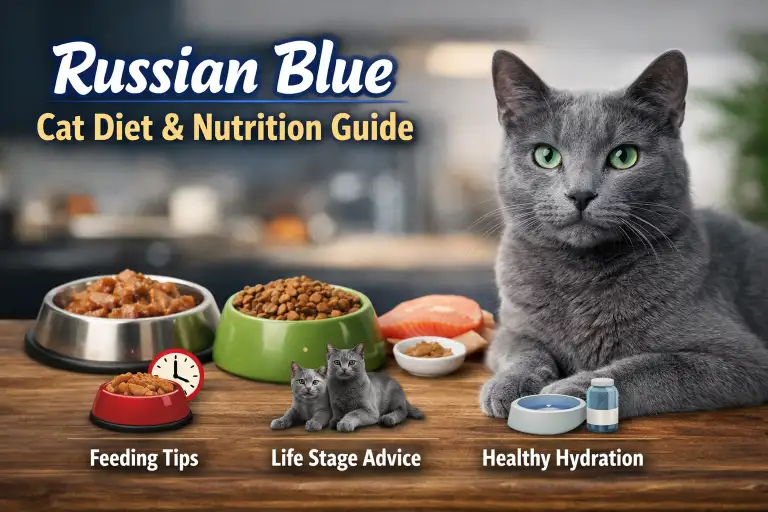
The Russian Blue is a unique and elegant breed, known for its lean, muscular build, plush blue-gray coat, and bright green eyes. While their beauty is striking, maintaining a Russian Blue’s health and vitality requires careful attention to nutrition. A well-balanced diet supports their energy, muscle tone, coat quality, and overall longevity.
Russian Blues can be sensitive eaters with a faster metabolism than some other breeds. This means that choosing the right foods, feeding the correct portion sizes, and ensuring proper hydration are all critical for keeping your cat healthy. Poor nutrition can lead to digestive issues, coat problems, or gradual weight changes that may not be immediately obvious because of the breed’s naturally lean appearance.
In this guide, you’ll learn how to provide a balanced diet for Russian Blue cats, including what nutrients matter most, how to feed across different life stages, and practical tips to make feeding safe, simple, and stress-free. Whether you’re a first-time Russian Blue owner or looking to improve your cat’s current diet, this guide will give you actionable advice based on feline nutrition science and real-world feeding experience.
Nutritional Needs & Food Choices
Russian Blue cats need the right balance of nutrients to stay healthy, strong, and active. Like all cats, they are obligate carnivores, which means they need meat to get essential nutrients. Here’s a simple breakdown of what your cat needs and how different food types help.
Key Nutrients for Russian Blue Cats
| Nutrient | Why It’s Important | Food Sources |
|---|---|---|
| Protein | Builds muscles and keeps your cat strong | Chicken, turkey, fish, beef |
| Fat | Gives energy and helps coat stay shiny | Fish oil, chicken fat |
| Taurine | Keeps heart and eyes healthy | Meat, fish, commercial cat food |
| Vitamins & Minerals | Supports overall health and immunity | Meat, eggs, commercial cat food |
| Omega-3 & Omega-6 | Supports skin, coat, and joints | Fish oil, flaxseed (in cat food) |
Wet vs Dry vs Mixed Feeding
| Food Type | Pros | Cons | Notes |
|---|---|---|---|
| Wet Food | High moisture, good for urinary health, tasty | More expensive, short shelf life | Can prevent dehydration |
| Dry Food | Convenient, long shelf life, helps teeth | Low moisture, may lead to less water intake | Best if water is available |
| Mixed Feeding | Combines benefits of both wet and dry | Can be harder to balance portions | Good choice for variety and hydration |
Tips for choosing the right food:
- Look for high-quality protein sources first.
- Avoid foods with too many fillers like corn or wheat.
- Check for AAFCO-approved cat foods to ensure complete nutrition.
- Include wet food regularly to increase water intake, especially for indoor cats.
Feeding your Russian Blue the right nutrients keeps them lean, active, and helps their coat stay soft and shiny.
Feeding Frequency, Portions & Life Stage Needs
Russian Blue cats need different amounts of food depending on their age and activity level. Feeding the right portions at the right times helps them stay healthy, maintain weight, and avoid digestive problems.
Feeding Guide by Life Stage
| Life Stage | Meals per Day | Approx. Portion Size | Notes |
|---|---|---|---|
| Kitten (2–12 months) | 3–4 | Small, frequent meals | Growing kittens need more protein and calories |
| Adult (1–7 years) | 2 | Medium meals | Keep lean muscle and healthy weight |
| Senior (7+ years) | 1–2 | Smaller meals | Adjust for lower activity and slower metabolism |
Tips for feeding your Russian Blue:
- Kitten: Feed more often with nutrient-rich food for growth.
- Adult: Stick to a regular schedule to avoid overeating.
- Senior: Offer easily digestible food and reduce portions if activity is low.
- Free-feeding vs Scheduled feeding: Free-feeding is leaving food out all day, but it can lead to overeating. Scheduled feeding gives your cat set meal times, which helps control weight.
- Portion control: Check the food label for guidance and adjust based on your cat’s weight and energy level.
Treats, Human Food, and Hydration
Treats and human food can be fun for your Russian Blue, but they need to be given carefully. Too many treats or unsafe foods can cause weight gain or health problems. Hydration is also very important because cats naturally drink less water than dogs, and Russian Blues can be prone to urinary issues.
Safe Treats vs Foods to Avoid
| Item | Safe/Unsafe | Notes |
|---|---|---|
| Cooked chicken or turkey | Safe | Small amounts, no seasoning |
| Cat treats | Safe | Check label for protein content |
| Cheese | Unsafe | Hard to digest, high fat |
| Chocolate | Unsafe | Toxic for cats |
| Onion, garlic | Unsafe | Can cause serious health problems |
| Human snacks | Unsafe | Often too salty or sugary |
Hydration Tips for Russian Blues
| Method | Example | Benefit |
|---|---|---|
| Wet food | Canned meals | Adds extra water to diet |
| Water fountain | Flowing water | Encourages drinking more |
| Multiple bowls | Spread around the house | Easy access for indoor cats |
| Ice cubes in water | Fun and interesting | Some cats drink more |
Tips to keep your cat hydrated:
- Always keep fresh water available.
- Mix wet food with a little water if your cat doesn’t drink enough.
- Observe your cat for signs of dehydration, like dry gums or lethargy.
Proper treats and hydration help your Russian Blue stay healthy, energetic, and happy.
Common Feeding Mistakes & Owner Tips
Even experienced cat owners can make mistakes when feeding Russian Blues. Knowing the common errors can help you keep your cat healthy and happy.
Common Feeding Mistakes
| Mistake | Why It’s a Problem | How to Fix It |
|---|---|---|
| Overfeeding | Can cause weight gain and digestive issues | Stick to portion sizes and life stage charts |
| Only feeding dry food | Can reduce water intake | Include wet food for hydration |
| Ignoring breed sensitivities | Russian Blues may have sensitive digestion | Monitor reactions to new foods and switch gradually |
| Free-feeding too much | Leads to overeating | Use scheduled meals to control intake |
| Giving unsafe human food | Can be toxic or unhealthy | Avoid chocolate, onions, garlic, and high-salt foods |
Owner Tips for Healthy Feeding:
- Indoor cats: They are less active, so reduce portions slightly to prevent weight gain.
- Spayed or neutered cats: Their metabolism may slow down, so monitor weight and adjust food.
- Multi-cat households: Feed each cat separately to ensure everyone gets the right amount.
- Monitor body condition: Your Russian Blue should have a visible waist and ribs you can feel but not see.
- Consult a veterinarian: If you notice sudden weight changes, lethargy, digestive issues, or coat problems.
Following these simple tips and avoiding common mistakes helps your Russian Blue stay lean, active, and healthy
For more about essential nutrients and minimum dietary requirements for cats, you can visit the Association of American Feed Control Officials (AAFCO) nutrient profiles for cat food.

Ata Ur Rehman is the founder of Pet Age in Human Years Calculator, an educational platform that provides age conversion charts and lifespan guides for dogs, cats, birds, and other companion animals. His work focuses on helping pet owners understand how animal ages translate into human years using commonly accepted age conversion formulas and published lifespan averages.
The website compiles breed and species lifespan data from kennel clubs, breed organizations, and general animal lifespan studies to present simple and easy-to-understand guides for pet owners worldwide.
This website was created to centralize animal age conversion charts into one easy reference platform for pet owners.