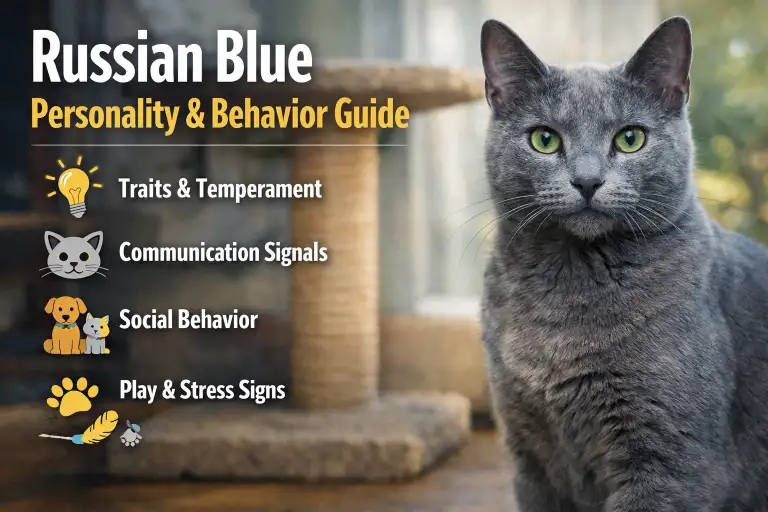
Russian Blue cats are known for being intelligent, sensitive, and playful, but every cat is unique. Their personality is shaped by genetics, early life experiences, and the environment they grow up in. Understanding their traits helps owners build a strong bond and provide a comfortable home.
Key Personality Traits
- Intelligent: They learn quickly and enjoy mental stimulation.
- Curious: Russian Blues explore their surroundings and like to investigate new things.
- Sensitive: They can notice changes in the environment or their owners’ moods.
- Playful: They enjoy toys, climbing, and interactive play sessions.
- Affectionate but Independent: Some like sitting on laps, others prefer being near you without direct contact.
Core Personality Traits Table
| Trait | Typical Behavior | Social Style | Notes |
|---|---|---|---|
| Intelligent | Solves puzzles, learns commands quickly | Independent thinker | Enjoys new toys or games |
| Curious | Explores rooms, investigates objects | Engages with environment | Needs safe exploration spaces |
| Sensitive | Reacts to changes or loud noises | Close to trusted humans | May hide when stressed |
| Playful | Chases toys, climbs, interactive play | Engages with humans & pets | Needs daily enrichment |
| Affectionate | Lap sitting, gentle head nudges | Lap cat / proximity cat | Varies by individual |
Understanding these traits early helps you anticipate behavior, provide proper enrichment, and respect your cat’s comfort zones. Russian Blues are gentle and loyal companions, but they thrive best when owners observe and respond to their unique personality.
How Russian Blues Communicate
Russian Blue cats use body language and sounds to show how they feel. Understanding their signals helps you know if they are happy, curious, or stressed.
Body Language
- Tail positions:
- Upright tail = friendly and confident
- Twitching tail = focused or excited
- Low or tucked tail = unsure or anxious
- Ear signals:
- Forward = curious and alert
- Side or back = cautious or annoyed
- Flattened = scared or defensive
- Eye and whisker signals:
- Slow blinking = relaxed and trusting
- Dilated pupils = excitement or stress
- Whiskers forward = curious or hunting mode
- Posture:
- Relaxed body = calm and comfortable
- Stiff or crouched = cautious or scared
- Meow: Usually to communicate with humans
- Purr: Contentment or comfort
- Chirp or trill: Curiosity or greeting
- Hiss or growl: Warning or fear
Communication Table
| Signal Type | What It Means | When You See It |
|---|---|---|
| Tail Upright | Friendly, confident | Greeting humans or exploring |
| Tail Twitch | Focused, excited | Playing or hunting mode |
| Ears Forward | Alert, curious | Observing surroundings |
| Ears Flattened | Scared, defensive | Unfamiliar situations |
| Slow Blink | Relaxed, trusting | During petting or eye contact |
| Meow | Communication with humans | Asking for attention |
| Purr | Contentment or comfort | When relaxed or cuddling |
| Chirp / Trill | Greeting or curiosity | When noticing something new |
| Hiss / Growl | Warning or fear | Feeling threatened |
Understanding these signals helps you respond appropriately to your Russian Blue and strengthen your bond. Observing subtle cues can prevent stress and make your cat feel safe.
Social Behavior with Humans and Other Pets
Russian Blues can be friendly, loyal, and gentle, but they often have a shy side. Understanding how they interact with people and other animals helps you create a happy home.
With Humans
- Usually bond closely with one or two family members
- Can be reserved around strangers
- Enjoy gentle petting and lap time, but some prefer being near you without direct contact
- May show affection by head nudges, kneading, or slow blinking
With Other Cats
- Can get along well with other cats if introduced slowly
- May show territorial behavior at first
- Play may look rough but is usually safe and non-aggressive
With Dogs and Other Pets
- Often cautious around dogs at first
- Can coexist with calm, well-behaved dogs
- Safe introductions and supervised interactions are important
Social Behavior Table
| Social Partner | Typical Behavior | Notes / Tips |
|---|---|---|
| Humans | Affectionate, gentle, shy with strangers | Bonding varies by individual |
| Other Cats | Tolerant, playful, can be territorial | Introduce gradually, monitor play |
| Dogs | Cautious, observant | Use slow introductions, supervised |
| Children | Gentle with respectful kids | Teach kids to approach calmly |
Russian Blues may take time to trust new people or pets, but patience helps build a strong bond. Observing their signals
Play, Hunting & Natural Instincts
Russian Blue cats have strong natural instincts. Even indoor cats show hunting and play behaviors that keep them active and healthy. Understanding these behaviors helps you provide safe enrichment and avoid misunderstandings.
Play Behavior
- Love to chase toys, climb, and explore
- Enjoy interactive play with humans, like wand toys or laser pointers
- Can show play aggression, which is normal — biting or pouncing without hurting
Hunting Instincts
- Stalk, pounce, and “capture” toys or moving objects
- Use their claws and agility even if they don’t go outdoors
- Indoor enrichment, like puzzle feeders, satisfies hunting instincts safely
Climbing and Perching
- Enjoy elevated spaces like shelves, cat trees, or window perches
- Helps them feel safe and observe their environment
- Supports exercise and mental stimulation
Play & Hunting Table
| Behavior | What It Means | How to Support Safely |
|---|---|---|
| Chasing & Pouncing | Natural hunting instinct | Use toys instead of hands or feet |
| Climbing & Perching | Exploration and safety | Provide cat trees or shelves |
| Interactive Play | Bonding and exercise | Wand toys, laser pointers |
| Play Aggression | Practicing hunting skills | Redirect to toys, not humans |
| Puzzle Feeding | Mental stimulation and hunting | Use treat puzzles or hide toys |
Russian Blues need daily play and enrichment to stay happy and prevent boredom. Observing their hunting style and respecting their energy levels helps you create a stimulating environment.
Stress, Comfort & Behavior Across Life Stages
Russian Blue cats show different behaviors depending on their mood, stress level, and age. Understanding these signals helps you keep your cat comfortable and happy throughout their life.
Stress Signals
- Hiding or staying in quiet spots
- Tail tucked or flicking rapidly
- Ears flattened or sideways
- Dilated pupils or crouched posture
- Less eating or sudden changes in activity
Comfort Behaviors
- Purring and kneading
- Slow blinking and gentle head nudges
- Grooming themselves or nearby objects
- Perching on shelves or cozy spots
- Curling up near trusted humans
Life Stage Changes
- Kittens: High energy, curious, playful, and learning boundaries
- Adults: More settled, strong preferences for routine, still playful
- Seniors: Less active, may prefer quiet time, sleep more, slower play
Stress & Comfort Table
| Behavior / Signal | Meaning | Age Relevance | Owner Tips |
|---|---|---|---|
| Hiding | Stress or insecurity | All ages | Provide safe, quiet spaces |
| Tail Flicking | Irritation or alertness | All ages | Observe before interacting |
| Purring / Kneading | Comfort and contentment | All ages | Offer gentle petting |
| Slow Blinking | Trust and relaxation | All ages | Return slow blinks to bond |
| Playful Hunting | Normal predatory instinct | Kittens & adults | Use toys for safe play |
| Reduced Activity | Aging or low energy | Seniors | Provide cozy resting spots |
By paying attention to these signals, you can support your Russian Blue’s emotional and physical well-being. Adjust play, interactions, and environment based on their life stage and personality.
For more in‑depth information about caring for Russian Blue cats and their health needs, you can visit the Russian Blue breed health overview on PetMD.

Ata Ur Rehman is the founder of Pet Age in Human Years Calculator, an educational platform that provides age conversion charts and lifespan guides for dogs, cats, birds, and other companion animals. His work focuses on helping pet owners understand how animal ages translate into human years using commonly accepted age conversion formulas and published lifespan averages.
The website compiles breed and species lifespan data from kennel clubs, breed organizations, and general animal lifespan studies to present simple and easy-to-understand guides for pet owners worldwide.
This website was created to centralize animal age conversion charts into one easy reference platform for pet owners.