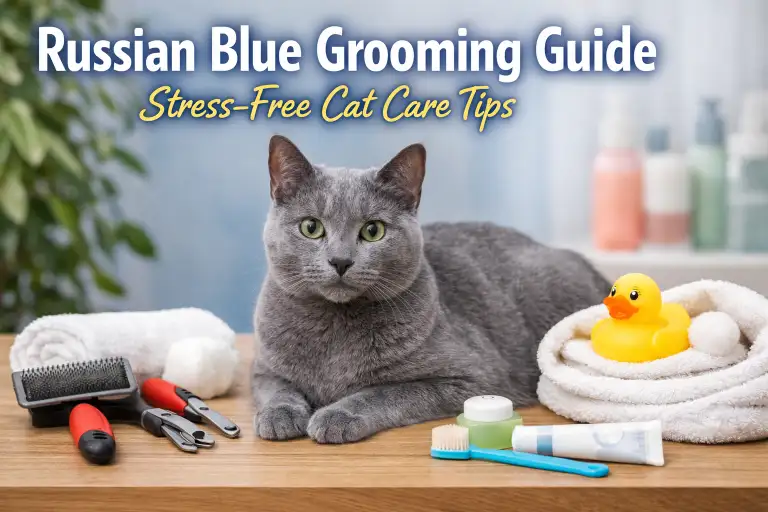
Russian Blue cats are known for their striking silver-blue coat, bright green eyes, and graceful, gentle demeanor. Their short, dense double coat is low-maintenance compared to long-haired breeds, but proper grooming is still essential for their overall health, comfort, and well-being. Regular grooming helps maintain a shiny coat, reduces hairballs, and strengthens the bond between you and your cat.
Understanding your Russian Blue’s grooming needs starts with recognizing their unique characteristics. Their soft, plush double coat sheds moderately, especially during seasonal changes, so brushing is necessary to remove loose hair and prevent minor tangles. Unlike some long-haired breeds, Russian Blues rarely develop mats, but neglecting regular care can lead to shedding buildup and minor skin irritations.
Behavior and temperament also play a crucial role in grooming. Russian Blues tend to be shy and sensitive, often wary of sudden movements. Gentle handling, calm tones, and short, positive grooming sessions will help them feel safe and cooperative. Kittens, adults, and senior cats all have slightly different grooming needs: kittens benefit from early desensitization to brushing, adults require consistent maintenance, and seniors may need gentler handling due to fragile skin or joint stiffness.
Indoor versus outdoor lifestyle can also affect grooming requirements. Indoor cats usually shed less and have cleaner coats, while outdoor cats may need extra attention to remove dirt, debris, or light tangles from playtime. Observing your cat’s behavior and coat condition regularly will help you tailor a grooming routine that keeps them comfortable and stress-free.
Brushing your Russian Blue helps keep their coat shiny, healthy, and free from loose hair. Even though their fur is short, brushing removes dead hair, reduces hairballs, and makes your cat feel good. Brushing is also a great way to bond with your cat.
You will need the right tools. A soft bristle brush or a slicker brush works best. You can also use grooming gloves if your cat likes being petted. Always brush gently to avoid hurting their skin. Short, calm sessions work better than long ones, especially if your cat is shy or nervous.
| Cat Type | Recommended Brush | Frequency | Notes |
|---|---|---|---|
| Kitten | Soft bristle | 2–3 times per week | Keep sessions short, make it fun |
| Adult | Slicker or soft bristle | 1–2 times per week | Increase brushing during shedding season |
| Senior | Soft bristle | Once per week | Brush gently, avoid sensitive areas |
Tips for stress-free brushing:
- Start slowly and let your cat sniff the brush.
- Use calm voices and soft strokes.
- Give treats after brushing to make it a positive experience.
- Watch your cat’s body language—if the ears go back or tail flicks, take a break.
Seasonal shedding may make your cat lose more fur. During this time, brushing more often can help reduce hairballs and keep your home cleaner. Regular brushing also helps you notice small skin problems early, like bumps or dry patches.
Nail, Ear, Eye, and Dental Care
Taking care of your Russian Blue’s nails, ears, eyes, and teeth is very important for their health. These tasks might seem small, but doing them regularly can prevent pain and infections.
Nail trimming
Cats’ nails grow constantly, so trimming them every 2–3 weeks is usually enough. Use a cat nail clipper and cut only the sharp tip. Avoid the pink area inside the nail called the quick, because it can hurt and bleed. If your cat is nervous, try trimming just one or two nails at a time.
Ear cleaning
Check your cat’s ears once a month. Use a soft cloth or vet-approved wipe to clean the outer ear. Never put cotton swabs inside the ear canal because it can hurt your cat. Look for redness, bad smell, or discharge, which may mean a vet visit is needed.
Eye care
Wipe away any discharge gently with a damp cloth. If the eyes are red, swollen, or have unusual discharge, contact your vet. Regular checks help catch small problems before they get worse.
Dental hygiene
Brushing your cat’s teeth 2–3 times a week is ideal. Use a cat toothbrush and toothpaste made for cats only. Start slowly and praise your cat. Good dental care prevents bad breath, gum problems, and tooth loss.
Here is a simple table showing what to do and how often:
| Task | Tool Needed | Frequency | Safety Tips |
|---|---|---|---|
| Nail trimming | Cat nail clippers | Every 2–3 weeks | Avoid cutting the quick |
| Ear cleaning | Soft cloth or vet-approved wipes | Monthly or as needed | Do not use cotton swabs inside ear |
| Eye cleaning | Damp cloth | As needed | Only remove discharge gently |
| Dental care | Cat toothbrush & toothpaste | 2–3 times per week | Use feline toothpaste only |
Tips for handling your cat:
- Keep sessions short and calm.
- Reward your cat with treats and praise.
- Stop if your cat gets too stressed and try again later.
Most Russian Blue cats do not need baths. Their short, dense coat stays clean on its own, and overbathing can dry out their skin. You only need to bathe your cat if they get very dirty, greasy, or if your vet recommends it for a skin condition.
When giving a bath, use lukewarm water and a cat-safe shampoo. Wet your cat gently, lather softly, and rinse well. Keep sessions short, and dry your cat with a towel—avoid using a hairdryer unless your cat is very comfortable with it. Always stay calm and talk softly to reduce stress.
There are alternatives to full baths:
- Grooming wipes for small dirty spots
- Waterless shampoo sprays
- Spot cleaning with a damp cloth
Special situations require extra care:
- Kittens: Keep grooming sessions very short. Introduce brushes, wipes, and gentle handling slowly.
- Senior cats: Their skin is more fragile, and joints may be stiff. Be gentle and avoid long sessions.
- Nervous or shy cats: Use short sessions, soft strokes, and treats. Stop if your cat shows stress.
- Professional help: Take your cat to a groomer or vet if mats, skin issues, or aggressive behavior make home grooming unsafe.
Here is a simple table for bathing and special situations:
| Situation | Recommended Action | Alternative |
|---|---|---|
| Dirty or greasy coat | Gentle bath with cat shampoo | Grooming wipes or spot cleaning |
| Nervous cats | Delay bath; stay calm | Waterless shampoo or wipe down |
| Senior cats | Only bathe if necessary | Gentle brushing and wipes |
| Kittens | Short, positive introduction | Brush and wipe instead of full bath |
Grooming Frequency, Safety, and Common Mistakes
Knowing how often to groom your Russian Blue and how to do it safely is very important. Regular grooming keeps your cat healthy, reduces hairballs, prevents nail and dental problems, and makes grooming less stressful for both you and your cat.
Stress signals to watch for:
- Ears pinned back
- Tail flicking or thumping
- Hissing or growling
- Body stiffening or trying to escape
If your cat shows any of these signs, stop and try again later. Always use calm voices, soft strokes, and short sessions. Reward your cat with treats and praise to make grooming positive.
Common mistakes to avoid:
- Over-brushing or brushing too hard
- Cutting nails too short
- Bathing too often
- Ignoring mats or debris
- Not paying attention to stress signals
Here is a full quick-reference grooming checklist for Russian Blues:
| Grooming Task | Frequency | Key Tip | Common Mistakes |
|---|---|---|---|
| Brushing | Weekly (or 1–2x/week for adults) | Short, gentle strokes | Brushing roughly or too long |
| Nails | Every 2–3 weeks | Trim small amounts | Cutting too close to the quick |
| Ears | Monthly | Inspect before cleaning | Using cotton swabs inside ear |
| Eyes | As needed | Remove discharge gently | Pulling or rubbing harshly |
| Dental care | 2–3 times per week | Use cat toothpaste | Using human toothpaste |
| Bath | Only when necessary | Use cat-safe shampoo | Bathing too frequently |
Following this schedule and watching your cat’s behavior will make grooming a safe and stress-free experience. Remember, grooming is not just about the coat—it’s about overall health and bonding with your cat.
You can visit the Association of American Feed Control Officials (AAFCO) nutrient profiles for cat food.

Ata Ur Rehman is the founder of Pet Age in Human Years Calculator, an educational platform that provides age conversion charts and lifespan guides for dogs, cats, birds, and other companion animals. His work focuses on helping pet owners understand how animal ages translate into human years using commonly accepted age conversion formulas and published lifespan averages.
The website compiles breed and species lifespan data from kennel clubs, breed organizations, and general animal lifespan studies to present simple and easy-to-understand guides for pet owners worldwide.
This website was created to centralize animal age conversion charts into one easy reference platform for pet owners.