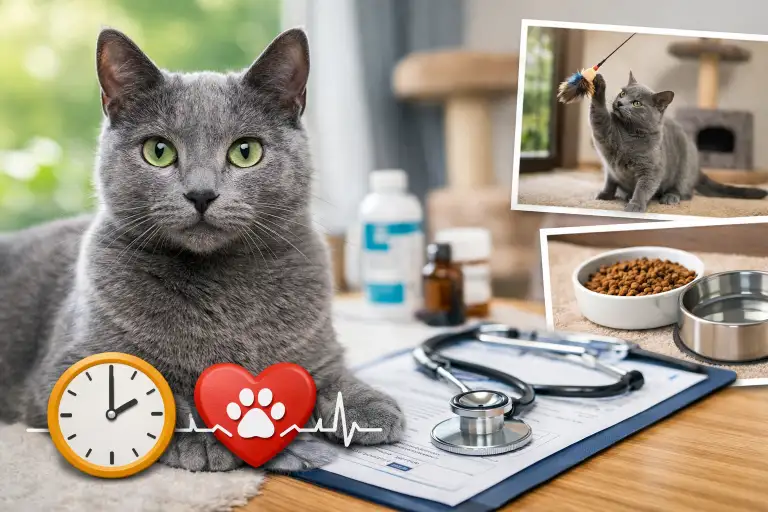
The Russian Blue is a naturally graceful and intelligent breed, known for its silvery-blue coat, bright green eyes, and gentle, affectionate temperament. Generally, Russian Blues are considered a healthy and robust breed, which makes them popular among cat owners who want a low-maintenance yet engaging companion
While they tend to have fewer hereditary issues than some other breeds, understanding their overall health and lifespan is important for every owner. Monitoring their wellbeing through regular checkups, a balanced diet, and attentive observation can help ensure they enjoy a long, active life.
This guide will cover what you need to know about Russian Blue health, common conditions to be aware of, preventive care strategies, and lifespan expectations. It is designed to provide practical, educational insights for owners without replacing veterinary advice or diagnosis.
Quick overview of the breed’s key traits:
- Coat: Short, dense, silvery-blue
- Eyes: Bright green
- Size: Medium, muscular, and agile
- Temperament: Affectionate, intelligent, and moderately playful
- Typical lifespan: 10–20 years, with indoor cats often living at the longer end
Understanding these basics lays the foundation for keeping your Russian Blue healthy and happy throughout their life stages.
Russian Blue Lifespan & Influencing Factors
| Factor | How It Affects Lifespan | Simple Tip for Owners |
|---|---|---|
| Indoor living | Usually adds 2–5 extra years | Keep your cat safe indoors with toys and climbing spaces |
| Diet & nutrition | Healthy weight supports long life | Feed high-quality cat food and avoid overfeeding |
| Preventive care | Helps catch problems early | Visit the vet regularly and keep vaccinations up to date |
| Genetics | Some health tendencies may run in families | Learn about the cat’s family history if possible |
| Exercise & activity | Keeps muscles and joints strong | Encourage play with toys, climbing trees, and short bursts of activity |
By keeping these factors in mind, owners can support their Russian Blue’s health and help them reach their full lifespan potential.
Common Health Issues & Early Warning Signs
| Health Issue | Early Signs | Simple Tip for Owners |
|---|---|---|
| Dental disease | Bad breath, drooling, trouble eating | Brush teeth if your cat allows, and schedule vet dental checks |
| Obesity | Weight gain, less activity | Feed measured meals and encourage daily play |
| Kidney or urinary problems | Drinking more water, peeing more or less, changes in litter box habits | Keep your cat hydrated and monitor litter box habits |
| Joint or muscle stiffness | Trouble jumping, slower movement | Encourage gentle exercise and keep a healthy weight |
By watching for these signs and taking simple preventive steps, you can help your Russian Blue stay healthy for many years.
Supporting Health & Quality of Life
Helping your Russian Blue stay healthy is easier when you follow simple routines. Daily care, good nutrition, exercise, and regular vet visits all make a big difference.
Daily/Weekly Health Checklist
| What to Check | Why It Matters |
|---|---|
| Appetite & weight | Changes can show health issues early |
| Litter box habits | Problems with peeing or pooping can indicate urinary or digestive issues |
| Coat & grooming | Dull or matted fur may signal health or stress issues |
| Activity & behavior | Less play or hiding can mean illness or pain |
| Drinking water | Too much or too little can be a sign of kidney or other problems |
Other tips to support your Russian Blue’s quality of life:
- Keep a balanced diet and avoid overfeeding
- Encourage gentle play and climbing to stay active
- Provide scratching posts, toys, and safe spaces for enrichment
- Schedule regular vet checkups, even if your cat seems healthy
FAQs & Practical Health Tips
Here are some common questions owners ask about Russian Blue health and lifespan, with simple answers:
- How long do Russian Blues usually live indoors?
Most indoor Russian Blues live 15 to 20 years, sometimes even longer with good care. - Are Russian Blues prone to kidney disease?
They can get kidney issues like any cat, but regular vet checkups and watching water intake can help catch problems early. - How can I keep my Russian Blue at a healthy weight?
Feed measured portions, avoid too many treats, and encourage daily play and exercise. - What are early signs my cat might be sick?
Changes in appetite, weight, drinking habits, litter box use, or activity can all be signs. - How often should I take my Russian Blue to the vet?
At least once a year for checkups, even if your cat seems healthy. Older cats may need visits twice a year. - How can I help my senior Russian Blue stay active?
Provide gentle play, climbing spaces, comfortable resting areas, and watch for signs of stiffness or slowing down. - Can indoor cats live longer than outdoor cats?
Yes, indoor cats are safer from accidents, infections, and predators, so they often live longer.
For more in‑depth information about caring for Russian Blue cats and their health needs, you can visit the Russian Blue breed health overview on PetMD.

Ata Ur Rehman is the founder of Pet Age in Human Years Calculator, an educational platform that provides age conversion charts and lifespan guides for dogs, cats, birds, and other companion animals. His work focuses on helping pet owners understand how animal ages translate into human years using commonly accepted age conversion formulas and published lifespan averages.
The website compiles breed and species lifespan data from kennel clubs, breed organizations, and general animal lifespan studies to present simple and easy-to-understand guides for pet owners worldwide.
This website was created to centralize animal age conversion charts into one easy reference platform for pet owners.