Many Scottish Terrier owners are surprised to learn that converting dog years to human years is not as simple as multiplying by seven. That old rule was never based on biology, and it doesn’t reflect how dogs—especially small, sturdy breeds like the Scottish Terrier—actually grow and age.
Dogs mature much faster than humans in their early years. A Scottish Terrier reaches physical and sexual maturity within the first year or two of life, a stage that would take humans more than a decade to reach. After that rapid early development, aging slows down and becomes more gradual, which is why a straight-line “7 human years per dog year” calculation quickly falls apart.
Scottish Terriers also age differently than large and giant breeds. As a small breed, they tend to mature slightly faster as puppies but age more slowly as adults, often maintaining good mobility, alertness, and personality well into their senior years. This is one reason Scotties commonly live longer than many larger dogs and why breed-specific age calculations matter.
Understanding how Scottish Terrier years compare to human years helps you:
- Interpret your dog’s behavior and energy levels more accurately
- Know when to adjust nutrition, exercise, and veterinary care
- Recognize when your Scottie is entering adulthood or senior life
Scottish Terrier Dog Age Calculator (How It Works)
A Scottish Terrier age calculator helps you understand your dog’s age in human terms. Instead of using the old “multiply by seven” rule, this calculator uses a method based on science. It considers the breed’s size, growth rate, and how dogs age differently at each stage of life.
Here’s how it works:
- Puppies grow very fast in their first year. One Scottie year in puppyhood is more than seven human years.
- Adult dogs age more slowly, so each dog year equals fewer human years.
- Senior dogs age at a steady pace, reflecting changes in mobility, health, and energy.
Using this calculator makes it easier to know what your Scottie’s age really means in terms of care, diet, and activity.
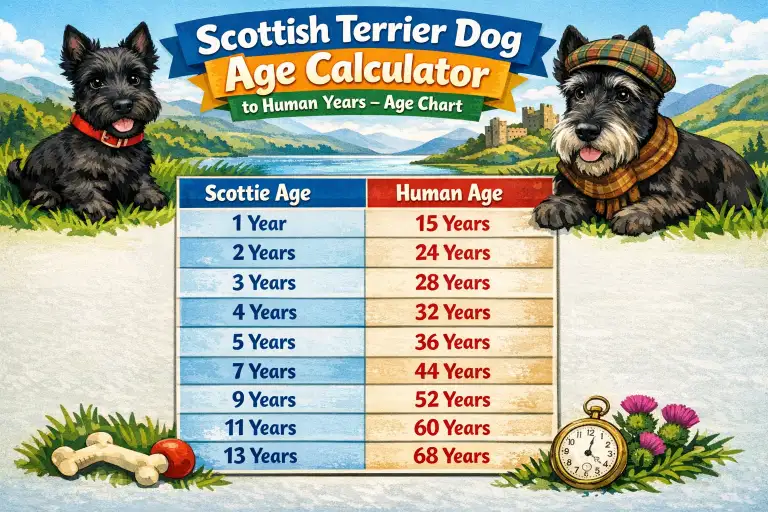
To make this clearer, the table below shows an example of how the conversion works at different life stages:
| Scottish Terrier Age (Dog Years) | Approximate Human Age Equivalent | Life Stage |
|---|---|---|
| 0–1 | 0–15 | Puppy |
| 2 | 24 | Young Adult |
| 3 | 28 | Adult |
| 5 | 36 | Adult |
| 7 | 44 | Adult |
| 10 | 56 | Senior |
| 12 | 64 | Senior |
| 15 | 76 | Senior |
Scottish Terrier Age Chart: Dog Years to Human Years
The easiest way to see how your Scottish Terrier ages is with a full age chart. This chart shows each year of your Scottie’s life and what it roughly equals in human years. It helps you understand their energy, health needs, and life stage at a glance.
| Dog Age (Years) | Human Age Equivalent | Life Stage |
|---|---|---|
| 0.5 | 7 | Puppy |
| 1 | 15 | Puppy |
| 2 | 24 | Young Adult |
| 3 | 28 | Adult |
| 4 | 32 | Adult |
| 5 | 36 | Adult |
| 6 | 40 | Adult |
| 7 | 44 | Adult |
| 8 | 48 | Adult |
| 9 | 52 | Adult |
| 10 | 56 | Senior |
| 11 | 60 | Senior |
| 12 | 64 | Senior |
| 13 | 68 | Senior |
| 14 | 72 | Senior |
| 15 | 76 | Senior |
This chart is designed for small breeds like Scottish Terriers, which generally live longer than larger dogs. You can quickly see when your Scottie moves from puppy to adult and then to senior years.
Scottish Terrier Life Stages and Aging Signs
Understanding your Scottish Terrier’s life stages helps you care for them better. Each stage comes with changes in energy, behavior, and health. Here is a simple guide with tables to make it easy to follow.
| Life Stage | Dog Age (Years) | Human Age Equivalent | What to Expect |
|---|---|---|---|
| Puppy | 0–1 | 0–15 | Rapid growth, teething, lots of energy, learning basic commands |
| Young Adult | 2–3 | 24–28 | Full size, strong, playful, learning social behavior |
| Adult | 4–7 | 32–44 | Stable energy, healthy, mature behavior, regular exercise needed |
| Senior | 8–15 | 48–76 | Slower movement, possible stiffness, decreased energy, more rest required |
Scottish Terriers also show signs of aging that you should watch for:
| Aging Signs | What to Look For |
|---|---|
| Mobility changes | Slower walking, difficulty jumping, stiffness |
| Cognitive changes | Forgetfulness, confusion, less interest in play |
| Weight changes | Weight gain or loss, difficulty maintaining healthy body condition |
| Coat & skin | Thinning fur, greying, dry skin |
| Hearing & vision | Reduced responsiveness, bumping into things |
By knowing these signs and life stages, you can adjust food, exercise, and care to help your Scottie stay happy and healthy.
Helping Your Scottish Terrier Age Healthily
Keeping your Scottish Terrier healthy as they grow older helps them live a longer, happier life. Small changes in diet, exercise, and care can make a big difference.
| Area | Tips for Healthy Aging |
|---|---|
| Nutrition | Feed high-quality dog food suited for small breeds, adjust portions to prevent weight gain, add senior formulas after 7 years |
| Exercise | Daily walks, gentle play, and short training sessions to maintain muscle and mobility |
| Mental Stimulation | Puzzle toys, training games, and social interaction to keep their mind sharp |
| Vet Care | Regular checkups, vaccinations, dental care, and screenings for common health issues like arthritis or heart disease |
| Lifestyle | Keep your home safe for older dogs, provide warm bedding, avoid stairs if mobility is limited |
| Spaying/Neutering | Can influence lifespan and reduce risk of some diseases, discuss timing with your vet |
By following these tips, your Scottish Terrier can enjoy their adult and senior years with better energy, health, and happiness.
“For more detailed information about this breed, visit the American Kennel Club’s official breed page.”

Ata Ur Rehman is the founder of Pet Age in Human Years Calculator, an educational platform that provides age conversion charts and lifespan guides for dogs, cats, birds, and other companion animals. His work focuses on helping pet owners understand how animal ages translate into human years using commonly accepted age conversion formulas and published lifespan averages.
The website compiles breed and species lifespan data from kennel clubs, breed organizations, and general animal lifespan studies to present simple and easy-to-understand guides for pet owners worldwide.
This website was created to centralize animal age conversion charts into one easy reference platform for pet owners.