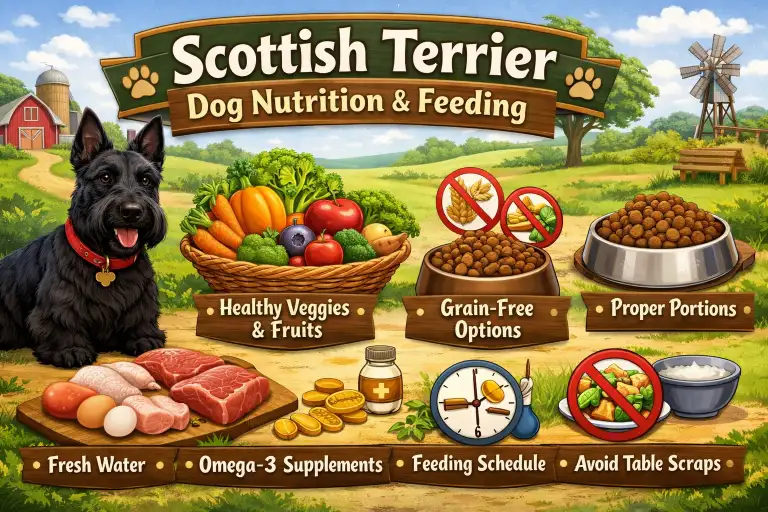
Scottish Terriers may be small in size, but they have very specific nutritional needs that differ from generic “small-breed dog” advice. Their compact, muscular build, short legs, and naturally strong appetite mean that diet plays a direct role in their long-term health, mobility, and quality of life.
One of the biggest nutrition challenges for Scottish Terriers is weight management. Even a small amount of extra weight can put strain on their joints and spine, increasing the risk of mobility issues as they age. Because Scotties are sturdy and low to the ground, weight gain often goes unnoticed until it starts affecting movement or stamina. Proper portion control and calorie awareness are therefore far more important for this breed than many owners realize.
Scottish Terriers are also known for skin and coat sensitivities. Poor-quality diets, low-grade fats, or frequent food changes can contribute to dry skin, itching, dull coat, and recurrent ear problems. Nutrition that includes adequate animal protein, balanced omega-3 and omega-6 fatty acids, and essential micronutrients helps support the skin barrier and reduce inflammatory flare-ups.
Digestive sensitivity is another common concern. Many Scotties do best on simple, highly digestible diets rather than foods with long ingredient lists or excessive fillers. When the gut is irritated, owners often notice soft stools, gas, or inconsistent appetite. Feeding a diet formulated to meet established standards such as AAFCO guidelines helps ensure nutritional balance while minimizing unnecessary digestive stress.
Beyond physical health, nutrition also affects a Scottish Terrier’s energy levels and behavior. Diets that are too high in calories for a low-to-moderate activity lifestyle can lead to restlessness and weight gain, while underfeeding protein can affect muscle tone and overall vitality. When a Scottie is fed the right amount of the right nutrients, owners typically see more consistent energy, better focus, and improved coat condition.
In short, feeding a Scottish Terrier isn’t just about choosing a “good dog food.” It’s about understanding how this breed’s body works and adjusting nutrition to support healthy weight, strong muscles, resilient skin, and long-term well-being. The sections that follow break down exactly what Scottish Terriers should eat, how much to feed, and how to avoid the most common feeding mistakes owners make with this breed.
What Should a Scottish Terrier Eat? (Nutritional Requirements Explained)
Scottish Terriers need a balanced diet to stay healthy, active, and happy. Their food should include the right amounts of protein, fat, and carbohydrates, plus essential vitamins and minerals. Feeding the right nutrients helps their skin, coat, digestion, muscles, and overall energy.
Protein is very important for Scotties. It helps build and maintain muscles, supports healthy skin and coat, and keeps their immune system strong. Look for foods where animal protein is the main ingredient, such as chicken, beef, lamb, or fish. Fat is also important for energy and a shiny coat, especially healthy fats like omega-3 and omega-6. Carbohydrates provide energy, but too many can cause weight gain, so it’s best to choose foods with digestible carbs like rice, oats, or sweet potatoes.
Vitamins and minerals are needed in small amounts but are essential for health. Calcium and phosphorus help strong bones, zinc and vitamin E support skin and coat, and B vitamins help with energy and metabolism. Most high-quality dog foods meet these requirements, but supplements should only be given if recommended by a vet.
Scottish Terriers can be sensitive to low-quality ingredients, fillers, or frequent food changes. A simple, high-quality diet is often best. Always check dog food labels for AAFCO approval, which ensures the food meets minimum nutrition standards. Avoid foods that rely heavily on by-products, fillers, or artificial additives.
shows the general nutritional requirements for Scottish Terriers:
| Nutrient | Ideal Range | Why It Matters |
|---|---|---|
| Protein | 22–30% of diet | Muscle maintenance, skin, coat, immunity |
| Fat | 8–15% of diet | Energy, shiny coat, brain health |
| Fiber | 2–4% of diet | Digestion, stool quality |
| Calcium | 1–1.5% of diet | Strong bones and teeth |
| Phosphorus | 0.8–1.2% of diet | Bone health, energy metabolism |
| Omega-3 & Omega-6 | Balanced | Healthy skin, coat, anti-inflammatory support |
| Vitamins A, D, E, B-complex | Meets AAFCO standards | Immune function, energy, skin and coat health |
Choosing the right food and keeping nutrients balanced helps prevent common problems like weight gain, itchy skin, and digestive upset. Stick to high-quality foods and feed consistently for the best results.
How Much to Feed a Scottish Terrier (Portions, Calories & Schedule)
Knowing how much to feed your Scottish Terrier is very important. Overfeeding can cause weight gain, while underfeeding can make your dog weak or low in energy. The right amount depends on your dog’s weight, age, and activity level.
Scottish Terriers are small but stocky, so even a little extra food can lead to fat gain. Puppies need more calories per pound than adults, and senior dogs usually need fewer calories because they move less. Active dogs, like those who play or walk a lot, need more energy than low-activity dogs.
Using a Body Condition Score (BCS) at home can help you see if your dog is at a healthy weight. You should be able to feel the ribs easily without seeing them and see a small waist from above.
shows daily feeding amounts based on weight and activity:
| Dog Weight | Low Activity | Moderate Activity | High Activity |
|---|---|---|---|
| 8 lbs | ½ cup | ⅔ cup | ¾ cup |
| 10 lbs | ⅔ cup | ¾ cup | 1 cup |
| 12 lbs | ¾ cup | 1 cup | 1 ⅛ cup |
| 14 lbs | 1 cup | 1 ⅛ cup | 1 ¼ cup |
Feeding frequency is also important:
- Puppies: 3–4 small meals per day
- Adults: 2 meals per day
- Seniors: 2 smaller meals per day
shows feeding frequency recommendations by life stage:
| Life Stage | Meals per Day | Notes |
|---|---|---|
| Puppy (2–6 months) | 3–4 | Small, frequent meals help growth |
| Puppy (6–12 months) | 2–3 | Gradually reduce meals as they grow |
| Adult (1–7 years) | 2 | Balanced meals for energy and weight control |
| Senior (7+ years) | 2 | Slightly smaller portions to prevent weight gain |
Adjust portions based on your Scottie’s activity, age, and health. Always monitor their body condition and weight. A Scottish Terrier with a healthy diet will have good muscle tone, a shiny coat, and steady energy levels throughout the day.
Best Dog Food Types for Scottish Terriers (What Actually Works)
Scottish Terriers can eat different types of dog food, but some options work better for their health, digestion, and skin. Choosing the right food helps prevent weight gain, allergies, and digestive issues.
Kibble (Dry Food) is convenient, helps keep teeth clean, and is easy to store. Look for high-quality kibble with animal protein as the first ingredient and minimal fillers.
Canned/Wet Food is tasty and easier to chew, especially for older Scotties or picky eaters. It usually has higher moisture, which helps hydration.
Fresh or Homemade Food can be healthy if balanced. Make sure it has the right amount of protein, fats, and carbs. Homemade diets should ideally be planned with a vet or canine nutritionist.
Raw or Freeze-Dried Food is sometimes used for skin or coat health. It can be nutritious but carries higher risk for bacteria if not handled safely.
Treats should be healthy and given in moderation, as extra calories can quickly lead to weight gain. Avoid human foods that are toxic, like chocolate, grapes, onions, or anything with xylitol.
compares food types for Scottish Terriers:
| Food Type | Pros | Cons | Best Use |
|---|---|---|---|
| Kibble (Dry) | Convenient, helps teeth, shelf-stable | Some low-quality brands have fillers | Daily feeding for adults |
| Canned/Wet | Tasty, higher moisture, good for picky eaters | More expensive, can spoil faster | Mix with kibble or occasional meals |
| Fresh/Homemade | Highly digestible, can target allergies | Needs careful balance, time-consuming | For special diets or picky eaters |
| Raw/Freeze-Dried | High protein, may improve coat | Risk of bacteria, costly | Occasional use, under vet guidance |
| Treats | Can reward and train | High calories, risk of obesity | Use in moderation |
Special Diets, Common Feeding Problems & When to See a Vet
Some Scottish Terriers need special diets or extra care with their food. Common reasons include allergies, sensitive stomachs, weight problems, or picky eating. Knowing how to handle these issues keeps your Scottie healthy and happy.
Allergies often show as itchy skin, hair loss, or recurring ear infections. In these cases, switching to limited ingredient diets or foods with novel proteins like duck or fish can help. Dogs with sensitive stomachs may do better with highly digestible foods that have fiber and probiotics.
Weight gain is common in Scotties because they are small but stocky. Reducing portion sizes, using lower-calorie foods, and measuring treats carefully can prevent obesity. For picky eaters, try mixing wet food with dry, warming food slightly, or offering small, frequent meals. Always avoid feeding toxic foods, including chocolate, grapes, onions, and anything with xylitol.
shows common feeding problems and practical solutions for Scottish Terriers:
| Problem | Signs | Solution |
|---|---|---|
| Food Allergies | Itchy skin, ear infections, digestive upset | Limited ingredient diet, novel protein, vet consultation |
| Sensitive Stomach | Soft stools, gas, vomiting | Highly digestible food, probiotics, avoid sudden food changes |
| Weight Gain | Excess fat, lack of waist, low energy | Measure portions, reduce treats, increase activity |
| Picky Eating | Refuses food, only eats certain meals | Mix wet & dry, small frequent meals, warm food |
| Overfeeding Treats | Rapid weight gain | Count treats as part of daily calories, use healthy low-calorie treats |
It is important to monitor your Scottish Terrier regularly. If you notice sudden changes in appetite, weight, or digestion, or if your dog shows signs of discomfort or skin issues, consult your veterinarian or a veterinary nutritionist. They can provide advice tailored specifically to your dog’s needs.
“For more detailed information about this breed, visit the American Kennel Club’s official breed page.”

Ata Ur Rehman is the founder of Pet Age in Human Years Calculator, an educational platform that provides age conversion charts and lifespan guides for dogs, cats, birds, and other companion animals. His work focuses on helping pet owners understand how animal ages translate into human years using commonly accepted age conversion formulas and published lifespan averages.
The website compiles breed and species lifespan data from kennel clubs, breed organizations, and general animal lifespan studies to present simple and easy-to-understand guides for pet owners worldwide.
This website was created to centralize animal age conversion charts into one easy reference platform for pet owners.