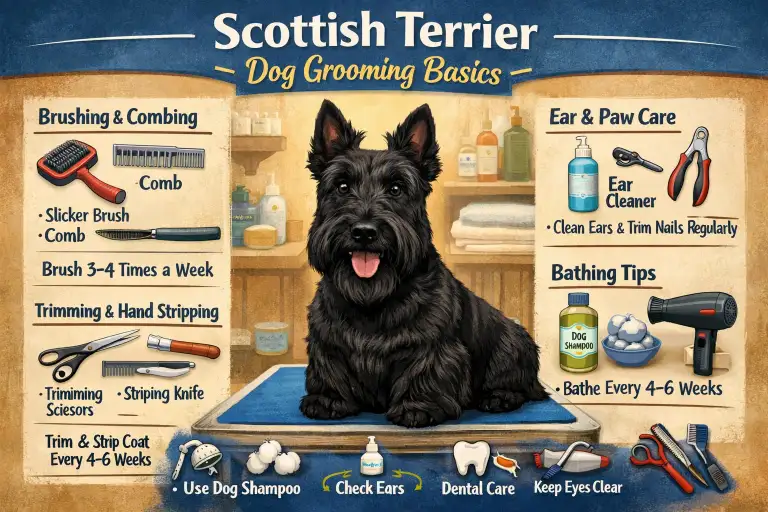
Scottish Terriers may be small in size, but their grooming needs are anything but simple. This breed has a distinctive double coat with a harsh, wiry outer layer and a soft undercoat underneath, and that combination requires regular, thoughtful care to stay healthy. Grooming a Scottish Terrier isn’t just about keeping them looking tidy or maintaining the classic Scottie outline—it directly affects their comfort, skin health, and overall well-being.
Proper grooming helps prevent matting, which is one of the most common problems seen in Scottish Terriers. Mats often form along the legs, under the chest, behind the ears, and in the beard and skirt areas. When left untreated, these mats can pull on the skin, trap moisture, and create an ideal environment for skin irritation, hot spots, or infections. In real-world grooming settings, many Scotties come in with hidden mats that owners don’t notice until the dog is uncomfortable or sensitive to touch.
Regular grooming also supports healthy skin. Brushing removes dirt, dead hair, and debris while distributing natural oils across the coat. This helps maintain the skin’s protective barrier and reduces dryness, flaking, and odor. For a breed that is prone to sensitive skin and allergies, consistent grooming can make a noticeable difference in how the coat feels and how the dog behaves.
Another reason grooming matters for Scottish Terriers is coat preservation. Improper techniques—such as shaving the coat or over-bathing with harsh shampoos—can permanently soften the wiry texture and damage the coat’s natural weather resistance. Once the coat loses its correct texture, it becomes more prone to matting and skin issues, and it can be difficult to restore.
Finally, grooming plays an important role in early health detection. While brushing, bathing, and handling your Scottish Terrier, you’re more likely to notice changes such as skin redness, unusual odors, lumps, sores, or ear irritation. Catching these issues early often prevents them from turning into more serious veterinary problems.
Scottish Terrier Coat Type and Grooming Needs
Scottish Terriers have a double coat that makes their grooming needs unique. The outer coat is hard and wiry, which gives them that classic Scottie look, while the undercoat is soft and dense, helping keep them warm. This combination means their coat doesn’t shed as much as some other breeds, but it can mat easily if not brushed regularly.
Mats are more likely to form in areas like behind the ears, under the legs, in the beard, and along the skirt. If mats are left untreated, they can pull on the skin, trap dirt, and even cause infections. Regular brushing and proper care are key to keeping your Scottie comfortable and their coat healthy.
Understanding your Scottie’s coat also helps with grooming frequency. While they don’t need daily bathing, they do need regular brushing to prevent mats and remove loose hair. Their wiry coat also means that some grooming tools work better than others, and knowing which brush or comb to use can save both you and your dog a lot of stress.
Here is a simple table to make it easy to understand the coat and how it affects grooming:
Scottish Terrier Coat Characteristics & Care Impact
| Coat Feature | What It Means | Grooming Impact |
|---|---|---|
| Outer coat | Harsh, wiry | Needs brushing to prevent tangles and mats |
| Undercoat | Soft, dense | Traps hair and debris; regular brushing required |
| Shedding level | Low to moderate | Less frequent vacuuming but watch for loose hair |
| Matting tendency | High in legs, beard, skirt, under ears | Requires careful brushing and occasional trimming |
| Odor control | Wiry coat helps repel dirt | Bathing needed occasionally, not too often |
Step-by-Step Scottish Terrier Grooming Routine at Home
Grooming your Scottish Terrier at home can be easy if you follow a regular routine. Using the right tools and steps will keep your dog clean, comfortable, and looking their best. This routine focuses on brushing, bathing, and keeping mats under control.
First, you need the right tools. A good grooming kit for a Scottie includes a slicker brush, pin brush, undercoat rake, comb, nail clippers, dog-friendly shampoo, and a towel or dog dryer. Each tool has a purpose, and using the right one makes grooming safer and faster.
Brushing is the most important part of home grooming. Brush your Scottie 2–3 times a week to remove loose hair and prevent mats. Focus on areas like the legs, skirt, beard, and under the ears, which mat the easiest. Use the slicker brush for tangles, and a comb to check for hidden mats. Always brush gently to avoid hurting your dog.
Bathing should be done once every 4–6 weeks unless your Scottie gets dirty sooner. Use a dog-friendly shampoo and rinse thoroughly. Avoid getting water in their ears. After bathing, towel dry or use a dog dryer on a low, warm setting to protect the coat. Never use a human hair dryer, as it can burn the skin.
Managing mats is important. Small mats can be carefully combed out, but larger mats may need trimming or professional help. Mats behind the ears, under the arms, and along the skirt are most common. Checking these areas during brushing helps prevent painful tangles.
Here are two tables to make the routine easy to follow:
Grooming Tools and Their Uses
| Tool | Use |
|---|---|
| Slicker brush | Removes tangles and small mats |
| Pin brush | Smooths and finishes coat |
| Undercoat rake | Removes loose undercoat hair |
| Comb | Checks for mats and fine tangles |
| Nail clippers | Trims nails safely |
| Dog-friendly shampoo | Cleans coat without drying skin |
| Towel/Dog dryer | Dries coat after bath |
Grooming Frequency Schedule for Scottish Terriers
| Task | Frequency |
|---|---|
| Brushing | 2–3 times per week |
| Bathing | Every 4–6 weeks |
| Nail trimming | Every 3–4 weeks |
| Ear cleaning | Weekly or as needed |
| Beard cleaning | As needed, usually 1–2 times per week |
Extra Grooming Care: Nails, Ears, Teeth, and Skin Health
Taking care of your Scottish Terrier goes beyond brushing and bathing. Nails, ears, teeth, and skin all need attention to keep your dog healthy and comfortable.
Nail care is important for short-legged dogs like Scotties. Long nails can make walking painful and can even change their posture. Trim the nails every 3–4 weeks using dog nail clippers. If you are unsure, trim a little at a time to avoid cutting the quick, which can hurt and bleed.
Ear cleaning helps prevent infections. Scottish Terriers have folded ears that can trap dirt and moisture. Check the ears weekly and gently wipe them with a vet-approved ear cleaner. Avoid using cotton swabs inside the ear canal, as they can push debris deeper.
Dental care is also essential. Brush your Scottie’s teeth 2–3 times per week with dog-friendly toothpaste. Regular brushing prevents plaque buildup, bad breath, and dental disease. You can also offer dental chews to help maintain oral hygiene.
Skin and coat health should be monitored during every grooming session. Look for redness, bumps, flaking, or unusual odors. These can be signs of allergies, dry skin, or infections. Early detection allows for faster treatment and prevents bigger health problems.
Common Scottish Terrier Skin & Grooming Problems
| Problem | Signs to Watch For | Suggested Action |
|---|---|---|
| Dry skin | Flaking, itchiness | Use gentle shampoo, avoid over-bathing |
| Allergies | Redness, itching, hot spots | Consult vet, use hypoallergenic products |
| Ear infections | Odor, redness, scratching | Clean ears weekly, vet if persistent |
| Mats and tangles | Pulling hair, skin irritation | Brush regularly, trim mats carefully |
| Dental disease | Bad breath, tartar buildup | Brush teeth, dental chews, vet checkups |
“For more detailed information about this breed, visit the American Kennel Club’s official breed page.”

Ata Ur Rehman is the founder of Pet Age in Human Years Calculator, an educational platform that provides age conversion charts and lifespan guides for dogs, cats, birds, and other companion animals. His work focuses on helping pet owners understand how animal ages translate into human years using commonly accepted age conversion formulas and published lifespan averages.
The website compiles breed and species lifespan data from kennel clubs, breed organizations, and general animal lifespan studies to present simple and easy-to-understand guides for pet owners worldwide.
This website was created to centralize animal age conversion charts into one easy reference platform for pet owners.