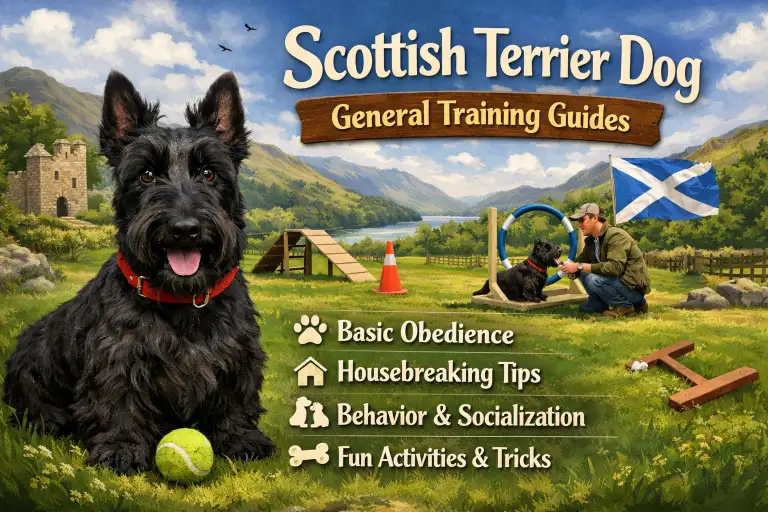
Scottish Terrier training isn’t about forcing obedience or repeating commands until a dog gives in. It’s about understanding how a Scottie thinks and using that intelligence in your favor. This breed is known for being confident, independent, and highly perceptive—traits that make them exceptional companions but also misunderstood when it comes to training.
Many owners search for “Scottish Terrier training” after realizing that generic dog training advice doesn’t work well with their Scottie. What looks like stubbornness is often selective decision-making. Scottish Terriers learn quickly, but they don’t respond to pressure, boredom, or inconsistent handling. When training is done correctly, they become focused, reliable, and deeply bonded to their owner.
This guide is designed for both Scottish Terrier puppies and adult dogs. Whether you’re starting fresh with a young Scottie, retraining an adult, or struggling with behaviors like ignoring commands or pulling on the leash, this article will walk you through a practical, science-backed approach that fits the breed’s temperament.
Why Scottish Terrier Training Is Different (and Why It Matters)
Scottish Terriers are not like many other dog breeds. They are smart, independent, and sometimes stubborn. This makes training both exciting and challenging. Understanding why training a Scottie is different will help you avoid frustration and get better results.
Scotties are naturally curious and like to think for themselves. They may ignore commands if they don’t see a reason to follow them. They also have a strong prey drive, which means they might chase small animals or react to movement. Safety is important—your dog must learn recall, leash manners, and impulse control to prevent accidents.
Training matters for behavior too. If a Scottie is not trained, they can develop bad habits like constant barking, guarding food, or ignoring you. Using force or punishment will usually make them fearful or more stubborn. Positive, consistent, and motivating methods work best.
Scottish Terrier Traits vs Training Implications
| Trait | What It Means for Training | Tips for Owners |
|---|---|---|
| Independent | May ignore commands | Use high-value rewards and short sessions |
| Intelligent | Learns quickly but selectively | Keep training interesting and varied |
| Stubborn | Resists pressure | Be patient and consistent |
| Prey drive | May chase small animals | Train recall and leash control early |
| Sensitive | Can get frustrated | Avoid harsh corrections; reward calm behavior |
Understanding Scottish Terrier Behavior and Motivation
Scottish Terriers have a mind of their own. They are smart, independent, and sometimes stubborn. Understanding how they think makes training much easier.
Scotties do not follow commands just because you say so. They respond to rewards, play, and clear communication. They also notice your mood and energy, so staying calm and patient helps a lot. Puppies and adult Scotties behave differently. Puppies are curious and eager to explore, while adults can be more set in their ways but often more focused.
Knowing what motivates your Scottish Terrier is key. Most Scotties love treats, praise, and short play sessions. Some respond better to games or toys rather than food. Recognizing their motivation lets you train without frustration.
Common Scottish Terrier Behaviors & What They Mean
| Behavior | What It Means | How to Respond |
|---|---|---|
| Ignoring commands | Thinking independently | Use high-value rewards and patience |
| Barking at strangers | Alert or protective | Teach “quiet” with calm rewards |
| Chasing small animals | Prey drive | Practice recall and leash control |
| Stopping training early | Bored or frustrated | Keep sessions short and fun |
| Guarding toys or food | Protective instinct | Use trade and reward strategies |
tep-by-Step Scottish Terrier Training Approach
Training a Scottish Terrier works best when it is consistent, short, and fun. Scottish Terriers learn quickly, but they get bored or stubborn if sessions are too long.
Start with short sessions of 5–10 minutes, 2–3 times a day for puppies, and 10–15 minutes for adults. Always end on a positive note. Focus on one skill at a time, like sitting, recall, or leash walking. Repeat the skill in different places so your Scottie learns to obey anywhere.
Use high-value rewards. Treats, toys, or praise work best. Timing is important—reward immediately after the desired behavior so your dog understands what you want. Avoid yelling or forcing; this can make a Scottie anxious or resistant.
Scottish Terrier Training Schedule (Puppy vs Adult)
| Age | Session Length | Sessions per Day | Focus |
|---|---|---|---|
| Puppy (8–16 weeks) | 5–10 min | 2–3 | Basic commands, potty training, socialization |
| Puppy (4–6 months) | 10–15 min | 2 | Obedience, recall, leash manners |
| Adult | 10–15 min | 1–2 | Advanced skills, impulse control, correcting bad habits |
Training Do’s and Don’ts for Scottish Terriers
| Do | Don’t |
|---|---|
| Use high-value rewards | Yell or punish harshly |
| Keep sessions short and fun | Overload with too many commands |
| Be patient and consistent | Force behaviors or repeat endlessly |
| Train in different environments | Expect perfection instantly |
| End sessions positively | Ignore signs of stress or boredom |
Common Scottish Terrier Training Problems and Solutions
Even with good training, Scottish Terriers can develop common problems. Knowing what to expect and how to fix it helps you stay calm and consistent.
Many owners say their Scottie ignores commands. This is often independence, not disobedience. Using high-value rewards and short, fun sessions helps. Leash pulling is another common issue—Scotties are strong-willed and like to explore. Teaching proper leash manners and practicing recall in safe areas solves this over time.
Barking, guarding toys or food, and chasing small animals are also frequent. These behaviors are natural but need guidance. Teaching trade games, “quiet” commands, and recall will reduce frustration.
Training Problems, Likely Causes, and Fixes
| Problem | Likely Cause | Solution |
|---|---|---|
| Ignoring commands | Independent thinking | Reward-based repetition, short sessions |
| Leash pulling | Excitement, stubbornness | Stop-and-go method, proper harness, consistent practice |
| Excessive barking | Alert or protective instinct | Teach “quiet” command, reward calm behavior |
| Guarding food or toys | Protective instinct | Trade game, reward sharing, supervised meals |
| Chasing animals | Prey drive | Leash training, recall practice, controlled exposure |
“For more detailed information about this breed, visit the American Kennel Club’s official breed page.”

Ata Ur Rehman is the founder of Pet Age in Human Years Calculator, an educational platform that provides age conversion charts and lifespan guides for dogs, cats, birds, and other companion animals. His work focuses on helping pet owners understand how animal ages translate into human years using commonly accepted age conversion formulas and published lifespan averages.
The website compiles breed and species lifespan data from kennel clubs, breed organizations, and general animal lifespan studies to present simple and easy-to-understand guides for pet owners worldwide.
This website was created to centralize animal age conversion charts into one easy reference platform for pet owners.