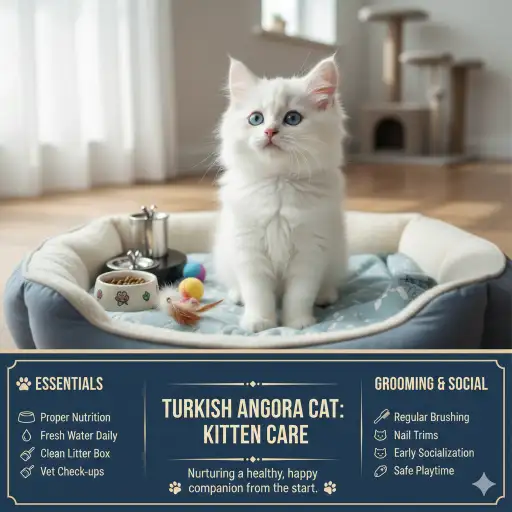
Bringing home a Turkish Angora kitten is exciting, but it can also feel overwhelming during the first few days. This breed is known for being very intelligent, playful, and people-focused. Your kitten will likely follow you from room to room, climb higher than you expect, and show strong curiosity about everything in your home. This is normal. Turkish Angora kittens are active thinkers. They don’t just sit and watch life — they want to be part of it.
During the first week, your kitten may act brave one moment and shy the next. Many kittens hide for a few hours, then suddenly race around the room. They may sleep most of the day and then have short bursts of wild energy in the evening. This up-and-down pattern is part of normal kitten development. Most kittens sleep 16–20 hours a day, even active breeds like this one.
Turkish Angora kittens usually form strong bonds with one person. They enjoy attention and often like to perch somewhere high where they can watch you. If your kitten cries the first few nights, it is often because they miss their mother and littermates. A soft blanket and a warm, quiet sleeping space help them feel secure.
It also helps to understand how kittens change month by month. Their energy level increases quickly. Their confidence grows. They test limits. Knowing what stage your kitten is in will make you feel calmer and more prepared.
| Age | What’s Happening | Normal Behavior | Your Focus |
|---|---|---|---|
| 8–12 weeks | Adjusting to new home | Sleeping a lot, short zoomies, clingy behavior | Build trust and routine |
| 3–6 months | Rapid growth & high energy | Climbing, play biting, exploring | Daily play and safe boundaries |
| 6–12 months | Teenage phase | Testing limits, strong personality | Consistency and patience |
If your kitten runs across the house at top speed, climbs your curtains once, or gently nips during play, don’t panic. These are common kitten behaviors. Calm guidance works much better than punishment. In the next part, we’ll look at how to prepare your home so your kitten stays safe while exploring.
Preparing Your Home & Creating a Safe Indoor Environment
Before your kitten has full access to your home, it helps to set up a small, quiet space just for them. This could be a bedroom or a calm corner of your living area. Place their litter box, food, water, soft bed, and a scratching post there. This space helps them feel secure during the first few days.
Turkish Angora kittens love to climb. They will test shelves, counters, and window sills. Because they are light and agile, they often jump higher than expected. Secure loose items, move fragile decor, and cover electrical cords. If you have blinds with strings, tie them up safely. Small objects on the floor can look like toys but may be unsafe.
Vertical space is very important for this breed. A tall cat tree or stable shelving gives them a safe way to climb. When kittens have safe climbing options, they are less likely to explore risky areas. A window perch is also helpful because these kittens enjoy watching outdoor activity.
If you live in an apartment, this breed can still do very well. The key is enrichment. Daily play, climbing space, and interaction matter more than square footage. Keeping your kitten indoors protects them from traffic, disease, and other outdoor dangers.
| Area | Risk | What to Do |
|---|---|---|
| Living room | Wires and breakables | Secure cords and remove fragile items |
| Windows | Falling risk | Use secure screens and safe perches |
| Kitchen | Small objects | Keep counters clear |
| Balcony | Escape or fall | Block access or use strong safety netting |
Preparing your home early prevents stress later. In the next part, we will talk about feeding and healthy growth, which is one of the biggest concerns for new kitten owners.
Feeding, Nutrition & Healthy Growth
Growing kittens need steady, balanced nutrition. Turkish Angora kittens are active and burn energy quickly, so regular meals are important. Most young kittens eat three to four small meals per day. As they grow older, this usually shifts to two to three meals daily.
Choose a high-quality kitten food that clearly states it supports growth. Wet food helps with hydration, while dry food can support dental health. Many owners use a mix of both. Fresh water should always be available. Some Turkish Angora kittens enjoy drinking from wide bowls or pet fountains.
Switching food too quickly can upset a kitten’s stomach. If you need to change brands, mix small amounts of the new food with the old food over 7–10 days. Watch for signs like loose stool or refusal to eat. Mild changes can happen during transitions, but ongoing problems should be discussed with your veterinarian.
It is normal for kittens to go through small appetite changes during growth spurts. As long as your kitten is playful and gaining weight steadily, small shifts are usually fine.
| Age | Meals Per Day | General Guidance | Notes |
|---|---|---|---|
| 8–12 weeks | 3–4 | Small, frequent meals | Growth is rapid |
| 3–6 months | 3 | Slightly larger portions | High energy stage |
| 6–12 months | 2–3 | Monitor body condition | Slower growth |
Avoid overfeeding treats. Treats should only make up a small part of their daily food. Consistent meal times also help support litter training and routine. In the next part, we’ll cover litter habits, sleep patterns, and how to build a simple daily routine.
Litter Training, Sleep & Daily Routine
Most kittens learn litter box habits quickly, especially if introduced early. Place the litter box in a quiet, easy-to-reach area. After meals or naps, gently place your kitten inside the box. You do not need to force them — just guide them. Clean the box daily because kittens prefer a fresh space.
Accidents can happen during the first few weeks. Stress, a dirty box, or a box placed in a noisy area are common reasons. Stay calm. Clean accidents with an odor-neutral cleaner so they are not drawn back to the same spot.
Sleep patterns can surprise new owners. Your kitten may nap most of the afternoon and then become active at night. This is natural because cats are most active at dawn and dusk. Playing with your kitten before bedtime helps release extra energy.
A simple routine helps your kitten feel secure. Feed, play, and rest at similar times each day. Turkish Angora kittens respond well to structure because they are intelligent and alert.
| Time of Day | Activity | Why It Matters |
|---|---|---|
| Morning | Feed + short play | Burns early energy |
| Afternoon | Quiet rest | Supports growth |
| Evening | Interactive play | Reduces night zoomies |
| Night | Calm environment | Encourages better sleep |
Play biting is common at this age. Always redirect biting to toys. Avoid using your hands as play objects. Gentle, consistent responses teach good habits without fear. In the next part, we’ll look at grooming and basic health care.
Grooming, Health Basics & First Vet Visits
The Turkish Angora has a silky, medium-long coat that is usually easier to maintain than many long-haired breeds. Even so, brushing once or twice a week keeps the coat smooth and reduces loose hair. Start brushing early so your kitten becomes comfortable with it. Use a soft brush and keep sessions short and positive.
Nail trimming should begin while your kitten is young. Trim small amounts every few weeks. If your kitten resists at first, go slowly. Offer praise and keep sessions calm. Checking ears and eyes weekly helps you notice any changes early.
Your first veterinary visit usually happens within the first week of bringing your kitten home. The veterinarian will check weight, heart, eyes, and overall development. This visit builds a health baseline and allows you to ask questions. You do not need to prepare anything special besides bringing any records from the breeder or shelter.
Watch for changes in energy, appetite, or litter box habits. Kittens are normally playful and curious. If your kitten becomes very quiet, refuses food for more than a day, or has ongoing digestive upset, it is wise to contact your veterinarian for advice.
| Behavior or Sign | Usually Normal | Contact a Vet If |
|---|---|---|
| Short zoomies | Yes | Not needed |
| Mild appetite shift | Sometimes | If lasting over 24 hours |
| Soft stool during food change | Possible | If persistent or severe |
| Sleeping many hours | Yes | If very hard to wake |
Turkish Angora cats can live long, healthy lives when kept indoors and given regular veterinary care. Many reach 12–18 years with proper attention and nutrition.
Raising a Turkish Angora kitten takes patience, but you do not need to be perfect. Consistent routines, safe climbing space, daily play, and gentle guidance make the biggest difference. Most early “problems” are simply normal growth stages. As your kitten matures, you will see their intelligence and affectionate nature shine.
For more general kitten health information, you can visit the American Veterinary Medical Association at https://www.avma.org/resources-tools/pet-owners/petcare/new-kitten-guide

Ata Ur Rehman is the founder of Pet Age in Human Years Calculator, an educational platform that provides age conversion charts and lifespan guides for dogs, cats, birds, and other companion animals. His work focuses on helping pet owners understand how animal ages translate into human years using commonly accepted age conversion formulas and published lifespan averages.
The website compiles breed and species lifespan data from kennel clubs, breed organizations, and general animal lifespan studies to present simple and easy-to-understand guides for pet owners worldwide.
This website was created to centralize animal age conversion charts into one easy reference platform for pet owners.