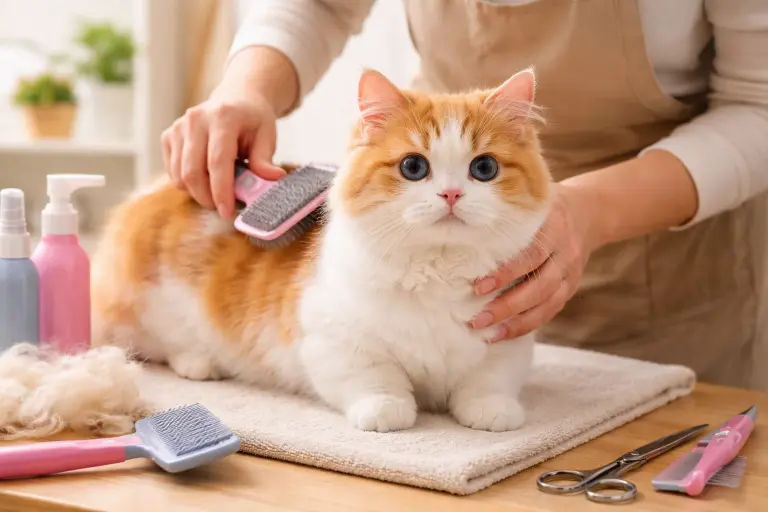
Grooming your Munchkin cat is important for their health and comfort. Because Munchkins have short legs, they may not reach all parts of their body while cleaning themselves. Regular grooming helps prevent mats, skin problems, and discomfort. It also gives you a chance to check for any signs of illness early.
Munchkin cats can have either short or long fur. Short-haired Munchkins need less brushing but still benefit from weekly care. Long-haired Munchkins need more frequent brushing to prevent tangles and mats, especially around their belly and legs. Seasonal shedding can make grooming more necessary, so extra care in spring and fall is important.
Short legs can make some grooming tasks trickier. For example, nail trimming or brushing under the belly may require gentle lifting or adjusting how your cat is positioned. Understanding your Munchkin’s body and limitations will make grooming safer and less stressful for both of you.
Grooming is not just about appearance. It supports circulation, reduces hairballs, and helps your cat feel comfortable. By checking their coat, skin, eyes, ears, and nails regularly, you can catch problems early before they become serious.
| Coat Type | Shedding | Grooming Needs | Notes |
|---|---|---|---|
| Short Hair | Low to Medium | Brush 1–2 times/week | Easy to maintain |
| Long Hair | Medium to High | Brush 3–5 times/week | Watch for mats, especially belly & legs |
Brushing & Coat Care
Brushing is one of the most important parts of grooming a Munchkin. It removes loose hair, prevents mats, and keeps the coat shiny. Use a soft-bristle brush for short-haired Munchkins and a comb or slicker brush for long-haired cats. Always brush gently to avoid hurting your cat’s skin.
The frequency of brushing depends on your cat’s coat. Short-haired cats usually need brushing once or twice a week, while long-haired cats should be brushed almost every day. Focus on areas they cannot reach themselves, like under the legs, along the belly, and behind the ears.
Look for tangles or mats, but never pull hard. Small mats can be carefully combed out, while large or stubborn mats may need professional help. If your cat resists brushing, break sessions into a few minutes at a time and reward them with treats or praise.
Brushing is also a good time to check for lumps, bumps, or skin issues. Consistent brushing helps your cat get used to being handled and makes other grooming tasks easier.
| Coat Type | Brush Type | Brushing Frequency | Areas to Focus |
|---|---|---|---|
| Short Hair | Soft Bristle | 1–2 times/week | Back, belly, behind ears |
| Long Hair | Slicker/Comb | 3–5 times/week | Belly, legs, behind ears, under arms |
Nail, Ear, Eye & Dental Care (All-in-One Routine)
Munchkin cats’ nails grow fast, so trimming them every 2–3 weeks is recommended. Use a proper cat nail clipper and avoid cutting the quick, which can cause pain and bleeding. Short legs mean your cat may have trouble retracting nails fully, so take extra care.
Ears should be checked weekly. Look for dirt, wax buildup, or redness. Clean gently with a cotton ball or soft cloth; never insert anything deep into the ear canal. Eyes may need wiping if tear stains appear. Use a damp cloth and wipe in the direction of the fur.
Dental care is also important. Brush your cat’s teeth a few times a week using cat-safe toothpaste. Look for bad breath, swelling, or tartar buildup. Regular dental care prevents tooth pain and keeps your cat healthy.
Combining nail, ear, eye, and dental checks into one routine makes grooming more efficient. Start slowly and keep sessions positive to reduce stress.
Bathing & Stress-Aware Grooming
Most Munchkin cats do not need frequent baths. They clean themselves well, and unnecessary bathing can cause stress. Only bathe your cat if they get dirty, sticky, or have a medical need. Use a mild cat shampoo and lukewarm water.
Watch your cat’s body language during bathing. Flattened ears, tail flicking, growling, or attempts to escape are signs of stress. Keep sessions short, support their body carefully, and always dry gently with a towel afterward. Never use human shampoo or hot water.
If your cat strongly dislikes bathing, try using damp cloths or waterless cat wipes for spot cleaning. Breaking grooming into small, calm sessions is key for nervous cats. Positive reinforcement with treats or gentle petting makes them more comfortable over time.
Grooming Schedules, Mistakes & When to Get Help
A simple routine helps you and your Munchkin keep grooming consistent. Here’s a suggested schedule:
| Task | Frequency |
|---|---|
| Brushing (short hair) | 1–2 times/week |
| Brushing (long hair) | 3–5 times/week |
| Nail trimming | Every 2–3 weeks |
| Ear check & cleaning | Weekly |
| Eye check | Weekly |
| Dental care | 2–3 times/week |
| Bathing | Only when needed |
Common mistakes include over-brushing, forcing grooming, cutting nails too short, or ignoring mats. If your cat resists grooming or shows signs of pain, stop and try later. Persistent mats, skin problems, or unusual behavior may require a professional groomer or vet.
Professional groomers can safely remove mats, trim nails, and handle long-haired Munchkins. Always choose someone experienced with cats and short-legged breeds. Early intervention prevents stress and injuries for both you and your cat.
For more detailed grooming tips, you can check resources from the American Association of Feline Practitioners here.

Ata Ur Rehman is the founder of Pet Age in Human Years Calculator, an educational platform that provides age conversion charts and lifespan guides for dogs, cats, birds, and other companion animals. His work focuses on helping pet owners understand how animal ages translate into human years using commonly accepted age conversion formulas and published lifespan averages.
The website compiles breed and species lifespan data from kennel clubs, breed organizations, and general animal lifespan studies to present simple and easy-to-understand guides for pet owners worldwide.
This website was created to centralize animal age conversion charts into one easy reference platform for pet owners.