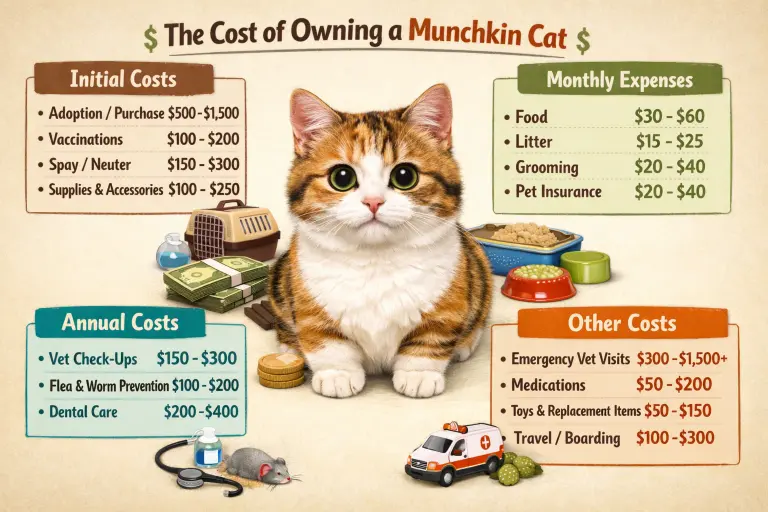
Owning a Munchkin cat is not just about the cute short legs and playful personality. It is also a long-term money responsibility. Many people focus only on the purchase price, but that is just the beginning. Real costs show up month after month and year after year.
A Munchkin cat usually lives 12 to 15 years, sometimes longer. During that time, you will pay for food, litter, vet care, and many small things that add up. Planning ahead helps you avoid stress and makes sure your cat gets proper care at every stage of life.
Costs can change based on where you live, your cat’s health, and how you care for them. Indoor cats, outdoor cats, single-cat homes, and multi-cat homes all spend money differently. This guide uses general ranges, not promises, so you can plan safely.
If you are still deciding whether a Munchkin cat fits your budget, this section matters the most. Understanding the full cost early is the best way to be a responsible owner.
Initial & One-Time Costs
The first year with a Munchkin cat is usually the most expensive. These are costs you pay once or mostly at the beginning. Many new owners underestimate this part.
Adoption fees are often lower than buying from a breeder, but both options have costs. Some cats come already vaccinated and fixed, while others do not. Always check what is included so you do not pay twice.
Supplies are another big upfront expense. Your cat needs basic items before day one. Skipping quality here can lead to replacements later, which costs more.
Some Munchkin cats may need extra health checks early in life. This does not mean something is wrong, but short-legged cats are sometimes monitored more closely by vets.
Typical one-time cost ranges:
| Item | Low Range | Average Range | High Range |
|---|---|---|---|
| Adoption or purchase | Low | Medium | High |
| Spay or neuter | Low | Medium | High |
| First vet visit & vaccines | Low | Medium | High |
| Litter box & carrier | Low | Medium | High |
| Scratching post, toys, bed | Low | Medium | High |
Ongoing Monthly & Annual Expenses
Most of the lifetime cost of a Munchkin cat comes from regular spending. These are costs you will see every month or every year.
Food and litter are the most predictable expenses. Higher-quality food usually costs more but may support better health over time. Litter choice also affects monthly spending.
Routine vet care includes yearly checkups and booster vaccines. Even healthy cats need preventive care. Skipping these visits can lead to bigger costs later.
Grooming costs depend on coat type. Short-haired Munchkins usually need less grooming than long-haired ones, but all cats need nail trimming and basic hygiene care.
Common ongoing cost ranges:
| Expense | Monthly Low | Monthly Average | Monthly High |
|---|---|---|---|
| Food | Low | Medium | High |
| Litter | Low | Medium | High |
| Routine vet savings | Low | Medium | High |
| Grooming & supplies | Low | Medium | High |
Unexpected & Emergency Costs
Unexpected costs are the hardest part of pet ownership to plan for. Even indoor cats can get sick or injured.
Emergency vet visits often cost much more than regular checkups. Tests, treatments, or short hospital stays can quickly raise the bill. These costs are not rare over a long cat’s life.
As Munchkin cats age, they may need more frequent vet visits. Senior cats often require blood tests, special diets, or long-term medication.
Many owners forget about small surprise costs like replacing broken items, treating parasites, or caring for the cat during travel or family emergencies. These may seem minor but add up.
Lifetime Cost Estimate & Practical Planning
When you add everything together, owning a Munchkin cat is a long-term financial commitment. Lifetime cost depends on how long your cat lives, their health, and your care choices.
Below is a simple lifetime estimate for one Munchkin cat over 12–15 years. These are planning ranges, not exact numbers.
| Cost Level | Estimated Lifetime Cost |
|---|---|
| Low-budget care | Lower range |
| Average care | Medium range |
| High-end care | Higher range |
Living style matters. Indoor cats often have lower injury risk but higher enrichment costs. Outdoor access may lower boredom costs but raise medical risks. Multi-cat homes usually save on some supplies but increase food and vet spending.If money is already tight, it is important to think carefully before adopting. A cat should never suffer because basic care becomes unaffordable. Planning ahead protects both you and your pet..For more general information about long-term pet costs, you can also review this resource from the ASPCA:
https://www.aspca.org/pet-care/general-pet-care/cost-pet-ownership

Ata Ur Rehman is the founder of Pet Age in Human Years Calculator, an educational platform that provides age conversion charts and lifespan guides for dogs, cats, birds, and other companion animals. His work focuses on helping pet owners understand how animal ages translate into human years using commonly accepted age conversion formulas and published lifespan averages.
The website compiles breed and species lifespan data from kennel clubs, breed organizations, and general animal lifespan studies to present simple and easy-to-understand guides for pet owners worldwide.
This website was created to centralize animal age conversion charts into one easy reference platform for pet owners.