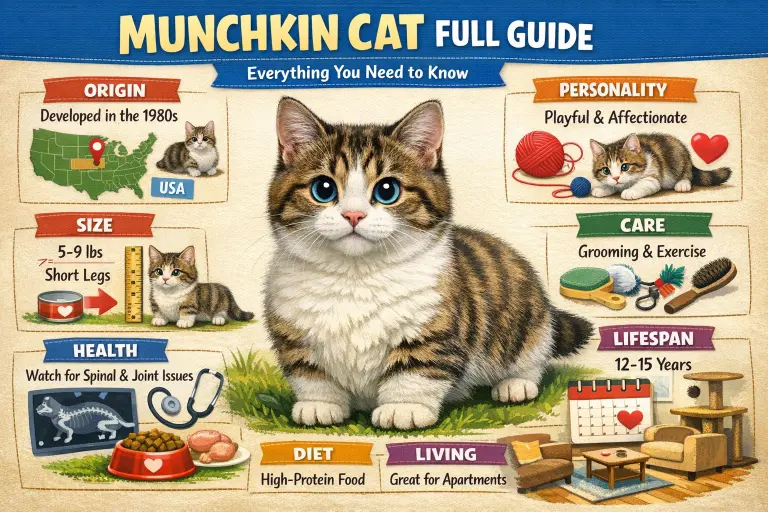
The Munchkin cat is a small, playful breed known for its very short legs. These cats look cute and unusual, but they are strong and fast despite their size. Munchkins are friendly, curious, and full of energy. They enjoy exploring, playing with toys, and interacting with their owners.
Munchkins first appeared in the 1980s, though short-legged cats have been spotted in photos dating back over 100 years. The breed became officially recognized by TICA in the 1990s. Breeders focused on creating healthy cats with the signature short legs without affecting their overall body strength.
One of the most interesting things about Munchkin cats is their personality. They are outgoing, confident, and often seem to have no fear of larger animals. They form strong bonds with their families and love to be involved in daily activities. Munchkins can adapt to both busy households and quieter homes as long as they have enough attention and playtime.
Despite their short legs, Munchkin cats are excellent jumpers and climbers, though they may not reach the heights of longer-legged cats. They are active indoors, making them a good fit for apartment living as long as they have toys, climbing shelves, and spaces to explore.
Appearance, Size & Temperament
Munchkin cats are small to medium-sized cats with short legs and a long body. Adult males usually weigh between 6 and 9 pounds, while females are slightly lighter at 4 to 8 pounds. Their short legs give them a unique look, but their bodies are strong and muscular.
The breed comes in both shorthair and longhair varieties. Coat colors and patterns vary widely, including solid, tabby, calico, and pointed colors. Their coats are soft and easy to care for, requiring only regular brushing to prevent tangles in long-haired cats.
Munchkins are playful, social, and curious. They enjoy exploring every corner of their home, climbing furniture, and chasing toys. They are often described as kitten-like even into adulthood, keeping their energy and mischievous personality for many years.
They are also friendly with children and other pets, making them a good family cat. Munchkins are not overly vocal but will chirp, trill, or meow softly to communicate. Their affectionate nature makes them great companions for people who want a playful, loving pet.
Size & Traits Summary Table
| Trait | Male | Female | Notes |
|---|---|---|---|
| Weight | 6–9 lbs | 4–8 lbs | Slight size difference between genders |
| Leg Length | Short | Short | Signature feature of the breed |
| Coat Types | Shorthair, Longhair | Shorthair, Longhair | Both require minimal grooming |
| Temperament | Playful, Friendly, Curious | Playful, Friendly, Curious | Good with kids and other pets |
| Vocalization | Soft meows, chirps | Soft meows, chirps | Not overly vocal |
Care Guide for Munchkin Cats
Munchkin cats need daily care like all cats, but their unique body requires some special attention. Feeding should be balanced, with high-quality cat food to maintain healthy weight. Munchkins are prone to gaining weight if not exercised regularly.
Exercise is very important. They enjoy toys, climbing shelves, and interactive play with their owners. Short legs do not stop them from running, jumping, and exploring. Providing mental stimulation, like puzzle feeders or new toys, keeps them happy and prevents boredom.
Grooming is easy. Short-haired Munchkins need weekly brushing, while long-haired ones may need brushing 2–3 times per week. Nail trimming, ear cleaning, and dental care are essential. Keeping them clean and healthy prevents common problems like dental disease or matted fur.
Munchkins have some breed-specific health concerns. They may develop joint problems like lordosis or spinal stress due to their short legs. Regular vet checkups are important, and early detection of issues can improve their quality of life. Their average lifespan is 12–15 years with proper care.
Health Risks & Screening Table
| Health Issue | Description | Recommended Screening |
|---|---|---|
| Lordosis | Curvature of the spine | Regular vet checkups, monitor posture |
| Hip Dysplasia | Joint problems | X-ray if symptoms appear |
| Obesity | Weight gain due to short legs | Diet control, daily exercise |
| Heart Disease | Rare but possible | Regular heart checkups |
| General Care | Nail, ear, dental hygiene | Routine vet visits |
Munchkin Cat Ownership: Costs, Suitability & Lifestyle
Owning a Munchkin cat can be a joyful experience, but it comes with responsibilities. Munchkin kittens typically cost between $600 and $1,200, depending on breeder reputation, coat type, and pedigree. Ongoing costs include food, litter, toys, vet visits, and occasional health screenings.
Munchkins are suitable for a wide variety of homes. They adapt well to apartments because of their small size, but they still need room to play. They are ideal for families with children, as they are tolerant and playful. They can live happily with other cats and friendly dogs if introduced gradually.
Indoor living is recommended, as outdoor environments can pose risks like traffic and predators. If allowed outside, it should be in a secure, supervised area. They thrive on attention, so first-time cat owners should be prepared to spend time engaging with them daily.
Cost Breakdown Table
| Expense Type | Estimated Cost | Notes |
|---|---|---|
| Kitten Price | $600–$1,200 | Depends on breeder and lineage |
| Food | $20–$40/month | High-quality cat food recommended |
| Vet & Preventive Care | $100–$300/year | Vaccinations, checkups, screenings |
| Toys & Accessories | $50–$150/year | Enrichment and climbing tools |
| Grooming | $0–$100/year | Depends on coat length and brushing |
FAQs + Breed Comparisons
Many people wonder if Munchkin cats are right for them. Common questions include whether short legs affect mobility, if they are good with kids, and how much exercise they need. Short legs do not stop them from running and jumping, but they may need extra care for spinal health.
Munchkins are generally good with children and other pets. They enjoy interaction and play but are also happy to nap in cozy spots. They are not overly vocal, so they fit well in quiet homes. Mental stimulation is essential to keep them happy and prevent boredom.
A quick comparison helps prospective owners see how Munchkins differ from other short-legged or playful breeds:
Breed Comparison Table
| Breed | Size | Temperament | Energy Level | Special Notes |
|---|---|---|---|---|
| Munchkin | Small–Medium | Playful, Friendly | High | Short legs, very social |
| Scottish Fold | Medium | Calm, Gentle | Moderate | Folded ears, less active |
| Manx | Medium | Curious, Intelligent | Moderate–High | No tail, strong jumper |
| Devon Rex | Small | Playful, Mischievous | High | Wavy coat, very active |
Munchkin cats are affectionate, playful, and a joy to watch. They fit well in many households, especially those who can provide attention and mental stimulation. While they have some special care needs due to their short legs, proper attention ensures a happy, healthy life.For more detailed care tips and breed insights, you can visit the official TICA Munchkin breed page: https://tica.org/breeds/browse-all-breeds

Ata Ur Rehman is the founder of Pet Age in Human Years Calculator, an educational platform that provides age conversion charts and lifespan guides for dogs, cats, birds, and other companion animals. His work focuses on helping pet owners understand how animal ages translate into human years using commonly accepted age conversion formulas and published lifespan averages.
The website compiles breed and species lifespan data from kennel clubs, breed organizations, and general animal lifespan studies to present simple and easy-to-understand guides for pet owners worldwide.
This website was created to centralize animal age conversion charts into one easy reference platform for pet owners.