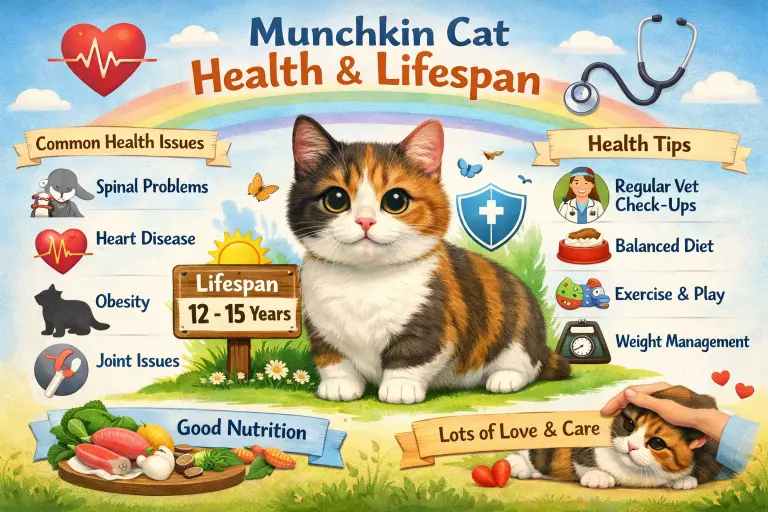
Munchkin cats are best known for their short legs, playful nature, and friendly personality. Many people who love this breed also want to know what kind of life they can expect to share with them. This guide focuses on general health awareness and lifespan expectations, written in a calm and easy way for everyday cat owners.
This article is educational only. It does not diagnose illness, suggest treatments, or replace advice from a veterinarian. Every cat is different, and health outcomes can vary based on care, environment, and genetics.
Munchkin cats can live full, happy lives when they receive proper care. Like all cats, they can experience common health issues over time, some related to aging and some related to lifestyle. Understanding these issues early helps owners notice changes sooner and seek professional care when needed.
This guide explains what owners commonly ask about: how long Munchkin cats live, what health concerns may appear, how aging affects them, and how owners can support overall well-being in a responsible way.
Average Lifespan & Factors That Influence It
Most Munchkin cats have a lifespan similar to other domestic cats. On average, many live 12 to 15 years, and some may live longer with good care. Whether a cat lives indoors or outdoors plays a big role in overall life expectancy.
Indoor cats are generally safer from accidents, fights, and infectious diseases. Outdoor cats may face more risks, which can shorten lifespan. Diet, activity level, stress, and routine veterinary care also make a difference over time.
Genetics can influence health, but lifestyle often matters just as much. A balanced diet, healthy body weight, mental stimulation, and regular checkups all support long-term health.
Below is a simple comparison to help owners understand lifestyle impact.
| Lifestyle | Typical Lifespan Range | Key Influences |
|---|---|---|
| Indoor only | 13–15+ years | Safer environment, routine care |
| Indoor/outdoor | 10–14 years | Exposure to risks and disease |
| Outdoor only | Often shorter | Accidents, parasites, infections |
Common Health Issues in Munchkin Cats
Munchkin cats can experience many of the same health issues seen in other cats. These are usually chronic or age-related, not sudden emergencies. Awareness helps owners notice early changes.
Dental disease is very common in cats, including Munchkins. It can start quietly with bad breath or red gums. Obesity is another concern, especially if activity levels are low. Extra weight can affect joints, comfort, and overall health.
Kidney disease, urinary tract issues, and diabetes are also seen in cats as they age. These conditions often develop slowly and may first show as changes in drinking, appetite, or litter box habits.
The table below shows common issues and early signs owners may notice at home.
| Health Issue | General Description | Early Signs Owners May Notice |
|---|---|---|
| Dental disease | Gum and tooth problems | Bad breath, drooling |
| Obesity | Excess body weight | Low activity, weight gain |
| Kidney disease | Reduced kidney function | More thirst, weight loss |
| Urinary issues | Bladder or urinary tract problems | Litter box changes |
| Diabetes | Blood sugar imbalance | Increased hunger or thirst |
Preventive Care & Supporting Quality of Life
Preventive care focuses on staying ahead of problems, not treating illness at home. Routine veterinary visits help detect changes early, even before clear signs appear.
Daily care at home also matters. Feeding measured meals, encouraging gentle play, and keeping a calm environment all support health. Mental stimulation, such as toys or interactive play, helps reduce stress and boredom.
Watching small changes is important. Cats often hide discomfort, so shifts in behavior, appetite, or grooming can be meaningful. Early attention often leads to better outcomes.
This checklist shows common preventive habits that support long-term well-being.
| Preventive Habit | Why It Helps |
|---|---|
| Routine vet visits | Early detection of issues |
| Healthy weight management | Reduces strain on body |
| Dental monitoring | Protects teeth and gums |
| Clean litter box | Tracks urinary changes |
| Enrichment and play | Supports mental health |
Senior Munchkin Cats: Aging Gracefully
As Munchkin cats grow older, changes often happen slowly. Senior years usually begin around 7 to 10 years of age, though this varies by individual cat.
Older cats may sleep more, move less, or groom differently. Appetite and digestion can also change. These shifts are often part of normal aging, but they still deserve attention and discussion with a veterinarian.
Supporting senior cats means focusing on comfort, routine, and observation. Soft bedding, easy access to food and litter, and reduced stress can improve daily life. Regular checkups become even more important during this stage.
Below is a simple snapshot of common senior changes.
| Area | Common Age-Related Changes |
|---|---|
| Activity | Less jumping, more rest |
| Appetite | Eating more slowly |
| Grooming | Reduced self-grooming |
| Behavior | Seeking quiet spaces |
For additional trusted information on feline health and care, you can visit the American Association of Feline Practitioners:
https://catvets.com

Ata Ur Rehman is the founder of Pet Age in Human Years Calculator, an educational platform that provides age conversion charts and lifespan guides for dogs, cats, birds, and other companion animals. His work focuses on helping pet owners understand how animal ages translate into human years using commonly accepted age conversion formulas and published lifespan averages.
The website compiles breed and species lifespan data from kennel clubs, breed organizations, and general animal lifespan studies to present simple and easy-to-understand guides for pet owners worldwide.
This website was created to centralize animal age conversion charts into one easy reference platform for pet owners.