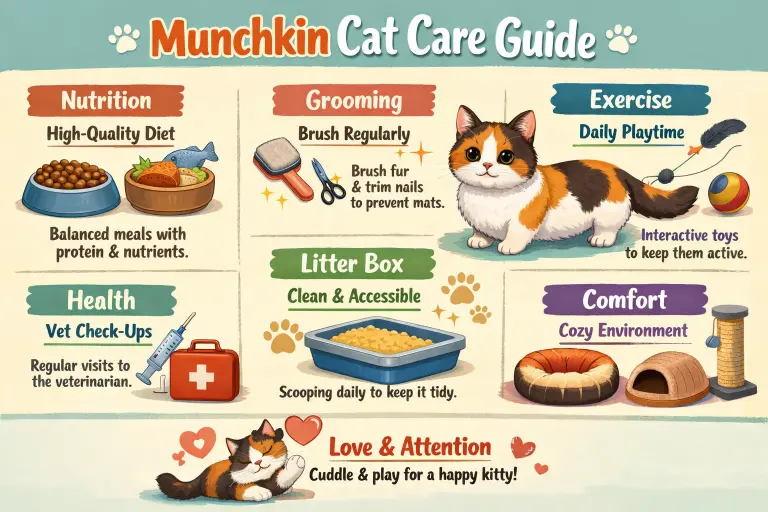
Munchkin cats are small, friendly cats with short legs and big personalities. They are curious, playful, and love spending time with their humans. Even though they look like kittens because of their short legs, they grow into healthy adults with proper care. Understanding their special traits is the first step to keeping your Munchkin happy and healthy.
These cats are generally friendly and social, which makes them great for families, including homes with kids or other pets. They are active but can also be a bit clumsy because of their shorter legs, so safe spaces are important. Munchkins need supervision in high areas and careful handling during play.
One thing to know about Munchkins is that their short legs make them prone to certain health issues. Spine and joint problems can develop if they don’t get proper exercise or if their environment is unsafe. Regular checkups and gentle play are key to preventing injuries.
Daily attention and love make a big difference for Munchkin cats. They enjoy interactive play, climbing structures adapted for their height, and a cozy resting spot. With the right care routine, these cats can live long, healthy lives while staying active and playful.
Nutrition & Feeding Guidelines
Feeding a Munchkin is not very different from other cats, but portions and diet quality are very important. They need balanced food with protein, fats, and vitamins for energy, growth, and joint health. Overfeeding can quickly lead to obesity, which adds stress to their spine and legs.
Kittens need more meals than adults. Usually, 3–4 small meals a day help them grow strong. Adult Munchkins do well with 2 meals a day, while senior cats may need smaller, more frequent meals to maintain weight and energy. Always provide fresh water, especially if feeding dry food.
Life stage matters when choosing food. Kitten formulas support bone and muscle development, while adult and senior diets often include joint-support nutrients like glucosamine. Avoid feeding too many treats or human food, as these can cause weight gain or digestive issues.
Here is a simple feeding guide table for quick reference:
| Life Stage | Meals per Day | Portion Notes | Special Tips |
|---|---|---|---|
| Kitten | 3–4 | Small amounts | Use kitten-specific food |
| Adult | 2 | Adjust by weight | Include high-protein food |
| Senior | 2–3 | Smaller portions | Check for joint supplements |
Grooming & Physical Maintenance
Munchkin cats have soft fur that needs regular grooming to stay healthy. Brushing at least twice a week removes loose hair and prevents matting. Short-haired Munchkins may need less frequent brushing, but long-haired varieties need daily attention.
Nail trimming is important since their short legs make jumping or climbing more stressful on their joints. Trim nails every 2–3 weeks to prevent scratching or snagging. Check ears weekly for wax buildup and clean gently with a damp cloth.
Dental care is often overlooked. Brushing your Munchkin’s teeth a few times a week helps prevent tartar and gum disease. If brushing is hard, dental treats or vet-approved water additives can help.
Bathing is rarely needed unless your cat gets dirty, but make sure water is warm and shallow. A calm approach prevents stress. Grooming is also a bonding time and helps you spot early signs of skin or coat problems.
Health & Mobility: What to Watch For
Munchkin cats are generally healthy, but short legs and long spines make them prone to certain conditions. Lordosis, scoliosis, and arthritis can affect their spine and joints. Watch for difficulty jumping, limping, or unusual stiffness.
Regular vet checkups are critical. Vaccinations, parasite prevention, and dental exams are essential to keep your Munchkin in good health. Early detection of joint problems or obesity makes treatment easier.
Exercise is important but needs to be safe. Provide low platforms and ramps instead of high shelves, and avoid forcing jumps. Short play sessions with toys, tunnels, and climbing pads help keep muscles strong without risking injury.
Here is a health monitoring checklist:
| Health Aspect | What to Watch | Action if Noticed |
|---|---|---|
| Joints & Spine | Limping, stiffness, reluctance to jump | Consult vet, provide gentle exercise |
| Weight & Diet | Sudden gain/loss | Adjust diet, check for illness |
| Teeth & Gums | Bad breath, red gums | Brush teeth, vet checkup |
| Ears & Eyes | Discharge, odor | Clean gently, seek vet if persistent |
Environment, Enrichment & Daily Routine
Munchkins need a home setup that keeps them active but safe. Short legs make high jumps risky, so ramps, low shelves, and cat trees with platforms close together work best. Soft bedding and quiet resting areas help them feel secure.
Interactive play is key. Toys like wand teasers, balls, and tunnels satisfy curiosity and encourage movement. Play in short sessions 2–3 times a day to prevent boredom and support joint health.
Litter box setup is important. Use a low-sided box to make it easy for your Munchkin to enter and exit. Keep the box clean to encourage consistent use. Multi-cat homes should have extra boxes for each cat to avoid stress.
Daily routines make cats feel safe. Feed at consistent times, provide fresh water, brush fur as needed, and monitor for any health or behavior changes. Keeping a predictable routine helps prevent anxiety and encourages a healthy, active lifestyle.
For more detailed breed-specific advice, visit PetMD’s Munchkin Cat Guide.

Ata Ur Rehman is the founder of Pet Age in Human Years Calculator, an educational platform that provides age conversion charts and lifespan guides for dogs, cats, birds, and other companion animals. His work focuses on helping pet owners understand how animal ages translate into human years using commonly accepted age conversion formulas and published lifespan averages.
The website compiles breed and species lifespan data from kennel clubs, breed organizations, and general animal lifespan studies to present simple and easy-to-understand guides for pet owners worldwide.
This website was created to centralize animal age conversion charts into one easy reference platform for pet owners.