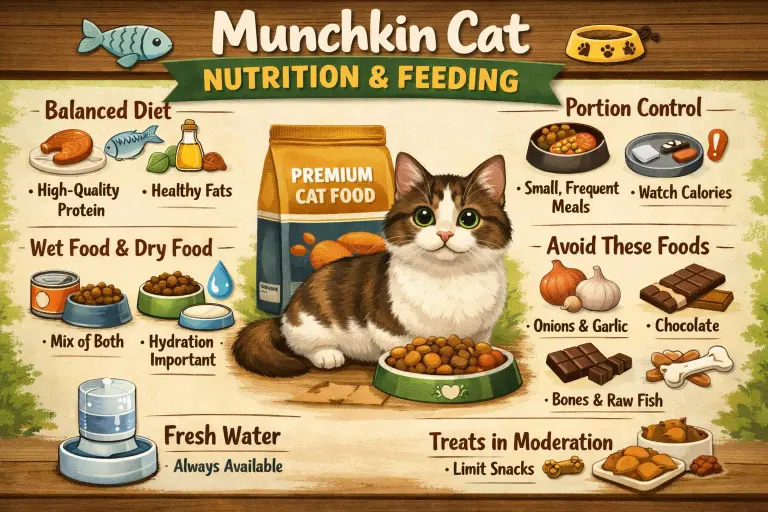
Munchkin cats are known for their short legs and playful personalities. While their small stature makes them adorable, it also means they have unique feeding needs to stay healthy. Proper nutrition helps support strong muscles, a healthy weight, and overall energy. Feeding the right food ensures your Munchkin can play, explore, and live a long, happy life.
Cats, including Munchkins, are obligate carnivores. This means their bodies rely on nutrients found mainly in animal proteins. They cannot thrive on plant-based diets alone. A balanced diet rich in protein and essential nutrients is essential to keep their heart, muscles, and organs working properly.
Overfeeding or underfeeding a Munchkin cat can lead to serious health issues. Because of their shorter legs, extra weight can put more stress on joints and bones. On the other hand, not eating enough can cause energy loss, poor growth in kittens, and health problems in adults. Feeding with care is crucial at every life stage.
Nutrition also affects your cat’s coat, digestion, and immune system. A high-quality diet with proper moisture, fats, and vitamins supports shiny fur, healthy skin, and regular bowel movements. By understanding the nutritional needs of Munchkin cats, owners can make smart feeding choices that improve their cat’s quality of life.
Core Nutritional Needs for Munchkins (Obligate Carnivore Overview)
Munchkin cats need a diet rich in protein. Proteins are made up of amino acids, which are the building blocks for muscles, organs, and tissues. Taurine, one essential amino acid, is critical for vision, heart health, and reproduction. Most commercial cat foods meet these requirements, but it’s still important to check labels.
Fats are an important energy source for Munchkins. They also help with nutrient absorption and support healthy skin and fur. Omega-3 and Omega-6 fatty acids are especially helpful for maintaining a soft coat and joint health. However, fats should be balanced because too much can lead to weight gain.
Carbohydrates are not required in large amounts for cats. While some cat foods include grains or vegetables, they mainly serve as fillers and energy sources. Munchkin cats can digest small amounts of carbs, but high-carb diets are not ideal. Focus should be on proteins and fats.
Moisture is another key factor. Cats naturally have a low thirst drive, so wet food or water-rich diets help prevent dehydration and kidney problems. Providing fresh water at all times is crucial, and wet food can help meet hydration needs while supporting urinary tract health.
Feeding Best Practices (Portions, Frequency & Food Types)
Munchkin cats do well with multiple small meals throughout the day. Adult cats can usually be fed 2–3 times daily, while kittens benefit from 3–4 small meals. Consistent meal times help regulate metabolism and prevent overeating.
Both wet and dry foods have advantages. Wet food provides extra moisture, which is excellent for hydration. Dry food is convenient and can help keep teeth clean. Many owners choose a mixed feeding approach, offering both types to balance nutrition and texture variety.
Portion size depends on age, weight, and activity level. Overfeeding is a common mistake, especially with indoor cats that may be less active. Underfeeding can stunt growth in kittens and cause weight loss in adults. It’s important to follow feeding guidelines on packaging and adjust as needed.
Feeding Portion Guidelines Table
| Cat Weight | Daily Calories | Suggested Portions (Wet/Dry) |
|---|---|---|
| 2.0–3.5 kg | 180–220 kcal | 1 can + ¼ cup dry |
| 3.5–5.5 kg | 220–260 kcal | 1–1.5 cans + ¼–⅓ cup dry |
| 5.5–7.0 kg | 260–300 kcal | 1.5–2 cans + ⅓ cup dry |
This table is a general guide. Always monitor your Munchkin’s body condition and adjust portions if needed.
Munchkin-Relevant Feeding Considerations
Munchkin cats have short legs, so extra weight can stress their joints and spine. Maintaining a healthy weight is very important. Playtime and indoor activity help burn calories, but diet control is the main factor for weight management.
Growth stages also affect feeding. Kittens need high-protein, energy-rich diets for proper development. Adults require balanced meals for maintenance. Senior cats benefit from diets that support joint health and maintain lean muscle mass. Adjusting food types and portions for each life stage keeps Munchkins healthy and active.
Treats should be given sparingly. Human food and high-calorie snacks can add up quickly and lead to obesity. Safe cat treats or small portions of wet food are better options. Make sure treats do not exceed 10% of the total daily caloric intake.
Life-Stage Feeding Summary Table
| Life Stage | Key Needs | Feeding Focus |
|---|---|---|
| Kitten | Growth, high protein | Frequent small meals |
| Adult | Maintenance | Balanced portions |
| Senior | Lower calories, joint support | Protein quality and hydration |
Practical Guidance & Safe Feeding Tips
Reading cat food labels is an important skill. Look for real meat as the first ingredient, check protein and fat levels, and make sure taurine is included. Avoid foods with excessive fillers, artificial colors, or sugars.
Hydration is critical. Even if your cat eats wet food, always provide fresh water. Place water bowls in multiple areas to encourage drinking, especially for less active or indoor cats.
Common feeding mistakes include free-feeding unlimited dry food, over-relying on treats, and sudden diet changes. Introduce new foods gradually to prevent digestive upset. Monitoring your cat’s weight and body condition regularly helps catch issues early.
Finally, regular vet check-ups are essential. While this guide is educational, your veterinarian can provide personalized advice based on your Munchkin’s health, age, and activity level.
For more detailed information on feline nutrition, visit the American Association of Feline Practitioners.

Ata Ur Rehman is the founder of Pet Age in Human Years Calculator, an educational platform that provides age conversion charts and lifespan guides for dogs, cats, birds, and other companion animals. His work focuses on helping pet owners understand how animal ages translate into human years using commonly accepted age conversion formulas and published lifespan averages.
The website compiles breed and species lifespan data from kennel clubs, breed organizations, and general animal lifespan studies to present simple and easy-to-understand guides for pet owners worldwide.
This website was created to centralize animal age conversion charts into one easy reference platform for pet owners.