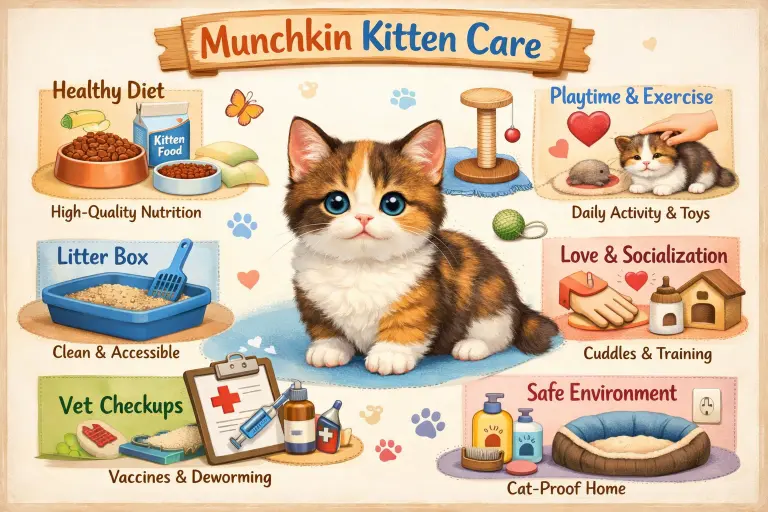
Munchkin kittens are a special and adorable breed known for their short legs and playful personalities. Their unique body structure makes them look small and cute, but it doesn’t mean they need fragile care. Like all kittens, they need love, attention, proper feeding, and a safe home to grow healthy and happy. Understanding their needs early will help you give them the best start in life.
When bringing a Munchkin kitten home, it’s normal to feel excited but also a little nervous. They may be shy at first, hiding in small spaces or observing their surroundings. Give them time to adjust, speak gently, and offer treats or toys to make them feel safe. This early period is very important for bonding and building trust.
Munchkin kittens are active and curious, but their short legs can affect how high they jump and how far they run. This doesn’t mean they can’t play or explore. You just need to provide safe, low-height play areas and avoid letting them jump from very tall surfaces. Watching their movement closely in the first weeks helps you spot anything unusual early.
Early care also includes keeping a routine. Regular feeding times, consistent litter box placement, and daily play sessions help your kitten feel secure. A predictable routine is calming for kittens and helps you manage their energy, which is often high in bursts. This section sets the foundation for understanding your kitten’s needs and ensures a smooth start to life together.
Feeding & Daily Basics for Growing Munchkins
Feeding your Munchkin kitten properly is one of the most important things you can do for their growth. Kittens need high-quality food with the right balance of protein, fat, and essential nutrients. During the first weeks at home, offer small meals 3–4 times a day to keep their energy steady and support healthy development.
As your kitten grows, you may adjust feeding portions according to age and weight. It’s helpful to follow a simple table like this:
Feeding Guide for Munchkin Kittens
| Age (weeks) | Meals per day | Approx. Portion per Meal |
|---|---|---|
| 8–12 | 3–4 | 1–2 tablespoons |
| 12–16 | 3 | 2–3 tablespoons |
| 16–20 | 2–3 | 3–4 tablespoons |
| 20+ | 2 | 3–5 tablespoons |
Daily routines are also important. Munchkin kittens benefit from a mix of play, rest, and food. Short play sessions throughout the day help them burn energy safely. Provide interactive toys, soft balls, or low climbing platforms. Avoid overexertion, especially in the first few weeks at home.
Always make fresh water available. Munchkin kittens can be active drinkers, so check their water bowl several times a day. Avoid sudden diet changes, and introduce new foods gradually to prevent upset stomachs. Observing their appetite and weight gain ensures they are developing properly.
Litter Training & Bathroom Habits
Litter training a Munchkin kitten is usually quick if you provide the right setup and encouragement. Start with a small, low-sided litter box so your kitten can easily step in and out. Keep the box in a quiet, accessible place where your kitten feels safe using it.
Kittens naturally learn to use a litter box, but accidents may happen at first. When accidents occur, avoid punishment. Instead, clean the area thoroughly and place your kitten back in the litter box. Rewarding them gently with praise or a treat after successful use reinforces positive habits.
It’s also important to keep the litter box clean. Scoop daily and change the litter regularly to prevent odors and discourage your kitten from seeking other places. If you have more than one kitten, provide one litter box per kitten plus an extra to reduce competition.
Litter Training Checklist
| Task | Tip |
|---|---|
| Box placement | Quiet, low-traffic area |
| Litter type | Unscented, soft for paws |
| Cleaning frequency | Scoop daily, full change weekly |
| Reward for success | Praise or small treat |
| Accident handling | Clean thoroughly, avoid punishment |
With patience and consistency, your Munchkin kitten will quickly learn proper bathroom habits, giving you both a smoother and stress-free experience.
Safety, Grooming & Environment Tips
Keeping your Munchkin kitten safe at home is essential. Because they have short legs, Munchkins may struggle with tall jumps or high shelves. Provide low platforms, soft landing areas, and block access to places they might fall from. Even playful jumps from furniture should be supervised.
Grooming is another key part of care. Most Munchkins have short coats that are easy to maintain, but brushing a few times a week helps reduce shedding and keeps their coat shiny. Trim their nails regularly and check ears, eyes, and teeth for cleanliness. Early grooming sessions make handling easier as they grow.
Your kitten’s environment should be enriching but secure. Offer toys, scratching posts, and cozy resting spots. Rotate toys to keep them interested. Keep electrical cords, small objects, and toxic plants out of reach. These simple adjustments prevent injuries and make your home kitten-friendly.
Munchkin Kitten Safety & Grooming Tips
| Area | Tip |
|---|---|
| Furniture | Low platforms, soft landings |
| Climbing/play areas | Provide safe, supervised options |
| Grooming | Brush coat, trim nails weekly |
| Household hazards | Hide cords, small items, toxic plants |
| Resting places | Cozy, quiet spots |
Following these steps helps your kitten explore confidently while staying safe and healthy.
Understanding Growth, Behavior & Health Basics
Munchkin kittens grow quickly during their first months. Normal growth includes gaining coordination, learning to play, and sleeping a lot. Sleep is vital for healthy development and may take up 16–20 hours a day for young kittens. Short bursts of energy are normal, followed by long naps.
Play behavior is also important. Kittens explore, pounce, and sometimes bite gently. These behaviors are natural, but it’s important to redirect them to toys instead of hands. Interactive play strengthens bonds and helps them release energy safely.
Monitoring health doesn’t mean diagnosing problems yourself. Watch for steady weight gain, clear eyes, and normal energy levels. Your vet should see your kitten for check-ups, vaccinations, and general advice. Early observation of behavior and growth ensures your kitten develops normally.
Development Milestones Table
| Age (weeks) | Typical Behaviors |
|---|---|
| 8–12 | Explore, play, learn litter box |
| 12–16 | Climbing, chasing, short jumps |
| 16–20 | Stronger coordination, social play |
| 20+ | More independence, routine energy |
Understanding your kitten’s growth, behavior, and basic health needs sets the stage for a happy and confident adult cat. Observing these milestones gives peace of mind and helps you support your Munchkin kitten effectively.
For more detailed kitten care tips, you can visit ASPCA Kitten Care.

Ata Ur Rehman is the founder of Pet Age in Human Years Calculator, an educational platform that provides age conversion charts and lifespan guides for dogs, cats, birds, and other companion animals. His work focuses on helping pet owners understand how animal ages translate into human years using commonly accepted age conversion formulas and published lifespan averages.
The website compiles breed and species lifespan data from kennel clubs, breed organizations, and general animal lifespan studies to present simple and easy-to-understand guides for pet owners worldwide.
This website was created to centralize animal age conversion charts into one easy reference platform for pet owners.