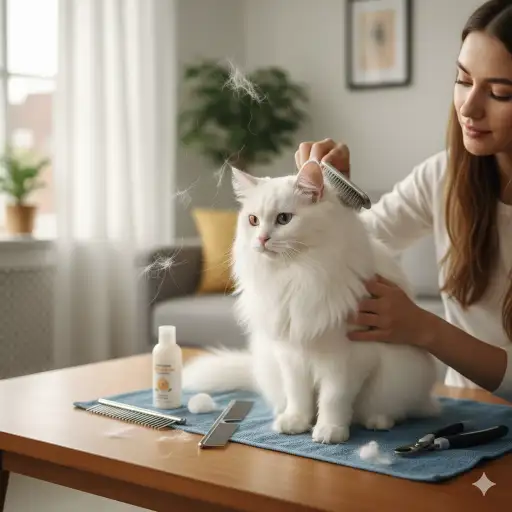
The Turkish Angora is known for its soft, silky coat and light, flowing tail. At first glance, many people think this breed must be very high maintenance. But the truth is more balanced. The Turkish Angora has a single-layer coat, which means it has very little undercoat. This makes the fur feel light and smooth instead of thick and fluffy. Because of this, grooming is usually easier than with heavy double-coated long-haired cats.
Even though they do not have a thick undercoat, Turkish Angoras still need regular grooming. Their fur is fine and can tangle in areas where there is friction. The most common spots are behind the ears, under the front legs, on the belly, and around the tail base. The tail plume is beautiful but can also hide small knots if it is not checked weekly.
Shedding also surprises some new owners. Turkish Angoras do shed, especially in spring and early summer. During this time, you may notice more hair on furniture and clothes. The coat may feel thinner after shedding season. This is normal. Indoor cats may shed lightly all year because indoor lights and heating affect their natural coat cycle.
Another common myth is that Turkish Angoras do not mat because they have no undercoat. While they mat less than some long-haired breeds, they can still develop tangles if brushing is skipped. Fine hair can twist together quickly. Regular brushing keeps the coat smooth, removes loose hair, and helps you check the skin for any redness, bumps, or irritation. Grooming is not just about looks. It is also about health and comfort.
Turkish Angora Brushing Routine (Step-by-Step)
Brushing is the most important part of Turkish Angora grooming. In most cases, brushing once a week is enough. During heavy shedding seasons, brushing two to three times a week works better. If your cat goes outside, you may need to brush more often because dirt and debris can stick to the coat.
Start brushing when your cat is calm. Choose a quiet room. Let your cat sit or lie down in a relaxed position. Begin with easy areas like the back and sides. Use slow and gentle strokes. Turkish Angoras have fine skin, so pressing too hard can cause discomfort. Always brush in the direction the hair grows.
After brushing the back, move to the chest and front legs. Lift one leg gently and check the armpit area. This is a common place for small tangles. If you find a small knot, hold the hair close to the skin with your fingers and gently work the tangle out. Never pull hard. Never cut close to the skin because their skin is thin and easy to injure.
The tail plume needs special care. Hold the tail gently and brush in small sections from the base outward. Do not rush. If the tail becomes static, brushing too much can make it worse. Slow, light strokes work best.
Watch your cat’s body language during brushing. If the tail starts flicking fast, the ears go back, or the skin twitches repeatedly, your cat may be getting stressed. Stop before the cat becomes upset. Short sessions are better than long ones. Positive grooming experiences build trust over time.
Nail, Ear, Dental & Hygiene Basics
Turkish Angoras are active and love to climb. Because they are athletic, their nails grow strong and sharp. Even indoor cats need nail trimming every two to four weeks. If you hear clicking sounds when your cat walks on a hard floor, the nails are probably too long.
When trimming nails, gently press the paw to extend the claw. Look for the pink area inside the nail, called the quick. Only trim the clear tip. Cutting into the quick causes pain and bleeding. If your cat pulls the paw away, pause and try again later. It is better to trim a few nails at a time than to force all of them at once.
Ear care is simple. Check the ears once a week. Clean only if you see visible dirt or wax. Healthy ears are light pink inside and do not smell bad. If you see redness, swelling, or thick discharge, contact a veterinarian. Over-cleaning can irritate the ear canal.
Eye care may be needed for light-colored Turkish Angoras. Some cats develop small tear stains near the inner corners of the eyes. Use a soft, damp cloth to gently wipe away debris. Do not use harsh products. If you see yellow or green discharge, this may be a sign of infection.
Dental care is often forgotten, but it is important. Brushing your cat’s teeth two to three times a week helps reduce plaque. If daily brushing is possible, that is even better. Signs of dental problems include bad breath, drooling, or difficulty eating. Regular dental care can prevent painful issues later.
Bathing a Turkish Angora (When It’s Needed — and When It’s Not)
Most Turkish Angoras do not need frequent baths. They are clean cats and groom themselves very well. In many homes, bathing once or twice a year is enough, unless the cat becomes very dirty or gets into something sticky.
Bathing may be needed if your cat has rolled in dirt, has oily buildup, or has a medical skin condition that requires washing. Always use a shampoo made for cats. Human shampoo is not safe because it changes the skin’s natural balance.
Use warm, not hot, water. Wet the coat slowly and avoid pouring water directly over the face. Gently massage the shampoo into the fur, especially around the tail and belly. Rinse very well. Leftover shampoo can cause itching.
Drying is very important. Use a soft towel to remove as much water as possible. Some cats tolerate a low-noise dryer on a cool setting, but many do not. Never use high heat. Make sure the coat is fully dry before your cat goes into a cool room. Damp fur can cause chills and skin irritation.
Shaving a Turkish Angora is usually not recommended. Their coat helps protect their skin from sunburn and temperature changes. Shaving can also change how the coat grows back. If severe matting happens, a professional groomer or veterinarian should handle it safely.
Grooming Schedule, Stress Signals & When to Get Help
Keeping a simple schedule helps you stay consistent. Here is a quick grooming guide for Turkish Angoras:
| Grooming Task | Normal Frequency | During Shedding Season | Notes |
|---|---|---|---|
| Brushing | Once a week | 2–3 times a week | Focus on tail, armpits, belly |
| Nail Trimming | Every 2–4 weeks | Same | Trim small amounts at a time |
| Ear Check | Once a week | Once a week | Clean only if dirty |
| Dental Care | 2–3 times weekly | Same | Daily is best if possible |
| Bathing | 1–2 times per year | Rarely needed | Only when truly dirty |
During grooming, always watch for stress signs. Cats give clear signals when they are uncomfortable.
| Body Signal | What It Means | What You Should Do |
|---|---|---|
| Fast tail flicking | Annoyed or overstimulated | Pause brushing |
| Ears pinned back | Fear or irritation | Stop and give space |
| Skin twitching | Sensitive or uncomfortable | Lighten pressure |
| Growling or hissing | High stress | End session calmly |
| Trying to escape | Overwhelmed | Try again later |
Common grooming mistakes include brushing too hard, skipping weekly sessions, cutting mats with scissors, and forcing long grooming times. Short, calm grooming sessions build trust. If your cat becomes aggressive, extremely fearful, or develops large mats close to the skin, it is best to seek help from a professional groomer or a veterinarian.
Kittens should be introduced to grooming early with very short sessions. Senior cats may need more help because they groom themselves less due to stiffness or arthritis. In these cases, gentle brushing helps keep them comfortable.
If you ever see red skin, sores, hair loss, or signs of infection, contact a veterinarian. Grooming should never cause pain. It should support your cat’s health and comfort.
With the right routine, Turkish Angora grooming is simple and manageable. Their silky coat is one of their most beautiful features, and regular care keeps it shining and healthy. For more detailed information about this breed’s overall characteristics and care, you can visit the Cat Fanciers’ Association breed page: https://cfa.org/breed/turkish-angora/

Ata Ur Rehman is the founder of Pet Age in Human Years Calculator, an educational platform that provides age conversion charts and lifespan guides for dogs, cats, birds, and other companion animals. His work focuses on helping pet owners understand how animal ages translate into human years using commonly accepted age conversion formulas and published lifespan averages.
The website compiles breed and species lifespan data from kennel clubs, breed organizations, and general animal lifespan studies to present simple and easy-to-understand guides for pet owners worldwide.
This website was created to centralize animal age conversion charts into one easy reference platform for pet owners.