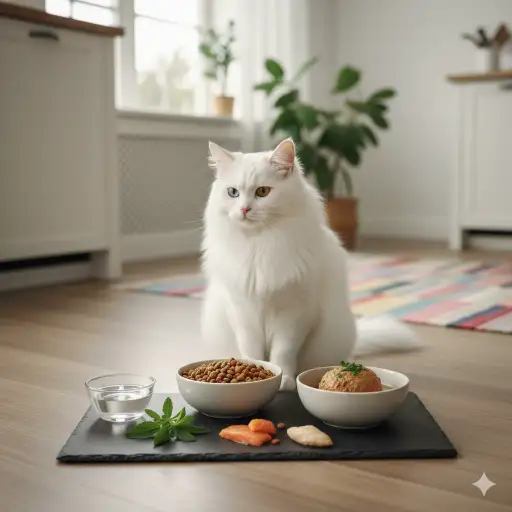
The Turkish Angora is a naturally lean, active, and elegant cat. Unlike heavier or stockier breeds, this cat is built for movement. That means nutrition must support muscle, energy, and coat health without causing unwanted weight gain. Feeding too little protein can lead to muscle loss, while feeding too many calories can quickly hide under that fluffy coat. Getting the balance right is key.
Like all domestic cats, the Turkish Angora is an obligate carnivore. This means they must eat animal-based protein to survive and thrive. Their bodies are designed to use protein and fat as their main energy sources. They do not need large amounts of carbohydrates. While small amounts of carbs in commercial cat food are normal and safe, the focus should always be on high-quality animal protein.
Protein quality matters more than just the number on the label. Animal-based proteins such as chicken, turkey, lamb, or fish provide essential amino acids. One of the most important is taurine. Taurine supports heart function, vision, and overall health. A complete and balanced commercial cat food formulated to meet standards from the Association of American Feed Control Officials (AAFCO) ensures these essential nutrients are present in safe and proper amounts.
Fat is also important for Turkish Angoras. Fat provides energy and helps keep their silky coat shiny and soft. However, because this breed is slim by nature, it is easy to overfeed calorie-dense food. Even small daily excess calories can lead to slow weight gain over time. A good diet should support strong muscles and steady energy without making the cat bulky or overweight.
Vitamins and minerals are just as important as protein and fat. Calcium and phosphorus help maintain bones. B vitamins support energy use. Vitamin A supports vision and skin. When choosing food, look for a label that says “complete and balanced.” This means the food is designed to meet a cat’s daily nutrient needs without needing extra supplements. Adding random supplements without veterinary advice can upset this balance.
Best Food Types for Turkish Angoras (Wet, Dry, or Mixed?)
Many owners ask what is the best food for a Turkish Angora: wet, dry, or both? The truth is that each type has benefits. The best choice depends on your cat’s activity level, hydration habits, and portion control.
Wet food contains high moisture, often around 70–80%. This helps support hydration and urinary health. Turkish Angoras are active, and some may not drink enough water on their own. Wet food helps make up for this. It also tends to be less calorie-dense per gram, which can help prevent overeating.
Dry food is more convenient and often less expensive. It can be left out for short periods without spoiling quickly. However, dry food is more calorie-dense. This means small portions contain more calories. If free-fed, it may lead to slow weight gain, especially in indoor or neutered cats. Some people believe dry food cleans teeth, but this effect is limited and should not replace dental care.
Mixed feeding combines both wet and dry food. This approach offers hydration support from wet food and convenience from dry food. It can also increase food enjoyment. The key is to adjust portions carefully so total daily calories remain balanced.
Below is a simple comparison to help you understand the differences.
Food Type Comparison
| Food Type | Moisture Level | Calorie Density | Portion Control Difficulty | Best For |
|---|---|---|---|---|
| Wet Food | High (70–80%) | Lower per gram | Easier | Cats needing hydration support |
| Dry Food | Low (10%) | Higher per gram | Harder if free-fed | Busy owners needing convenience |
| Mixed Feeding | Moderate | Adjustable | Moderate | Balanced approach |
No matter which type you choose, always check that it is labeled complete and balanced. Avoid switching foods suddenly. Gradual changes over 7–10 days help prevent stomach upset.
How Much Should a Turkish Angora Eat?
Feeding the right amount is just as important as choosing the right food. Turkish Angoras are slim and athletic, so their food needs depend on age, weight, and activity level. A kitten needs more calories per pound than an adult. A very active cat needs more than a quiet indoor cat.
Kittens usually need three to four small meals a day. Adults typically do well with two measured meals daily. Seniors may continue with two meals, but portion size may need adjustment based on activity and muscle condition.
Free-feeding, where food is left out all day, can work for some self-controlled cats. However, many Turkish Angoras enjoy food and may overeat dry kibble. Measured meals help prevent slow weight gain. Use a kitchen scale or measuring cup for accuracy. Guessing often leads to overfeeding.
Feeding Frequency Guide
| Life Stage | Meals Per Day | Portion Focus | What to Monitor |
|---|---|---|---|
| Kitten | 3–4 | Higher energy | Steady growth |
| Adult | 2 | Muscle maintenance | Body shape |
| Senior | 2 | Maintain weight | Muscle loss |
Watch your cat’s body shape. You should feel the ribs easily but not see them sharply. From above, the waist should be visible. If your cat loses that waistline, portions may need to decrease. If ribs feel too sharp, more food may be needed. Always adjust slowly and observe changes over weeks, not days.
Portion Awareness Guide
| Weight Trend | Activity Level | Feeding Adjustment | Monitor For |
|---|---|---|---|
| Gaining Weight | Low | Slightly reduce calories | Fat around belly |
| Stable Weight | Moderate | Maintain portions | Lean muscle |
| Losing Weight | High | Slightly increase calories | Energy level |
Spayed and neutered cats often have a lower metabolism. This means they may need fewer calories than before surgery. Indoor cats also burn fewer calories than outdoor hunters. Small adjustments make a big difference over time.
Treats, Hydration & Common Feeding Mistakes
Treats are enjoyable but should be limited. A good rule is to keep treats under 10% of daily calories. Choose protein-based treats instead of high-carb options. Avoid feeding table scraps often, as they add hidden calories.
Some human foods are unsafe for cats. Onions, garlic, chocolate, grapes, and alcohol are toxic. Many adult cats are lactose intolerant, so milk may cause stomach upset. Even safe foods should be given only in tiny amounts.
Hydration is very important. Cats naturally have a low thirst drive. Wet food can help increase water intake. Providing fresh water daily and using a water fountain may encourage drinking. Clean bowls often and place them away from litter boxes.
Common feeding mistakes include overfeeding dry food, switching diets too quickly, adding unnecessary supplements, and ignoring slow weight gain. Sometimes owners judge health only by appetite. A cat that eats eagerly is not always at a healthy weight. Regularly checking body condition is more reliable than relying on hunger signals alone.
Do / Don’t Feeding Guide
| Do | Don’t | Why It Matters |
|---|---|---|
| Measure meals | Free-feed high-calorie kibble | Prevents weight gain |
| Choose complete food | Add random supplements | Keeps nutrient balance safe |
| Transition slowly | Switch food overnight | Reduces stomach upset |
| Limit treats | Offer daily table scraps | Avoids excess calories |
Special Considerations & When to Seek Veterinary Guidance
Indoor Turkish Angoras often need fewer calories than active outdoor cats. They may benefit from puzzle feeders to increase movement and mental stimulation. Spayed or neutered cats may gain weight easily if portions are not adjusted. Monitor changes closely after surgery.
In multi-cat homes, one cat may eat another’s portion. Separate feeding areas help ensure each cat gets the right amount. Feeding by life stage is important. A kitten should not rely on adult maintenance food, and seniors may need more digestible formulas.
Watch for warning signs. Sudden weight loss, refusal to eat, vomiting, diarrhea, dull coat, or extreme thirst can signal health issues. These changes require veterinary attention. This guide is educational and does not replace professional care.
If you are unsure about portion size, calorie needs, or sudden appetite changes, consult your veterinarian. They can assess body condition and overall health.
Turkish Angoras thrive on high-quality protein, balanced fat, and proper portion control. Focus on lean muscle, steady energy, and coat shine. Avoid overfeeding, monitor weight regularly, and adjust diet as life stage changes. With careful feeding habits, this elegant and active breed can maintain its natural grace and health for many years.
For more general guidance on feline nutrition standards, you can review resources from the American Veterinary Medical Association at: https://www.avma.org/resources/pet-owners/petcare/cat-nutrition

Ata Ur Rehman is the founder of Pet Age in Human Years Calculator, an educational platform that provides age conversion charts and lifespan guides for dogs, cats, birds, and other companion animals. His work focuses on helping pet owners understand how animal ages translate into human years using commonly accepted age conversion formulas and published lifespan averages.
The website compiles breed and species lifespan data from kennel clubs, breed organizations, and general animal lifespan studies to present simple and easy-to-understand guides for pet owners worldwide.
This website was created to centralize animal age conversion charts into one easy reference platform for pet owners.