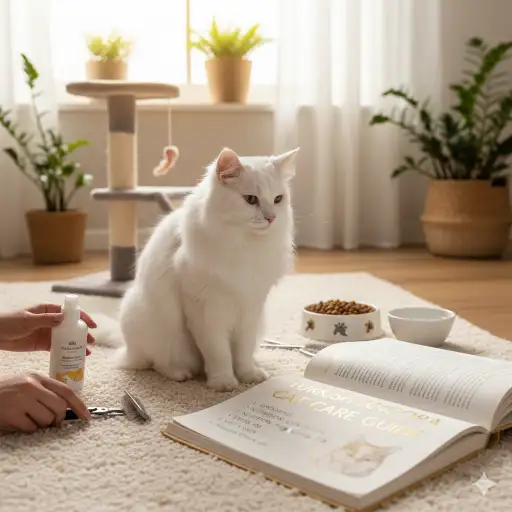
The Turkish Angora is one of the oldest natural cat breeds, originally from Turkey and recognized today by organizations like the Cat Fanciers’ Association. Many people think this cat is “low maintenance” because of its silky coat. In reality, Turkish Angora care is more about mental stimulation and daily interaction than heavy grooming. This is not a quiet lap cat that sleeps all day. It is alert, smart, fast, and deeply connected to its people.
Turkish Angoras are highly intelligent. They learn routines quickly and can even figure out how to open cabinets or doors. Owners often say their Angora watches everything happening in the house. Because of this intelligence, they need daily play and attention. If they feel bored, they may climb curtains, knock items off shelves, or meow loudly for attention. This is not bad behavior. It is usually a sign that their needs are not being met.
They are also very social. Many Turkish Angoras follow their favorite person from room to room. Some become strongly attached to one family member. If left alone too often without stimulation, they may develop stress behaviors. This is why understanding their emotional needs is just as important as feeding or grooming them.
Even though their coat looks long and fancy, it is a single-layer coat without a thick undercoat. This means less heavy shedding compared to double-coated breeds, but it still needs regular brushing to stay smooth and shiny. Overall, Turkish Angoras are moderate to high maintenance when it comes to time and attention, but moderate when it comes to grooming effort.
Here is a quick overview of what caring for a Turkish Angora really involves:
| Care Factor | Level | What It Means for You |
|---|---|---|
| Grooming | Moderate | Brush 2–3 times weekly |
| Shedding | Moderate (seasonal) | More hair in spring |
| Play Needs | High | Daily interactive play required |
| Vocalization | Moderate to High | Will “talk” when bored |
| Attention Needs | High | Prefers company and interaction |
| Best Home Type | Active household | Works well with engaged families |
If you want a calm, independent cat that entertains itself all day, this breed may not be the best choice. But if you enjoy interactive play, smart behavior, and a cat that truly bonds with you, Turkish Angora care can be very rewarding.
Daily & Weekly Turkish Angora Care Routine
Caring for a Turkish Angora works best when you follow a simple routine. These cats love structure. When feeding time, play time, and rest time happen at similar hours each day, they feel safe and relaxed.
Daily play is very important. At least 20 to 30 minutes of active play should be divided into two short sessions. Use wand toys, feather teasers, or small moving toys that allow jumping and chasing. Turkish Angoras enjoy climbing, so tall cat trees and wall shelves help burn energy safely. Without daily play, they may create their own “games” by climbing furniture or exploring unsafe spaces.
Feeding should match their activity level. Most adult Turkish Angoras do well with two measured meals per day. Because they are active, some owners worry about weight loss. Others overfeed because the cat acts hungry due to boredom. Monitoring weight monthly helps prevent problems. Fresh water should always be available, and many Angoras enjoy water fountains.
Weekly care includes brushing, nail trimming, ear checks, and dental care. Even though their coat is fine, brushing two to three times per week prevents small tangles behind the ears and under the legs. Nails usually need trimming every two to three weeks. Teeth brushing, even twice weekly, supports long-term health.
Here is a simple care schedule:
| Task | Frequency | Time Needed | Why It Matters |
|---|---|---|---|
| Interactive Play | Daily | 20–30 min | Prevents boredom & bad behavior |
| Feeding | Daily | 5 min | Maintains healthy weight |
| Coat Check | Daily quick look | 1–2 min | Spots mats early |
| Brushing | 2–3x weekly | 5–10 min | Keeps coat smooth |
| Nail Trim | Every 2–3 weeks | 5 min | Prevents scratches & splits |
| Dental Care | 2x weekly | 3–5 min | Reduces dental disease risk |
| Weight Check | Monthly | 2 min | Tracks health changes |
Keeping this routine consistent helps prevent many common Turkish Angora behavior issues.
Grooming & Shedding: Keeping the Turkish Angora Coat Healthy
The Turkish Angora’s coat is soft, silky, and elegant. Unlike many long-haired cats, they do not have a thick undercoat. This means their fur is less likely to form heavy mats, but it can still tangle if ignored.
Brushing two or three times per week is usually enough. Use a soft slicker brush or a stainless-steel comb with wide teeth. Always brush gently in the direction of hair growth. Pay close attention to areas behind the ears, under the front legs, and near the back legs. These spots can form small knots that are easy to miss.
Shedding increases during spring and sometimes fall. During these times, brushing may need to increase to every other day. Regular brushing reduces loose hair in your home and prevents hairballs. Even though Turkish Angoras shed less than some long-haired breeds, they are not hypoallergenic.
Bathing is rarely needed unless the cat gets very dirty. Their coat naturally stays clean. If bathing is required, use a mild cat-safe shampoo and dry the coat fully to prevent skin irritation.
Here are basic grooming do’s and don’ts:
| Do | Don’t |
|---|---|
| Brush gently 2–3 times weekly | Pull hard on tangles |
| Check hidden mat areas | Ignore small knots |
| Increase brushing during shedding season | Assume single coat means no grooming |
| Use cat-safe shampoo if bathing | Use human shampoo |
Good grooming also becomes bonding time. Many Turkish Angoras enjoy the attention if introduced to brushing early in life.
Health, Lifespan & Warning Signs Owners Should Know
Turkish Angoras are generally healthy and can live 12 to 18 years with proper care. Because they are a natural breed, they tend to have fewer genetic problems than heavily modified breeds. However, there are still some health concerns to watch for.
White Turkish Angoras, especially those with blue eyes, may have a higher risk of congenital deafness. This does not affect every white Angora, but it is something breeders test for. Responsible breeders often follow health guidelines from organizations like the American Veterinary Medical Association to support ethical breeding practices.
Like all cats, they can develop dental disease, obesity, or kidney issues later in life. Regular veterinary visits once per year for adults and twice per year for seniors are recommended. Weight monitoring is important because their slim body can hide early weight changes.
Behavior changes are often the first sign of illness. A normally playful Angora that suddenly hides or stops jumping may be in pain. A very vocal cat that becomes silent may also signal a problem. Quick action can prevent more serious health issues.
Here is a helpful comparison:
| Normal Behavior | Concerning Sign |
|---|---|
| Active and curious | Sudden lethargy |
| Clear bright eyes | Eye discharge or squinting |
| Steady appetite | Refusing food for 24 hours |
| Regular grooming | Overgrooming or bald spots |
| Consistent litter use | Avoiding litter box |
If you notice sudden appetite loss, breathing trouble, repeated vomiting, or extreme behavior changes, contact a veterinarian immediately.
Special Care Situations: Kittens, Seniors & Multi-Cat Homes
Turkish Angora kittens are full of energy. Early socialization is very important. Introduce grooming tools gently so brushing becomes normal. Provide safe climbing spaces early to prevent dangerous jumping habits. Kittens need more frequent meals and shorter but more frequent play sessions.
Adult Angoras need steady mental stimulation. Rotating toys every week helps prevent boredom. Puzzle feeders are helpful for smart cats that enjoy problem-solving. In apartments, vertical climbing space is especially important to allow natural behavior.
Senior Turkish Angoras may slow down but still enjoy interaction. Grooming may need to increase slightly because older cats groom themselves less. Watch for joint stiffness, weight loss, or confusion. Soft bedding and easy access to litter boxes support aging comfort.
In multi-cat homes, resource management matters. Provide multiple litter boxes, feeding areas, and resting spots. Turkish Angoras can be confident and may try to dominate resources. Slow introductions reduce stress.
With proper care, attention, and regular veterinary support, Turkish Angoras thrive in loving homes. They reward owners with intelligence, beauty, and deep companionship.
For more general cat health guidelines, you can visit the American Veterinary Medical Association website: https://www.avma.org

Ata Ur Rehman is the founder of Pet Age in Human Years Calculator, an educational platform that provides age conversion charts and lifespan guides for dogs, cats, birds, and other companion animals. His work focuses on helping pet owners understand how animal ages translate into human years using commonly accepted age conversion formulas and published lifespan averages.
The website compiles breed and species lifespan data from kennel clubs, breed organizations, and general animal lifespan studies to present simple and easy-to-understand guides for pet owners worldwide.
This website was created to centralize animal age conversion charts into one easy reference platform for pet owners.