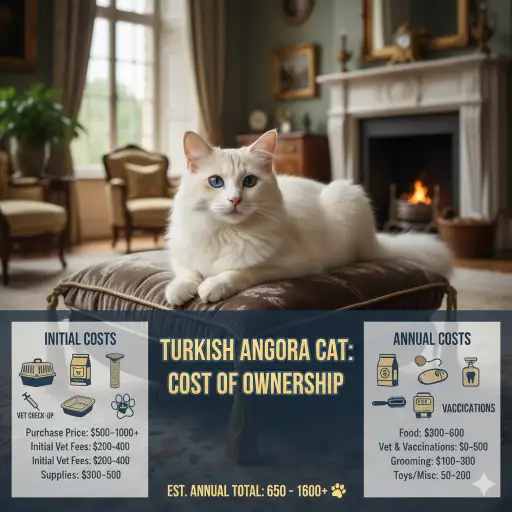
Owning a Turkish Angora is not just about buying a beautiful white cat with soft fur and bright eyes. It is about making a long-term promise. This breed is active, smart, and very social. They do not like to be ignored. They need attention, play time, and proper care for many years.
Many people only think about the purchase price. But the real cost of ownership is much more than that. You must think about food, litter, vet visits, toys, climbing trees, and possible emergency care. A Turkish Angora can live 12 to 16 years, and some live even longer. That means over a decade of spending.
Understanding the full cost helps you decide if you are truly ready. This guide will show you honest, realistic costs. These are not exact numbers. Prices change by country, city, and lifestyle. The goal is to help you plan wisely, not scare you or sell you something.
One-Time Initial Costs
Before you bring your Turkish Angora home, you will spend money on setup and medical care. These costs happen mostly in the first year.
Acquisition cost depends on where you get the cat. Adoption is usually lower cost. Buying from a responsible breeder is more expensive because it includes health testing and proper early care.
Typical acquisition cost range:
| Type | Low Range | High Range |
|---|---|---|
| Adoption | $75 | $300 |
| Reputable breeder | $800 | $2,500+ |
If you travel to pick up the kitten, transport can add extra cost.
Basic setup supplies are also needed right away. Turkish Angoras are active and love climbing. A simple setup is not enough for this breed.
Essential supply cost estimate:
| Item | Estimated Cost Range |
|---|---|
| Litter box (1–2) | $20 – $80 |
| Litter scoop & mat | $10 – $30 |
| Food & water bowls | $15 – $50 |
| Cat carrier | $30 – $100 |
| Scratching post | $30 – $150 |
| Cat tree (important for this breed) | $80 – $300 |
| Bed & blankets | $20 – $60 |
| Grooming tools | $15 – $40 |
Early medical care may include:
| Service | Estimated Cost Range |
|---|---|
| First vet visit | $50 – $150 |
| Vaccinations | $75 – $200 |
| Spay or neuter | $100 – $400 |
| Microchip | $25 – $75 |
Total one-time starting cost usually falls between $500 and $3,500 depending on breeder choice and quality of supplies.
Ongoing Monthly Costs
After setup, monthly costs begin. These are steady expenses.
Food is one of the main costs. Turkish Angoras are lean and active. They benefit from good-quality protein. Cheap food may lead to health problems later.
Food cost estimate per month:
| Diet Type | Monthly Cost |
|---|---|
| Budget dry food | $20 – $35 |
| Mid-range mixed diet | $35 – $60 |
| Premium wet-focused diet | $60 – $100 |
Litter is another regular expense.
| Litter Type | Monthly Cost |
|---|---|
| Basic clay litter | $15 – $25 |
| Clumping premium litter | $25 – $45 |
Preventive healthcare should be planned monthly, even if paid yearly. This includes parasite control and saving for annual exams.
Average monthly preventive budget: $15 – $40
Toys and enrichment matter more for this breed than many others. Turkish Angoras get bored easily. Bored cats may damage furniture.
Toy replacement and enrichment budget: $10 – $25 per month
Estimated total monthly cost:
| Lifestyle Level | Estimated Monthly Cost |
|---|---|
| Basic care | $60 – $100 |
| Moderate care | $100 – $160 |
| High-quality lifestyle | $160 – $250 |
Annual and Periodic Expenses
Routine vet visit with exam and vaccines:
| Service | Annual Cost |
|---|---|
| Wellness exam | $75 – $150 |
| Booster vaccines | $50 – $120 |
| Basic bloodwork (adult cat) | $80 – $200 |
Dental cleanings may be needed every few years. These can cost $300 – $800.
Grooming costs are usually low because Turkish Angoras have a silky single coat. They do not mat easily. Most owners groom at home. If professional grooming is used, expect $50 – $100 per visit.
Boarding or pet sitting during travel:
| Service Type | Daily Cost |
|---|---|
| Boarding facility | $20 – $50 |
| In-home pet sitter | $20 – $40 |
If you travel for one week per year, that can add $140 – $350 annually.
Equipment replacement should also be expected. Cat trees wear out. Scratching posts get destroyed.
Unexpected and Emergency Costs
Annual replacement estimate: $50 – $200
No one likes to think about emergencies, but they happen.
Emergency vet visit can start at $200 just for the exam. Treatment can quickly rise to $1,000 or more depending on the problem.
Common unexpected situations include:
- Swallowed string or object
- Broken tooth
- Urinary blockage
- Injury from falling
Emergency cost examples:
| Situation | Possible Cost Range |
|---|---|
| Minor injury treatment | $300 – $800 |
| Surgery | $1,000 – $3,000+ |
| Hospital stay | $800 – $2,500 |
Turkish Angoras are generally healthy, but like all purebred cats, they may have some genetic risks. Deafness can occur in white cats with blue eyes. Heart issues are rare but possible. Long-term medication for chronic illness can add $30 – $150 per month.
It is wise to have an emergency fund, but this guide does not give financial advice. The key point is that surprise costs can be large.
Lifetime Cost of Owning a Turkish Angora
Now let’s look at the bigger picture.
| Lifestyle Level | Initial Cost | Monthly Average | Annual Vet & Extras | Lifetime Emergencies | Estimated Lifetime Total |
|---|---|---|---|---|---|
| Basic Lifestyle | $800 | $90 | $500 | $1,500 | $18,000 – $22,000 |
| Moderate Lifestyle | $1,800 | $140 | $700 | $2,500 | $25,000 – $35,000 |
| High-Investment Lifestyle | $3,000+ | $200 | $1,000 | $4,000+ | $35,000 – $45,000+ |
These numbers do not include inflation or very serious medical crises. They also assume one cat only.
Cost Differences by Lifestyle
Indoor cats usually cost less in injury care. Outdoor cats may have higher vet bills due to fights, parasites, or accidents.
Single-cat households are simpler to budget. Adding a second Turkish Angora does not double all costs, but many expenses increase.
Comparison example:
| Expense | One Cat | Two Cats |
|---|---|---|
| Food | $100 | $180 |
| Litter | $30 | $50 |
| Vet exams | $200 | $400 |
| Toys | $20 | $30 |
Some items can be shared, like cat trees. But medical costs double.
Living space also matters. Small apartments may require more vertical furniture. Large homes may mean buying more scratching posts to prevent damage.
Practical Ways to Manage Costs Responsibly
Choose a healthy kitten from a responsible breeder or a healthy adult from a shelter. Early health reduces long-term costs.
Feed balanced food, not the cheapest option available. Preventive care is often cheaper than treating illness later.
Buy strong, durable cat trees instead of very cheap ones that break in a year.
Brush teeth at home if possible to reduce dental bills.
Track monthly spending. Many owners are surprised when they add up yearly totals.
When Cost Should Be a Serious Consideration
If you struggle to cover your own emergency savings, adding a cat may not be wise yet.
If your housing situation is not stable, pet deposits and moving costs can add stress.
If you travel often, regular boarding costs can become high.
Time cost also matters. Turkish Angoras need play and attention. A bored cat may cause damage that costs money.
Ask yourself: Can I provide steady care for 14 years or more?
FAQs
Is a Turkish Angora more expensive than a regular cat?
The purchase price is usually higher. Monthly care is similar, but enrichment needs may increase toy and furniture costs.
How much should I budget monthly?
A safe estimate is $100 to $160 for moderate care.
Are they expensive to groom?
No. Their coat is easier than many long-haired breeds.
What hidden costs do new owners miss?
Emergency vet visits, dental care, and replacing damaged furniture.
Are kittens more expensive than adults?
Yes. Kittens need vaccines and spay or neuter surgery in the first year.
Does owning two reduce costs?
Not much. Food and vet bills mostly double.
Final Cost Summary & Owner Guidance
Owning a Turkish Angora is not cheap, but it is manageable with planning.
| Cost Category | Typical Range |
|---|---|
| Initial Setup | $500 – $3,500 |
| Monthly Costs | $60 – $250 |
| Lifetime Ownership | $18,000 – $45,000+ |
These numbers are not meant to scare you. They are meant to prepare you. A well-planned owner feels less stress and can focus on enjoying the cat.
A Turkish Angora is playful, loving, and loyal. If you are financially ready, the reward is many years of companionship.
For more general information about the cost of owning a cat, you can visit:
https://www.aspca.org/pet-care/general-pet-care/costs-owning-pet

Ata Ur Rehman is the founder of Pet Age in Human Years Calculator, an educational platform that provides age conversion charts and lifespan guides for dogs, cats, birds, and other companion animals. His work focuses on helping pet owners understand how animal ages translate into human years using commonly accepted age conversion formulas and published lifespan averages.
The website compiles breed and species lifespan data from kennel clubs, breed organizations, and general animal lifespan studies to present simple and easy-to-understand guides for pet owners worldwide.
This website was created to centralize animal age conversion charts into one easy reference platform for pet owners.