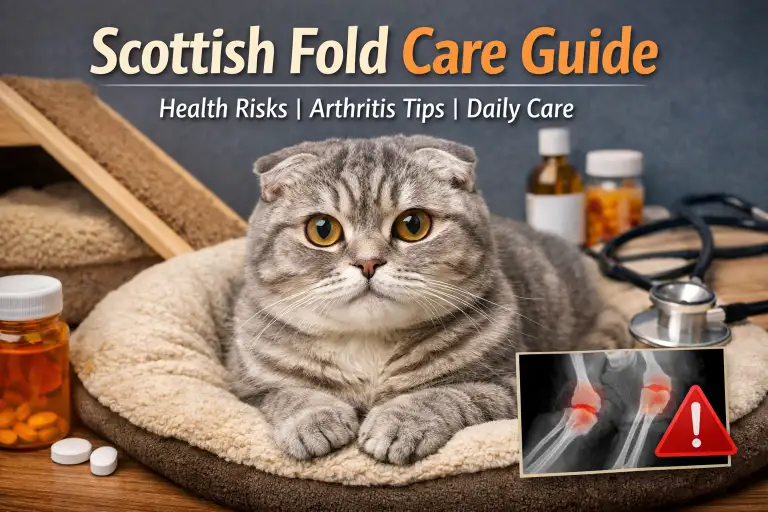
Scottish Folds are known for their round faces, large eyes, and distinctive folded ears. While their appearance is undeniably charming, their ear shape is not just a cosmetic feature — it is the result of a genetic mutation that directly affects cartilage throughout the body. Understanding this is the foundation of responsible Scottish Fold care.
If you own one — or are considering adopting one — the most important thing to know is this: Scottish Folds require lifelong joint monitoring and proactive comfort management.
The Folded Ear Gene Explained Simply
The folded ears are caused by a dominant genetic mutation that affects cartilage development. Cartilage is the flexible tissue found not only in the ears but also in joints, tail vertebrae, and other structural areas.
In Scottish Folds, this mutation leads to a condition called osteochondrodysplasia — a disorder that affects bone and cartilage development. This is why the breed’s care is closely tied to joint health.
The ear fold itself is simply the visible sign. The real concern lies beneath the surface.
Why Ear Shape Affects the Whole Body
Because the mutation affects cartilage systemically, it can cause:
- Thickened joints
- Reduced flexibility
- Early-onset arthritis
- Tail stiffness
- Abnormal bone growth
Some cats show mild symptoms. Others develop significant mobility issues, sometimes as early as a few months of age. The severity often depends on whether the cat inherited one copy or two copies of the gene.
Scottish Fold Genetics & Health Risk Overview
| Feature | What It Means | Care Impact |
|---|---|---|
| Folded ears | Cartilage mutation present | Lifelong joint monitoring required |
| Straight ears (Scottish Straight) | May carry gene without folded appearance | Lower risk but still monitor |
| Two copies of fold gene | Higher likelihood of severe bone changes | Earlier arthritis and mobility support needed |
Responsible breeders avoid mating two folded-ear cats together because kittens with two copies of the gene are much more likely to develop painful skeletal issues.
Are All Scottish Folds in Pain?
This is one of the most common concerns owners have.
Not all Scottish Folds show obvious pain early in life. Some remain relatively comfortable for years. However, the genetic risk is always present, and arthritis tends to develop over time.
Cats are also masters at hiding discomfort. Subtle signs may include:
- Hesitation before jumping
- Sleeping more than usual
- Irritability when touched near joints
- Sitting in unusual postures
These signs are often dismissed as personality quirks, especially in young cats.
Ethical Considerations and Owner Responsibility
The breed is controversial in some countries because of the known link between the ear mutation and skeletal disease. Some veterinary associations discourage breeding Scottish Folds for this reason.
As an owner, responsible care means:
- Accepting the possibility of chronic joint management
- Budgeting for long-term veterinary monitoring
- Focusing on comfort rather than appearance
- Avoiding breeding practices that increase risk
Scottish Folds can be affectionate, gentle companions. But their care requires awareness, early monitoring, and a commitment to mobility support throughout their lives.
Understanding these health basics sets the stage for everything that follows in their care routine.
Daily & Weekly Scottish Fold Care Routine
Scottish Folds need more than basic cat care. Because their joints can become stiff or painful over time, small daily habits can make a big difference in their comfort.
This section gives you simple, clear steps you can follow at home.
Make Your Home Joint-Friendly
Your cat should not have to jump high or land hard.
Simple changes that help:
- Use ramps or pet stairs for beds and couches
- Keep food, water, and litter boxes on the same floor
- Choose a low-entry litter box
- Place soft beds in warm, quiet areas
- Add rugs if you have slippery floors
Hard landings and slippery floors can strain weak joints.
Daily Care Checklist
These quick checks only take a few minutes.
| Task | How Often | Why It Matters |
|---|---|---|
| Watch how your cat walks | Daily | Helps spot early stiffness |
| Notice jumping ability | Daily | Jump changes can signal pain |
| Check comfort when resting | Daily | Restless shifting can mean joint discomfort |
| Short gentle play session | Daily | Keeps joints moving safely |
Keep play low to the ground. Avoid games that make your cat jump high.
Weekly Care Tasks
Some things do not need daily attention but still matter.
| Task | How Often | Why It Matters |
|---|---|---|
| Check tail flexibility gently | Weekly | Stiff tail can be an early warning sign |
| Look inside ears | Weekly | Folded ears trap wax and moisture |
| Brush coat (short hair) | 1–2 times weekly | Removes loose hair and checks skin |
| Brush coat (long hair) | 3–4 times weekly | Prevents mats and skin problems |
When checking the tail, move it gently. Never force it. If your cat reacts with pain, stop and call your vet.
Safe vs Risky Activities
Not all exercise is safe for Scottish Folds.
| Safe Activities | Avoid or Limit |
|---|---|
| Wand toys near the floor | High cat trees with big jumps |
| Puzzle feeders | Rough chasing games |
| Short, calm play sessions | Long, intense play |
| Soft climbing ramps | Jumping from tall shelves |
The goal is movement without stress.
Weight Control Is Very Important
Extra weight makes joint pain worse.
To help manage weight:
- Measure food instead of free feeding
- Avoid too many treats
- Use puzzle feeders to slow eating
- Ask your vet about ideal weight range
Even one extra pound can put more pressure on joints.
Watch for Small Changes
Many owners miss early signs because they are very small.
Pay attention if your cat:
- Stops jumping on favorite spots
- Sits in a strange position
- Sleeps more than usual
- Avoids being picked up
- Becomes grumpy when touched
Small changes often come before big problems.
Taking care of a Scottish Fold is about daily comfort, not just feeding and cleaning.
Common Health Problems & Warning Signs
Scottish Folds are sweet and loving cats. But because of their special gene, they are more likely to have joint and bone problems. Knowing the warning signs early can help you protect your cat from serious pain later.
Here are the most common health problems owners should watch for.
Osteochondrodysplasia (Bone and Cartilage Disorder)
This is the main health issue in Scottish Folds. It affects how bones and cartilage grow.
It can cause:
- Thick joints
- Stiff legs
- Short or stiff tail
- Pain when moving
- Trouble jumping
Some cats show signs when they are very young. Others may not show clear signs until adulthood.
Arthritis
Arthritis means joint swelling and pain. It often gets worse as the cat gets older.
Arthritis can cause:
- Slow walking
- Trouble climbing stairs
- Less jumping
- Sleeping more
- Avoiding play
Cats hide pain very well. They may not cry or limp at first.
Tail Stiffness
The tail is often one of the first areas to become stiff.
A healthy tail should move easily and gently. If the tail feels very hard or your cat reacts when you touch it, that could be a warning sign.
Never force the tail to bend.
Ear Infections
Because their ears fold forward, air does not move inside the ear as easily.
This can lead to:
- Wax buildup
- Bad smell
- Redness
- Head shaking
- Scratching at ears
Ear infections are treatable, but they should not be ignored.
Early vs Advanced Warning Signs
| Early Signs | Advanced Signs |
|---|---|
| Hesitates before jumping | Limping |
| Sleeps more | Avoids walking |
| Stiff tail | Swollen joints |
| Less playful | Cries when touched |
| Slight mood changes | Hides often |
Early signs are easy to miss. Many owners think their cat is just “lazy” or “calm.”
When to Call the Vet
| Symptom | What To Do |
|---|---|
| Mild stiffness | Book a normal vet visit |
| Sudden limp | See vet within 1–2 days |
| Crying in pain | Go to vet immediately |
| Swollen joints | Schedule exam soon |
| Stops eating | Emergency visit |
Never wait if your cat shows strong pain signs.
Lifespan and Long-Term Care
Scottish Folds can live 12–15 years or longer. But many will need joint care as they age.
Long-term care may include:
- Pain medicine
- Joint support supplements
- Special beds
- More frequent vet visits
Early care can improve quality of life.
Watching for small changes is one of the best things you can do for your cat.
Veterinary Care, Pain Management & Long-Term Planning
Scottish Folds need regular vet care. Even if your cat looks healthy, joint problems can slowly develop over time. Early checkups help catch issues before they become severe.
This section explains how often to see the vet and what treatments may help.
How Often Should a Scottish Fold See the Vet?
Regular visits are very important for this breed.
| Life Stage | How Often to Visit | What the Vet Checks |
|---|---|---|
| Kitten | Every 3–4 weeks (first months) | Growth, joint shape, vaccines |
| Adult | 1–2 times per year | Early arthritis signs, weight |
| Senior (7+ years) | Every 6 months | Pain level, mobility, joint damage |
Senior Scottish Folds often need more frequent monitoring because arthritis usually gets worse with age.
When Are X-Rays Needed?
If your cat shows stiffness or pain, your vet may suggest X-rays.
X-rays help the vet:
- See bone changes
- Check joint damage
- Decide the right treatment plan
Not every cat needs X-rays right away. Your vet will decide based on symptoms.
Pain Management Options
There is no cure for osteochondrodysplasia. But pain can be managed.
Common treatments may include:
- Vet-prescribed pain medicine
- Anti-inflammatory medication
- Joint supplements (if recommended by your vet)
- Special diets for joint support
Never give human pain medicine to your cat. It can be deadly.
Many vets follow feline pain management guidelines from trusted groups like AAFP and ISFM to keep cats safe and comfortable.
Weight Management Plan
Keeping your cat at a healthy weight is one of the best ways to reduce joint pain.
Your vet may:
- Set a target weight
- Recommend portion control
- Suggest a weight-support diet
Even small weight gain can increase joint stress.
Physical Therapy & Comfort Support
Some cats benefit from:
- Gentle home exercises
- Warm bedding
- Heated pads made for pets
- Laser therapy (offered by some clinics)
Ask your vet before trying new therapies.
Planning for the Future
Because joint disease is lifelong, owners should prepare for:
- Ongoing vet visits
- Possible daily medication
- Extra comfort support at home
- Higher medical costs over time
Many Scottish Folds live happy lives with proper care. The key is early action and regular monitoring.
Special Situations & Responsible Ownership
Owning a Scottish Fold is a long-term responsibility. This breed needs more care than many other cats. Before adopting or buying one, it is important to understand what that means.
This section helps you decide if this breed is right for you and explains special care situations.
Caring for a Scottish Fold Kitten
Scottish Fold kittens may look normal at first. Joint problems can start later.
With kittens:
- Schedule regular vet visits
- Watch how they walk and play
- Avoid high climbing toys
- Feed proper kitten food for healthy growth
Early monitoring helps catch problems sooner.
Caring for a Senior Scottish Fold
Senior cats often need extra support.
You may need to:
- Add more soft beds
- Use ramps instead of stairs
- Lower litter box sides
- Visit the vet more often
Older Scottish Folds may need daily pain medicine to stay comfortable.
Indoor vs Outdoor Living
Scottish Folds are safer indoors.
Outdoor risks include:
- Injuries from jumping
- Fights with other animals
- Hard landings on rough ground
- Less control over movement
Indoor cats can still get exercise with safe toys and playtime.
Multi-Cat Homes
If you have other cats:
- Watch for rough play
- Make sure food and litter boxes are easy to reach
- Give your Scottish Fold quiet resting spots
Some healthy cats may play too rough for a Fold with joint pain.
Is a Scottish Fold Right for You?
Before choosing this breed, ask yourself:
| Question | If Yes | If No |
|---|---|---|
| Can you afford regular vet visits? | Good | Reconsider |
| Are you ready for possible long-term pain care? | Good | May not be ideal |
| Can you make home changes for joint safety? | Good | Think carefully |
| Do you understand the health risks? | Responsible choice | Learn more first |
This breed is loving and gentle. But it may need more medical care than other cats.
Final Thoughts
Scottish Folds can live 12–15 years or longer. Many live happy lives when owners understand their needs.
The most important things to remember:
- Monitor joints early
- Keep weight healthy
- Visit the vet regularly
- Focus on comfort
- Plan for long-term care
For more detailed guidance on recognizing and managing pain in cats, you can review the American Association of Feline Practitioners (AAFP) Feline Pain Management Guidelines here.

Ata Ur Rehman is the founder of Pet Age in Human Years Calculator, an educational platform that provides age conversion charts and lifespan guides for dogs, cats, birds, and other companion animals. His work focuses on helping pet owners understand how animal ages translate into human years using commonly accepted age conversion formulas and published lifespan averages.
The website compiles breed and species lifespan data from kennel clubs, breed organizations, and general animal lifespan studies to present simple and easy-to-understand guides for pet owners worldwide.
This website was created to centralize animal age conversion charts into one easy reference platform for pet owners.