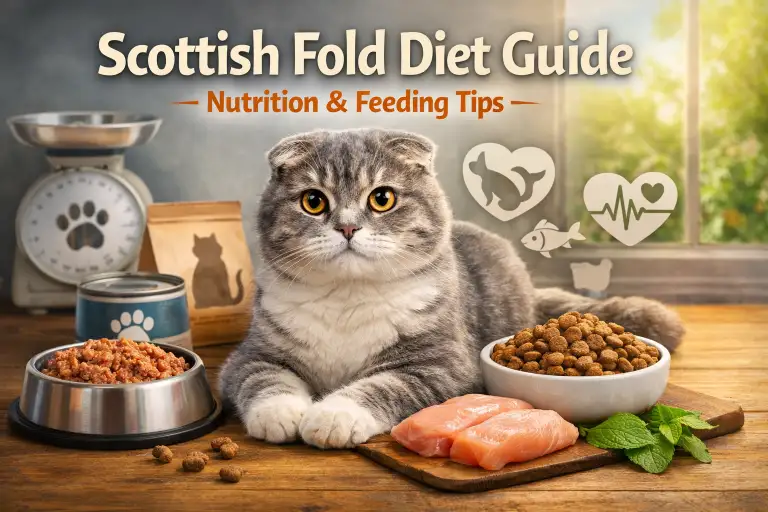
Scottish Folds are known for their distinctive folded ears and sweet temperament, but behind their charming appearance is a cat that shares the same biological foundation as all felines: they are obligate carnivores. That means their bodies are designed to thrive on nutrients primarily derived from animal sources.
While Scottish Folds do not require a radically different diet from other domestic cats, their moderate activity levels and potential joint sensitivity make balanced nutrition and weight control especially important.
Why Diet Matters for This Breed
Most Scottish Folds live primarily indoors and tend to have calm, easygoing personalities. This combination often means:
- Lower overall calorie expenditure
- Higher risk of gradual weight gain
- Increased strain on joints if overweight
Because the breed can be prone to cartilage and joint issues, maintaining a lean, healthy body condition is one of the most important nutritional goals. Diet alone does not prevent orthopedic conditions, but proper weight management can significantly reduce unnecessary stress on the skeletal system.
Core Nutritional Priorities for Scottish Folds
A high-quality commercial cat food labeled “complete and balanced” should form the foundation of the diet. This ensures it meets established nutritional standards for feline health.
Below are the key nutrients that matter most:
| Nutrient | Why It Matters | What Owners Should Look For |
|---|---|---|
| Animal Protein | Supports muscle mass and overall body maintenance | Named meat sources as primary ingredients |
| Fat | Primary energy source for cats | Moderate, species-appropriate levels |
| Taurine | Essential for heart and eye health | Included in all complete cat foods |
| Moisture | Supports hydration and urinary health | Higher levels in wet food |
The Importance of Animal Protein
Scottish Folds, like all cats, rely heavily on animal-based protein to maintain muscle mass and organ function. Protein quality is more important than simply looking at a high percentage number on the label.
High-quality protein sources typically:
- Come from clearly identified animal ingredients
- Provide essential amino acids
- Support lean muscle maintenance
This is particularly important in a breed where maintaining strong musculature can help support overall mobility.
Fat as a Primary Energy Source
Dietary fat is not something to fear in cats. It serves as their main energy source and helps support:
- Healthy skin and coat
- Absorption of fat-soluble vitamins
- Palatability of food
However, calorie density matters. Foods higher in fat contain more calories per gram, which means portion control becomes essential—especially for indoor Scottish Folds.
What About Carbohydrates?
Carbohydrates are one of the most misunderstood components of cat nutrition.
Cats do not have a biological requirement for carbohydrates in the same way they require protein and fat. However, this does not automatically make all carbohydrates harmful. In commercial diets, carbohydrates:
- Provide an energy source
- Help create the structure of dry kibble
- Contribute fiber for digestive support
The key is balance. Excess calorie intake—regardless of whether it comes from carbs or fat—is what contributes to weight gain.
Taurine and Essential Micronutrients
Taurine is a critical amino acid for cats. Without adequate taurine, serious heart and eye conditions can develop. Fortunately, all reputable commercial cat foods formulated to be complete and balanced include appropriate taurine levels.
Other essential micronutrients include:
- Vitamin A (cats cannot convert it efficiently from plant sources)
- Vitamin D
- B-complex vitamins
- Calcium and phosphorus in proper balance
For this reason, adding random supplements to a properly balanced commercial diet is generally unnecessary unless recommended by a veterinarian.
Choosing a “Complete and Balanced” Food
When selecting food for your Scottish Fold, look for a statement indicating the diet is formulated to meet established nutritional standards (such as AAFCO guidelines).
This tells you the food:
- Contains all essential nutrients
- Is balanced for a specific life stage (kitten, adult, or senior)
- Is intended as a primary diet, not just a treat or topper
Marketing terms like “premium,” “natural,” or “grain-free” do not automatically indicate superior nutrition. The nutritional adequacy statement is far more important than front-of-bag claims.
Cost vs. Nutrition: Finding a Practical Balance
Higher cost does not always equal higher quality, but extremely low-cost foods may rely more heavily on inexpensive fillers. A reasonable approach is to:
- Prioritize complete and balanced formulas
- Ensure animal protein is prominent
- Monitor your cat’s body condition and energy level
The best diet is one your Scottish Fold maintains well on—showing stable weight, a healthy coat, normal digestion, and consistent energy.
A well-balanced, portion-controlled diet built around high-quality animal protein and appropriate calorie intake forms the foundation of long-term health for Scottish Folds. In the next section, we’ll compare wet food, dry food, and mixed feeding to help you decide what works best for your cat.
Wet vs Dry Food for Scottish Folds: Which Is Better?
One of the most common questions owners ask is:
Should I feed my Scottish Fold wet food or dry food?
The honest answer is that both can work well — as long as the food is complete and balanced. The best choice often depends on your cat’s needs, your budget, and your daily routine.
Let’s look at the differences in a simple way.
Wet Food
Wet food contains a high amount of water, usually around 70–80%. This helps support hydration, which is important because many cats naturally do not drink enough water.
Benefits of wet food:
- Higher moisture supports urinary health
- Usually lower in calories per gram
- Can help with portion control
- Often more filling
- Good for picky eaters
Things to consider:
- More expensive per serving
- Must be refrigerated after opening
- Can spoil if left out too long
For many indoor Scottish Folds, wet food can help prevent weight gain because it often has fewer calories per portion compared to dry food.
Dry Food
Dry food (kibble) contains much less moisture, usually around 8–10%. It is more calorie-dense, meaning it contains more calories in a smaller amount.
Benefits of dry food:
- Convenient and easy to store
- Less expensive per meal
- Easy to measure
- Can be left out longer than wet food
Things to consider:
- Easier to overfeed
- Does not help much with hydration
- Higher calorie density means small portions
Some people believe dry food cleans teeth. While chewing kibble may reduce some buildup, it should not replace proper dental care.
Mixed Feeding (Wet + Dry)
Many owners choose to feed both wet and dry food. This is called mixed feeding.
Benefits of mixed feeding:
- Combines hydration support from wet food
- Keeps convenience of dry food
- Adds variety to the diet
Important tip:
If you mix foods, you must adjust portions carefully. Feeding full portions of both can easily lead to weight gain.
Wet vs Dry vs Mixed: Simple Comparison
| Feature | Wet Food | Dry Food | Mixed Feeding |
|---|---|---|---|
| Moisture Level | High | Low | Medium |
| Calories per Gram | Lower | Higher | Varies |
| Hydration Support | Strong | Minimal | Moderate |
| Easy to Overfeed | Less likely | More likely | Possible |
| Cost | Higher | Lower | Moderate |
Which Is Best for a Scottish Fold?
There is no single “perfect” answer. The most important things are:
- The food is complete and balanced
- Portions are measured
- Your cat stays lean and active
- Your cat drinks enough water
Because Scottish Folds are often indoor cats with moderate activity levels, portion control matters more than food type.
If your cat gains weight easily, wet food or carefully measured mixed feeding may help. If you use dry food, measure it precisely and avoid free-feeding without limits.
How Much and How Often Should You Feed a Scottish Fold?
Feeding the right amount is just as important as choosing the right food. Even high-quality food can cause weight gain if you give too much.
Scottish Folds are usually calm, indoor cats. This means they may burn fewer calories than very active breeds. Because of this, measuring food is very important.
How Often Should You Feed?
Most cats do best with set meal times instead of food being left out all day.
Here is a simple guide:
| Life Stage | Meals Per Day | Why |
|---|---|---|
| Kitten (under 1 year) | 3–4 meals | Growing fast, needs more energy |
| Adult | 2 meals | Maintains steady energy |
| Senior | 2 small meals | Easier digestion and steady weight |
Feeding at set times helps:
- Control portions
- Prevent overeating
- Track appetite changes
- Build a healthy routine
Free-feeding (leaving dry food out all day) can lead to slow weight gain, especially in indoor Scottish Folds.
How Much Should You Feed?
There is no single perfect number. It depends on:
- Your cat’s weight
- Age
- Activity level
- Type of food (wet or dry)
Dry food has more calories in a small amount. Wet food has fewer calories per spoonful.
Always:
- Check the feeding guide on the food package
- Start in the middle of the recommended range
- Adjust slowly based on your cat’s body shape
Do not increase food just because your cat begs. Many cats ask for food out of habit, not hunger.
Indoor vs Outdoor Cats
Most Scottish Folds live indoors. Indoor cats usually need fewer calories than outdoor cats.
If your cat:
- Sleeps most of the day
- Does not play much
- Lives fully indoors
You may need to feed slightly less than the package suggests.
After Spaying or Neutering
After surgery, many cats:
- Burn fewer calories
- Feel hungrier
- Gain weight more easily
This is a common time for weight gain. Measuring food carefully after spaying or neutering is very important.
How to Tell If You’re Feeding the Right Amount
Instead of only looking at the scale, look at your cat’s body shape.
Healthy signs:
- You can feel the ribs but not see them clearly
- There is a slight waist when looking from above
- The belly does not hang low or swing when walking
Here is a simple guide:
| Signs of Overfeeding | Signs of Underfeeding |
|---|---|
| Round body shape | Visible ribs |
| No waist | Very thin waist |
| Low energy | Low muscle mass |
| Heavy belly | Dull coat |
If you notice sudden weight loss or fast weight gain, talk to a veterinarian.
Quick Tips for Portion Control
- Use a measuring cup or kitchen scale
- Do not guess
- Count treats as part of daily calories
- Adjust slowly, not all at once
Feeding the right amount helps protect your Scottish Fold’s joints and overall health.
Special Nutrition Considerations for Scottish Folds
Scottish Folds are loving and calm cats. But this breed is known for joint and cartilage problems. Because of this, keeping a healthy body weight is very important.
Food cannot cure joint problems. But the right diet can help reduce extra stress on the body.
Keep Your Scottish Fold Lean
Extra weight puts more pressure on joints. Even a small amount of weight gain can make movement harder.
To protect your cat:
- Measure food carefully
- Avoid too many treats
- Encourage daily play
- Watch body shape every month
A lean cat moves easier and puts less strain on bones and joints.
Protein Helps Support Muscles
Muscles help support the body and joints. Good-quality animal protein helps keep muscle strong.
Look for:
- Real meat listed clearly on the ingredient list
- A complete and balanced label
- Food made for your cat’s life stage
Strong muscles help support overall mobility.
Omega-3 Fats and Overall Wellness
Some cat foods contain omega-3 fatty acids. These are healthy fats that support skin, coat, and overall body function.
They are not a cure for joint problems. But they are part of a balanced diet and may support general health.
Always choose a complete food instead of adding random supplements unless a veterinarian recommends it.
Feeding Scottish Fold Kittens
Kittens grow fast. Their bones and joints are still developing.
For kittens:
- Feed kitten-formulated food
- Offer 3–4 meals a day
- Do not rush growth with overfeeding
Controlled, steady growth is healthier than very fast growth.
Feeding Senior Scottish Folds
Older cats may:
- Move less
- Lose muscle
- Have smaller appetites
Senior cats still need good protein to protect muscle. Watch for:
- Sudden weight loss
- Trouble eating
- Changes in appetite
If you see fast changes, speak with a veterinarian.
Multi-Cat Homes
If you have more than one cat:
- Feed in separate areas
- Watch that one cat is not eating all the food
- Measure portions for each cat
Some cats eat quickly and some eat slowly. Without watching, one cat may gain weight while another loses it.
When to Speak to a Veterinarian
Talk to a veterinarian if your Scottish Fold has:
- Sudden weight loss
- Fast weight gain
- Loss of appetite
- Trouble moving
- Ongoing vomiting or diarrhea
Nutrition supports health, but medical problems need professional care.
Treats, Human Food and Common Feeding Mistakes
Treats can be a fun way to bond with your Scottish Fold. But too many treats can quickly lead to weight gain.
Because this breed can have joint problems, keeping a healthy weight is very important.
How Many Treats Are Too Many?
A simple rule many owners follow is the 10% rule.
This means:
- Treats should not be more than 10% of your cat’s daily calories
- 90% of calories should come from balanced cat food
Even small treats add up. A few extra bites every day can slowly cause weight gain.
Can Scottish Folds Eat Human Food?
Some human foods are not safe for cats.
Avoid giving:
- Onions and garlic
- Chocolate
- Grapes and raisins
- Alcohol
- Foods with a lot of salt
Even safe foods like plain cooked chicken should only be given in small amounts. Human food should not replace balanced cat food.
Table scraps can also teach your cat to beg. Once begging becomes a habit, it can be hard to stop.
Grain-Free and Other Diet Trends
You may see labels that say:
- Grain-free
- Natural
- Premium
- Holistic
These words sound good, but they do not always mean the food is better.
The most important thing to look for is a “complete and balanced” statement for your cat’s life stage.
Do not choose food based only on marketing claims.
Common Feeding Mistakes
Many owners make small mistakes without realizing it.
Common mistakes include:
- Leaving dry food out all day without measuring
- Guessing portions instead of measuring
- Giving too many treats
- Switching food too quickly
- Adding supplements without advice
Slow weight gain often happens quietly over time. Checking your cat’s body shape every month can help you catch changes early.
Do and Don’t Quick Guide
Do:
- Measure food daily
- Limit treats
- Choose complete and balanced food
- Transition new food slowly
Don’t:
- Free-feed without limits
- Feed table scraps often
- Trust marketing words over nutrition labels
- Ignore weight changes
Healthy feeding is about balance and consistency.
For more detailed information on how pet foods are evaluated and labeled as complete and balanced, you can visit the Association of American Feed Control Officials (AAFCO) website.

Ata Ur Rehman is the founder of Pet Age in Human Years Calculator, an educational platform that provides age conversion charts and lifespan guides for dogs, cats, birds, and other companion animals. His work focuses on helping pet owners understand how animal ages translate into human years using commonly accepted age conversion formulas and published lifespan averages.
The website compiles breed and species lifespan data from kennel clubs, breed organizations, and general animal lifespan studies to present simple and easy-to-understand guides for pet owners worldwide.
This website was created to centralize animal age conversion charts into one easy reference platform for pet owners.