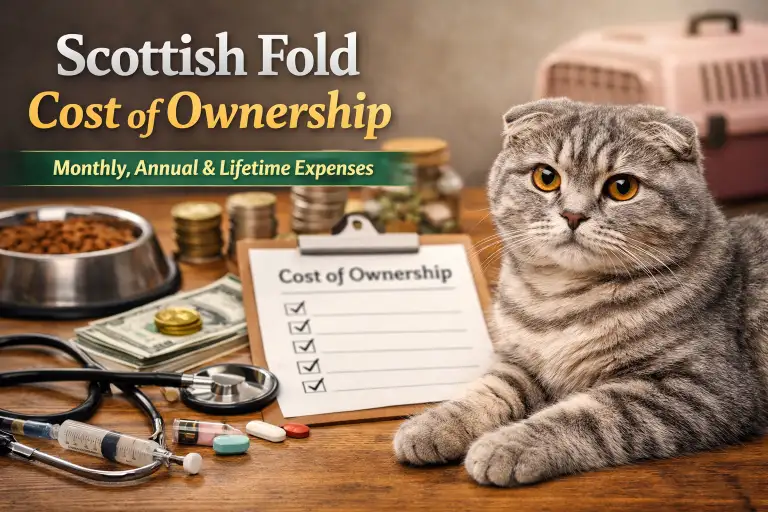
If you’re researching Scottish Fold ownership, the first question is usually simple: how much does one cost? The honest answer is that Scottish Folds are typically more expensive than most other cat breeds — and the purchase price is only part of the financial picture.
Purchase Price from a Breeder
Scottish Fold kittens from reputable breeders generally cost more than common purebred cats. This is due to:
- High demand for their distinctive folded ears
- Smaller responsible breeding pools
- Health testing and ethical breeding practices
- Limited litter sizes
A very low purchase price should raise caution. Because the breed carries a known genetic mutation linked to joint disease (osteochondrodysplasia), ethical breeding requires careful pairing and medical awareness. Bargain pricing may indicate poor breeding standards or lack of health oversight.
Adoption or Rescue Costs
While less common, Scottish Folds do occasionally appear in rescues or breed-specific adoption groups. Adoption fees are usually significantly lower than breeder prices, but availability is unpredictable.
Adoption may also reduce initial medical costs if the cat is already spayed/neutered and vaccinated — though this varies by organization.
Initial Veterinary Costs
Even if you purchase from a breeder, you should budget for:
- First wellness exam
- Vaccination updates
- Microchipping (if not already done)
- Spay/neuter (if not included in purchase agreement)
Some owners also choose baseline health screening early on for peace of mind.
Essential First-Time Supplies
Beyond the cat itself, you’ll need to set up a safe and comfortable environment. Initial supplies typically include:
- Litter box and litter
- Scratching posts
- Food and water bowls
- Carrier
- Bed or soft resting area
- Toys and enrichment items
- Cat tree or stable climbing structure
Because Scottish Folds may develop joint stiffness over time, stable and supportive furniture is preferable to tall, unstable climbing towers.
Estimated Initial Cost Breakdown
| Cost Category | Low Estimate | Typical Range | Higher-End Setup |
|---|---|---|---|
| Purchase or Adoption | Moderate | High | Premium breeder pricing |
| First Vet Visit | Standard exam fee | + Vaccines | + Additional screening |
| Spay/Neuter | Included (some cases) | Standard clinic rate | Specialty clinic |
| Supplies Setup | Basic essentials | Quality setup | Premium equipment |
| Estimated Total Initial Investment | Four-figure range | Mid four-figure range | Upper four-figure range |
Note: These are general planning ranges. Actual costs vary significantly by location, breeder standards, and personal purchasing choices.
What Most New Owners Underestimate
Many first-time Scottish Fold buyers focus only on the kitten’s price. In reality, the first-year cost is usually substantially higher once veterinary care and supplies are included.
For responsible budgeting, it’s wise to view the purchase price as just the entry point — not the full financial commitment.
This sets the foundation for understanding the real cost of ownership, which becomes clearer when we look at ongoing monthly and annual expenses.
Monthly and Annual Cost of Owning a Scottish Fold
After the purchase and setup, the real cost of owning a Scottish Fold becomes clear in the monthly and yearly expenses. These are the costs you must be ready to handle for many years — not just the first few months.
Most owners spend money in five main areas: food, litter, routine vet care, preventive treatments, and basic supplies.
Food Costs
Scottish Folds do not require a special diet, but many owners choose high-quality food to support joint health. Better food often costs more, but it may help long-term wellness.
Your monthly food cost depends on:
- Dry vs wet food
- Brand quality
- Cat’s size and appetite
- Special dietary needs
Litter Costs
Litter is a steady monthly expense. The cost depends on:
- Type (clay, clumping, natural)
- How often you clean
- Number of cats in the home
A single indoor cat will use less litter than multiple cats.
Routine Veterinary Care
Every year, your Scottish Fold will need:
- A wellness exam
- Vaccine updates (as needed)
- General health checks
Dental cleanings may also be needed every few years.
To make budgeting easier, many owners divide yearly vet costs into a monthly savings amount.
Preventive Treatments
Most cats need:
- Flea prevention
- Parasite control
- Occasional deworming
These small costs add up over time.
Grooming and Basic Supplies
Scottish Folds are usually short-haired, but some are long-haired (Highland Fold). Long-haired cats may need more brushing.
Other small costs include:
- Nail trimming tools
- Ear cleaning supplies
- Replacing worn toys
- Replacing scratching posts
Monthly Cost Estimate
Below is a simple planning guide. These are general ranges and will vary by location.
| Expense | Budget Level | Average Level | Higher Level |
|---|---|---|---|
| Food | Moderate | Higher quality | Premium brands |
| Litter | Basic clay | Clumping | Natural or specialty |
| Preventive Care | Standard | Regular protection | Extended coverage |
| Supplies & Misc. | Basic replacements | Quality replacements | Premium items |
| Estimated Monthly Total | Low hundreds | Mid hundreds | Higher hundreds |
Annual Cost Estimate
| Category | Estimated Annual Cost Range |
|---|---|
| Routine Vet Visits | Low to mid hundreds |
| Preventive Treatments | Low hundreds |
| Dental Care (if needed) | Varies widely |
| Supplies Replacement | Moderate |
| Estimated Annual Total | Mid to high hundreds (healthy cat) |
Important Budget Reminder
These numbers assume a healthy cat with no major medical issues. If health problems appear, costs can increase quickly.
It is smart to:
- Set aside a small amount each month
- Keep emergency savings separate
- Plan for costs to slowly increase as your cat ages
Why Scottish Fold Vet Bills Can Be Higher Than Other Cats
Scottish Folds are loving and calm cats. But they have one important health risk that can affect their lifetime cost.
The folded ears come from a gene change. This same gene can affect cartilage and bones. Because of this, some Scottish Folds develop joint problems as they grow.
Not every cat will have serious problems. But the risk is higher compared to many other breeds.
The Main Health Concern
The biggest issue linked to this breed is joint disease. It can cause:
- Stiff legs
- Trouble jumping
- Thick or painful tail
- Arthritis at a young age
Some cats show mild signs. Others may need regular treatment.
What This Can Mean for Vet Costs
If joint problems appear, costs may include:
- Extra vet visits
- X-rays or imaging
- Pain relief medicine
- Long-term arthritis care
- Specialist consultations
These costs can increase slowly over time.
Health Cost Scenarios
Here is a simple way to think about possible medical costs.
| Scenario | What It Looks Like | Financial Impact |
|---|---|---|
| Mild Joint Issues | Slight stiffness, basic pain care | Low to moderate increase |
| Moderate Mobility Problems | Regular medication, more vet visits | Moderate increase |
| Severe Orthopedic Issues | Imaging, specialist care, long-term treatment | High increase |
Important: Some Scottish Folds stay fairly healthy. Others may need ongoing care. There is no way to fully predict this early.
Emergency Visits
Like all cats, Scottish Folds can also face:
- Accidents
- Sudden illness
- Infections
- Dental problems
Emergency visits can cost much more than regular checkups. This is why many owners keep emergency savings ready.
Why Planning Matters
Because this breed has a known health risk, owners should:
- Expect possible higher vet bills
- Avoid stretching their budget too thin
- Plan for care that may last many years
This does not mean every Scottish Fold will have serious health problems. It simply means you should be financially prepared.
Lifetime Cost of Owning a Scottish Fold
When you buy a Scottish Fold, you are making a long-term promise. Most of these cats live around 12 to 15 years. Some may live longer with good care.
The total lifetime cost depends on three main things:
- The purchase price
- Yearly care costs
- Health problems over time
Let’s break this down in a simple way.
Healthy Cat Scenario
If your Scottish Fold stays mostly healthy:
- You pay the purchase and setup cost once
- You pay regular monthly care
- You pay normal yearly vet visits
In this case, the lifetime cost is steady and predictable. Most of the money goes toward food, litter, and routine vet care.
Moderate Medical Needs Scenario
If your cat develops mild to moderate joint issues:
- You may need extra vet visits
- You may need regular pain medicine
- You may need occasional imaging
This increases your total cost over time. The monthly cost may rise slowly as your cat ages.
Higher Medical Complexity Scenario
If your cat develops serious joint problems:
- Long-term treatment may be needed
- Specialist visits may be required
- Ongoing medication may be necessary
This can push the lifetime cost much higher than average.
Estimated Lifetime Cost Range
Here is a simple planning guide based on different health paths.
| Scenario | Estimated Lifetime Cost Range |
|---|---|
| Mostly Healthy Cat | Mid five-figure total |
| Moderate Medical Needs | Higher five-figure total |
| Significant Health Issues | Upper five-figure or more |
These are planning ranges only. Real costs vary by:
- Location
- Vet pricing
- Quality of food and supplies
- Number of health problems
Indoor vs Outdoor Impact
Indoor cats usually:
- Live longer
- Have fewer injuries
- Have more predictable costs
Outdoor cats may:
- Face injury risks
- Need more vet care
- Have shorter lifespans
Longer lifespan often means higher total lifetime cost, even if yearly costs stay normal.
Single vs Multi-Cat Homes
If you own more than one cat:
- Food and litter costs increase
- Vet bills multiply
- Supplies need replacing more often
Some costs stay the same, but most will scale up with each additional cat.
Simple Lifetime Planning Tip
Instead of thinking only about yearly cost, ask yourself:
Can I afford this cat for 12 to 15 years?
That is the real financial question.
Can You Afford a Scottish Fold? Practical Cost Planning Guide
By now, you have seen the purchase cost, the monthly cost, and the possible health costs. The final step is simple but important.
Can you afford this cat without stress?
This section helps you think clearly before making a decision.
Ask Yourself These Questions
Be honest with yourself. There is no right or wrong answer.
- Can I handle a large vet bill if it happens?
- Do I have steady monthly income?
- Can I afford food, litter, and vet care every month for 12 to 15 years?
- Am I okay with possible joint problems in the future?
- Do I already struggle with my current bills?
If you answer “no” to many of these, it may be better to wait.
Emergency Fund Reality
Scottish Folds may need more medical care than other cats. Because of this, it is wise to have savings ready.
A good rule for planning:
Keep enough money saved for at least one unexpected vet visit.
This reduces stress if something sudden happens.
Common Money Mistakes New Owners Make
Many people:
- Spend all their money on the kitten
- Forget about first-year vet costs
- Underestimate dental care
- Do not plan for aging costs
- Think health problems are rare
Planning ahead prevents regret later.
Ways to Manage Costs Responsibly
You can control many expenses by:
- Choosing a responsible breeder
- Keeping your cat indoors
- Feeding balanced food
- Keeping up with regular vet visits
- Saving a small amount each month for future care
Avoid unsafe shortcuts like skipping vet visits or delaying treatment. That often leads to higher costs later.
When Cost Should Be a Serious Concern
You should pause and reconsider if:
- You live paycheck to paycheck
- You have no savings
- You feel anxious about possible medical bills
- You want a Scottish Fold only for its look, not long-term care
Owning this breed is a long commitment. It is okay to decide that it is not the right time.
Final Thoughts
Scottish Folds are gentle and sweet cats. But they can be more expensive than many other breeds, especially because of joint health risks.
If you plan carefully, save wisely, and understand the risks, ownership can be manageable.
For more information about inherited health conditions in cats, including joint disorders, you can visit the Cornell University College of Veterinary Medicine’s feline health resource page.

Ata Ur Rehman is the founder of Pet Age in Human Years Calculator, an educational platform that provides age conversion charts and lifespan guides for dogs, cats, birds, and other companion animals. His work focuses on helping pet owners understand how animal ages translate into human years using commonly accepted age conversion formulas and published lifespan averages.
The website compiles breed and species lifespan data from kennel clubs, breed organizations, and general animal lifespan studies to present simple and easy-to-understand guides for pet owners worldwide.
This website was created to centralize animal age conversion charts into one easy reference platform for pet owners.