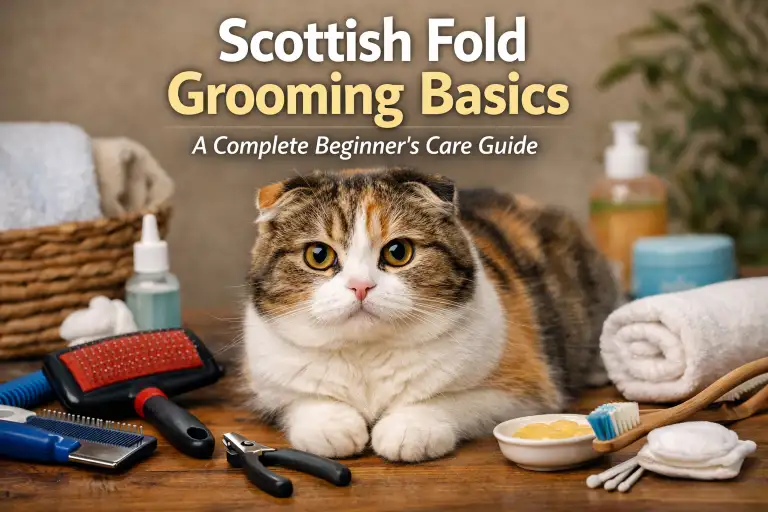
Scottish Folds are often described as low-maintenance cats because of their calm temperament and moderate activity level. But when it comes to grooming, they are not “no-maintenance.” Their unique ear structure, coat type, and potential joint sensitivity mean they require consistent, gentle care — just not excessive care.
Understanding what makes this breed different will help you groom safely and confidently.
Why Grooming Matters for Scottish Folds
All cats groom themselves, but self-grooming doesn’t replace owner support. Regular grooming:
- Reduces loose hair and hairballs
- Prevents mats (especially in long-haired Scottish Folds)
- Keeps nails at a healthy length
- Allows early detection of ear infections or skin issues
- Helps you monitor changes in mobility or comfort
Because Scottish Folds can have cartilage-related stiffness, grooming sessions are also a valuable opportunity to notice if your cat is moving differently or reacting to touch in certain areas.
Short-Haired vs Long-Haired Scottish Folds
Scottish Folds come in two coat types: short-haired and long-haired (often called Highland Folds). Grooming needs vary slightly between them.
| Grooming Area | Short-Haired Scottish Fold | Long-Haired (Highland Fold) |
|---|---|---|
| Brushing Frequency | 1–2 times per week | 3–5 times per week |
| Mat Risk | Low | Moderate to high |
| Shedding Level | Moderate, seasonal increase | Higher, heavy seasonal shedding |
| Overall Maintenance | Moderate | Moderately high |
Short-haired Scottish Folds typically require routine brushing to manage shedding. Long-haired varieties need more frequent brushing to prevent matting, especially around the underarms, belly, and hind legs.
The Importance of Folded Ear Care
The folded ear is the breed’s most recognizable feature — and the area that requires the most consistent monitoring.
Because the ear flap folds forward, air circulation inside the ear canal may be reduced. This can make some Scottish Folds more prone to wax buildup or irritation if ears aren’t checked regularly.
You don’t need to clean the ears daily. But you should:
- Check them weekly
- Look for redness, odor, or dark discharge
- Avoid inserting anything deep into the ear canal
Healthy ears should appear pale pink, clean, and free of strong odor.
Shedding and Seasonal Changes
Like most cats, Scottish Folds shed more heavily during seasonal coat changes — typically spring and fall. During these periods, brushing frequency should temporarily increase to prevent loose fur buildup and hairballs.
Indoor cats may shed more consistently year-round due to artificial lighting and climate control.
Age and Lifestyle Considerations
Grooming needs change depending on your cat’s life stage and environment:
- Kittens need short, positive sessions to build tolerance.
- Adults benefit from consistent routine maintenance.
- Seniors may require extra support, especially if joint stiffness makes self-grooming harder.
- Outdoor Scottish Folds may collect debris or dirt more often than indoor cats.
The key is consistency. Short, calm sessions once or twice a week are far more effective than infrequent, stressful grooming marathons.
Understanding your Scottish Fold’s coat type, ear structure, and comfort level sets the foundation for safe brushing, nail care, and hygiene.
Brushing, Shedding & Coat Care
Brushing is the most important part of Scottish Fold grooming. It keeps the coat clean, reduces shedding, and prevents painful mats. Even though cats groom themselves, they still need your help.
Regular brushing also helps you notice skin problems early.
How Often Should You Brush a Scottish Fold?
- Short-haired Scottish Fold: 1–2 times per week
- Long-haired (Highland Fold): 3–5 times per week
- During heavy shedding season: add 1–2 extra brushing days
If your cat is older or cannot groom well, you may need to brush more often.
Why Brushing Is So Important
Brushing helps:
- Remove loose fur
- Reduce hairballs
- Prevent tangles and mats
- Spread natural oils in the coat
- Keep skin healthy
- Strengthen your bond with your cat
Long-haired Scottish Folds need more brushing because their fur can tangle easily.
Step-by-Step: How to Brush Your Scottish Fold
Keep sessions short and calm. Start slow.
- Choose a quiet room with no distractions.
- Let your cat sniff the brush first.
- Start brushing the back and sides gently.
- Use slow strokes in the direction of hair growth.
- Move to the chest and neck.
- Carefully brush under the arms and behind the legs.
- Leave the belly for last, and only if your cat is relaxed.
Keep sessions around 5–10 minutes. Stop before your cat gets annoyed.
Sensitive Areas to Brush Gently
Scottish Folds can be sensitive in certain spots:
- Under the front legs
- Belly area
- Behind the back legs
- Base of the tail
If your cat pulls away or flicks their tail, pause for a moment.
What About Mats?
Mats are tight clumps of tangled fur. They can hurt your cat and pull on the skin.
Do not cut mats out with scissors. This can easily cut the skin.
If the mat is:
- Small and loose → You may gently work it apart with your fingers.
- Tight and close to the skin → See a professional groomer or vet.
Long-haired Scottish Folds are more likely to develop mats, especially during shedding season.
Managing Shedding
Scottish Folds shed more in spring and fall.
During this time:
- Brush more often
- Check underarms and belly daily
- Watch for small tangles forming
Indoor cats may shed lightly all year.
Signs Your Cat Is Getting Stressed
Watch your cat’s body language while brushing.
If you notice:
- Tail flicking
- Ears turning back
- Skin twitching
- Growling or trying to leave
It’s time to stop.
Never hold your cat down or force brushing. Short, calm sessions work better than long ones.
Ear, Nail, Teeth & Basic Hygiene Care
Besides brushing, your Scottish Fold also needs simple hygiene care. This includes checking the ears, trimming nails, and caring for the teeth. These small tasks help prevent pain and health problems later.
Keep each session short and calm.
Ear Care for Scottish Folds
Scottish Folds have folded ears. Because of this shape, air does not move as freely inside the ear. This can sometimes lead to wax buildup.
You should check your cat’s ears once a week.
Healthy ears should:
- Look light pink
- Have no strong smell
- Have little to no dark discharge
If you see redness, swelling, bad smell, or thick dark debris, contact your vet.
How to clean ears safely:
- Use a vet-approved ear cleaning solution.
- Put a small amount on a cotton pad.
- Gently wipe the outer part of the ear.
- Do not push anything deep inside the ear canal.
Never use cotton swabs inside the ear. They can push dirt deeper and cause injury.
Nail Trimming Basics
Scottish Folds need nail trims every 2–4 weeks.
If you hear clicking on the floor when your cat walks, the nails are too long.
Steps to trim nails safely:
- Hold your cat gently on your lap.
- Press lightly on the paw to extend the nail.
- Look for the pink area inside the nail (this is called the quick).
- Cut only the sharp tip, not the pink part.
If you cut the quick by mistake, it may bleed. Stay calm and use styptic powder if needed.
If your cat struggles a lot, trim just one or two nails at a time. You can finish the rest later.
Never force your cat or hold them down tightly.
Dental Care Basics
Dental care is often forgotten, but it is very important.
Poor dental care can cause:
- Bad breath
- Gum disease
- Pain while eating
Try brushing your cat’s teeth 2–3 times per week using cat-safe toothpaste.
If brushing is not possible:
- Use dental treats approved by vets
- Offer dental gels
- Schedule regular vet dental checks
Never use human toothpaste. It is not safe for cats.
Quick Hygiene Care Table
| Care Task | How Often | What to Watch For |
|---|---|---|
| Ear Check | Once a week | Redness, smell, dark discharge |
| Nail Trim | Every 2–4 weeks | Clicking sound, sharp nails |
| Teeth Care | 2–3 times per week | Bad breath, swollen gums |
Keeping up with these simple tasks helps your Scottish Fold stay healthy and comfortable.
Bathing Scottish Folds — When It’s Needed and When It’s Not
Many people ask, “Do Scottish Folds need baths?”
The simple answer is: not often.
Cats clean themselves every day. Most Scottish Folds do not need regular baths like dogs do.
Bathing too often can dry out the skin and cause itching.
When a Bath Is Needed
You may need to bathe your Scottish Fold if:
- They get into something sticky or dirty
- They have fleas (with vet advice)
- They are very greasy or have strong odor
- They cannot groom themselves well (older or sick cats)
If your cat is clean and healthy, brushing is usually enough.
When You Should NOT Bathe
Do not bathe your cat:
- Just because they shed
- Too often (more than every few months)
- If they are very stressed by water
- If they have open wounds or skin problems (ask a vet first)
Over-bathing removes natural oils from the coat. This can make the skin dry and flaky.
How to Bathe a Scottish Fold Safely
If you must give a bath, keep it simple and calm.
- Use lukewarm water (not hot, not cold).
- Use only cat-safe shampoo.
- Place a towel at the bottom of the sink or tub so your cat does not slip.
- Wet the body gently. Avoid the face and ears.
- Massage shampoo softly into the coat.
- Rinse very well. Leftover soap can cause itching.
- Wrap your cat in a soft towel to dry.
Do not pour water directly over the head.
Protecting Folded Ears During Bathing
Scottish Fold ears should stay dry.
Water inside the ear can cause infection.
- Do not spray water near the ears.
- Do not put cotton deep inside the ear.
- If ears get wet, gently dry the outer area with a towel.
If your cat shakes their head a lot after the bath, check the ears later for signs of irritation.
What If My Cat Hates Water?
Many cats dislike baths.
If your cat becomes very stressed:
- Stop the bath.
- Try cleaning only the dirty area with a damp cloth.
- Focus on regular brushing instead.
Never force your cat into water. Stress can damage trust.
Grooming Schedule, Stress Signals & When to Get Help
Now let’s put everything together into a simple routine. Grooming works best when it is done often and in short sessions.
You do not need to do everything in one day. Spread tasks out during the week.
Scottish Fold Grooming Schedule
Here is a simple guide you can follow:
| Grooming Task | Short-Haired | Long-Haired | Notes |
|---|---|---|---|
| Brushing | 1–2 times a week | 3–5 times a week | Brush more during shedding season |
| Ear Check | Once a week | Once a week | Look for smell or redness |
| Nail Trim | Every 2–4 weeks | Every 2–4 weeks | Trim only the sharp tip |
| Teeth Care | 2–3 times a week | 2–3 times a week | Use cat-safe toothpaste |
| Bath (if needed) | Every few months max | Every few months max | Only if dirty or advised by vet |
This schedule keeps your Scottish Fold clean and healthy without overdoing it.
Watch for Stress Signals
Grooming should feel calm. If your cat gets stressed, stop early.
Here are common stress signs:
| Body Signal | What It Means | What You Should Do |
|---|---|---|
| Tail flicking fast | Getting annoyed | Pause or stop |
| Ears flat back | Fear or stress | End session |
| Growling or hissing | Very upset | Stop immediately |
| Trying to escape | Overwhelmed | Let them go |
Always stop before your cat becomes very upset.
Short sessions (5–10 minutes) work better than long ones.
Common Grooming Mistakes to Avoid
- Brushing too hard
- Cutting mats with scissors
- Trimming nails too short
- Cleaning deep inside the ear
- Bathing too often
- Forcing your cat to stay still
Grooming should build trust, not fear.
When to See a Professional
Sometimes, home grooming is not enough.
Contact a groomer or vet if:
- Mats are tight and close to the skin
- Ears have bad smell or thick discharge
- Nails are very overgrown
- Your cat shows pain when touched
- Your cat cannot groom due to stiffness or age
Professionals have tools and training to handle these safely.
Final Advice for Scottish Fold Owners
Be patient. Be gentle. Stay consistent.
Scottish Folds do not need extreme grooming, but they do need regular care — especially ear checks and brushing.
If you keep sessions short and calm, grooming can become a bonding time instead of a struggle.
For more detailed veterinary guidance on safe ear cleaning and general cat hygiene, you can visit the American Veterinary Medical Association’s cat care resources.

Ata Ur Rehman is the founder of Pet Age in Human Years Calculator, an educational platform that provides age conversion charts and lifespan guides for dogs, cats, birds, and other companion animals. His work focuses on helping pet owners understand how animal ages translate into human years using commonly accepted age conversion formulas and published lifespan averages.
The website compiles breed and species lifespan data from kennel clubs, breed organizations, and general animal lifespan studies to present simple and easy-to-understand guides for pet owners worldwide.
This website was created to centralize animal age conversion charts into one easy reference platform for pet owners.