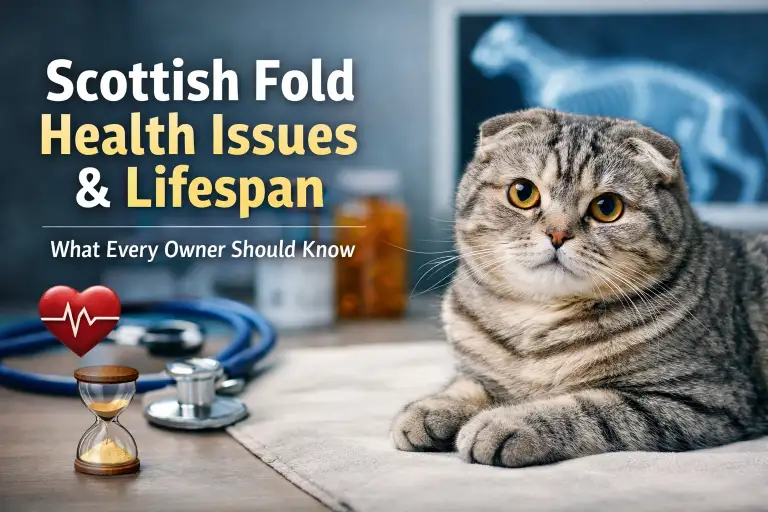
Scottish Folds are affectionate, people-oriented cats known for their distinctive folded ears and gentle personalities. One of the most common questions potential and current owners ask is simple: How long do Scottish Folds live?
The answer is not one-size-fits-all. Lifespan depends on genetics, overall health management, environment, and the severity of any inherited cartilage changes associated with the breed.
In general, many Scottish Folds live around 11 to 15 years, with some living longer under attentive care. This range overlaps closely with the average lifespan of many indoor domestic cats. However, health variation within the breed can influence how comfortably and how long an individual cat lives.
Lifespan comparison overview
| Cat Type | Average Lifespan | Key Influencing Factors |
|---|---|---|
| Indoor Domestic Cat | 12–18 years | Preventive care, diet, genetics, indoor safety |
| Outdoor Domestic Cat | 5–10 years | Accidents, predators, infections, environmental stress |
| Scottish Fold (General Range) | 11–15 years | Genetic cartilage mutation, joint health, weight management, routine veterinary monitoring |
It’s important to understand that lifespan and quality of life are related but not identical. Some Scottish Folds may develop joint stiffness or mobility changes earlier in life due to inherited cartilage differences. Others may experience only mild changes and remain active for many years.
Living indoors significantly improves safety and longevity for Scottish Folds, just as it does for most cats. Because this breed may be more vulnerable to joint stress, avoiding outdoor risks and trauma can be particularly beneficial.
Genetics also plays a major role. Scottish Folds inherit a cartilage mutation responsible for their folded ears. The expression of this mutation varies from cat to cat. Some develop more noticeable skeletal changes, while others show minimal outward effects. Responsible breeding practices and informed ownership can influence long-term outcomes.
For owners, the most helpful perspective is this:
Scottish Folds are not automatically short-lived cats, but they do require thoughtful monitoring throughout life. With consistent veterinary care, appropriate weight management, and attention to subtle mobility changes, many Scottish Folds enjoy affectionate, meaningful lives well into their senior years.
The Genetics Behind Scottish Fold Health (Why This Breed Is Different)
Scottish Folds are different from most other cats because of one specific gene change. This gene affects cartilage. Cartilage is the soft, flexible tissue that supports the ears, joints, and bones.
The folded ears that make this breed famous are not just an ear trait. They are linked to a whole-body cartilage mutation. This means the same gene that folds the ears can also affect joints and bone development.
This condition is called osteochondrodysplasia. The word sounds complex, but it simply means abnormal cartilage and bone growth.
Here is what that means in simple terms:
- Cartilage helps joints move smoothly.
- In Scottish Folds, cartilage may not form normally.
- This can lead to stiffness or joint changes over time.
- The severity is different for every cat.
Some Scottish Folds carry one copy of the gene. Others carry two copies. Cats with two copies are more likely to develop more serious bone and joint problems. Cats with one copy may still develop changes, but often less severe.
Not all Scottish Folds will have the same health outcome. Some show mild stiffness later in life. Others may develop earlier mobility issues. There is no way to predict exactly how the gene will affect each cat.
Common Myths About Scottish Fold Health
| Myth | Reality |
|---|---|
| The folded ears are only cosmetic | The ear fold is linked to a cartilage mutation that affects the whole body |
| All Scottish Folds are always in pain | Severity varies. Some cats show mild changes, others may develop more noticeable joint stiffness |
| Straight-eared Scottish cats have no risk | Even cats with straight ears may carry the cartilage gene |
Because of this genetic link, Scottish Folds are sometimes part of ethical debates in the cat world. Some veterinary groups have raised concerns about breeding practices. The goal of these discussions is to reduce the risk of severe joint problems, not to criticize owners.
If you already have a Scottish Fold, the most important thing to remember is this: awareness helps. Knowing the genetic background allows you to watch for early changes and support your cat as they grow.
Common Health Issues in Scottish Folds (What Owners May Notice)
Because of their cartilage gene, Scottish Folds can have some health problems that other cats may not have as often. Some issues are linked to the breed. Others are common in all cats.
Not every Scottish Fold will have serious problems. The signs can range from very mild to more noticeable. The key is knowing what to look for.
Here are the most common health concerns.
Osteochondrodysplasia (Bone and Cartilage Changes)
This is the main condition linked to the breed.
It affects how cartilage and bones develop. Over time, this can change how joints move.
Owners may notice:
- A stiff or thick tail
- Shorter or stiff legs
- Trouble jumping
- Moving more slowly than before
These changes may appear when the cat is young or later in life.
Arthritis (Joint Stiffness)
Arthritis means joint inflammation. It can happen in many older cats, but Scottish Folds may develop it earlier because of their cartilage changes.
Signs may include:
- Less jumping
- Sleeping more than usual
- Not wanting to be picked up
- Walking carefully or slowly
These signs are often subtle at first.
Dental Disease
Dental problems are common in all cats, not just Scottish Folds. Gum disease and tooth problems can affect eating and overall health.
Watch for:
- Bad breath
- Drooling
- Eating on one side of the mouth
- Dropping food
Obesity (Excess Weight)
Extra weight puts more pressure on joints. For Scottish Folds, this can make mobility problems worse.
Healthy weight is very important for this breed.
Kidney and Urinary Problems
These are common in many cats, especially as they age.
Signs may include:
- Drinking more water
- Urinating more often
- Weight loss
- Changes in litter box habits
Heart Concerns
Some cats may develop heart conditions, though this is not the main issue linked to Scottish Folds. Regular veterinary checkups help monitor heart health.
Health Issue Overview
| Condition | Breed-Linked or Common in All Cats? | What Owners May Notice |
|---|---|---|
| Osteochondrodysplasia | Breed-linked | Stiff tail, short legs, reduced jumping |
| Arthritis | Often linked to breed but also age-related | Slow movement, less activity |
| Dental Disease | Common in all cats | Bad breath, eating changes |
| Obesity | Common in all cats | Weight gain, less movement |
| Kidney/Urinary Issues | Common in all cats | Increased thirst, litter box changes |
It is important to remember that small behavior changes can be early signs. Cats often hide discomfort. A cat that jumps lower than before or plays less may simply be adjusting to mild joint stiffness.
Preventive Care: How to Support a Healthy Scottish Fold
Good care does not mean doing anything extreme. It means staying consistent and paying attention to small changes. Because Scottish Folds can have joint risks, simple daily habits can make a big difference over time.
Routine Veterinary Checkups
Regular vet visits help track your cat’s weight, joints, teeth, and overall health. Even if your cat looks fine, yearly exams (or as your veterinarian suggests) help catch small problems early.
Early detection often means better comfort and better long-term outcomes.
Watch Body Weight
Extra weight adds pressure to joints. For Scottish Folds, this matters even more.
To help maintain a healthy weight:
- Feed measured portions
- Avoid too many treats
- Encourage gentle play every day
- Ask your veterinarian about ideal body condition
A small weight gain can increase joint stress, so regular weight checks are helpful.
Create a Joint-Friendly Home
You do not need to redesign your house. Small changes are often enough.
Helpful adjustments:
- Soft bedding for comfort
- Easy access to litter boxes
- Low-entry litter boxes if jumping becomes harder
- Pet stairs or ramps to reach favorite spots
These changes reduce strain on joints without limiting normal behavior.
Encourage Safe Activity
Movement keeps joints flexible. Short, gentle play sessions are better than intense jumping games.
Watch your cat’s comfort level. If they hesitate before jumping or stop sooner than usual, adjust the activity.
Monitor Dental Health
Healthy teeth support overall health.
Watch for:
- Bad breath
- Red gums
- Trouble chewing
Your veterinarian can guide you on safe dental care options.
Preventive Care Checklist
| Area to Monitor | What to Watch For | Why It Matters |
|---|---|---|
| Weight | Gradual weight gain | Extra weight strains joints |
| Mobility | Lower jumps, stiffness | Early sign of joint changes |
| Teeth & Gums | Bad breath, redness | Dental health affects whole body |
| Activity Level | Playing less than usual | May signal discomfort |
| Litter Box Habits | Changes in urination or stool | Can signal internal health issues |
Preventive care is not about worrying every day. It is about knowing your cat’s normal habits. When you know what is normal, small changes are easier to spot.
For additional veterinary perspective on inherited disorders and responsible breeding practices, the American Veterinary Medical Association (AVMA) provides educational resources.

Ata Ur Rehman is the founder of Pet Age in Human Years Calculator, an educational platform that provides age conversion charts and lifespan guides for dogs, cats, birds, and other companion animals. His work focuses on helping pet owners understand how animal ages translate into human years using commonly accepted age conversion formulas and published lifespan averages.
The website compiles breed and species lifespan data from kennel clubs, breed organizations, and general animal lifespan studies to present simple and easy-to-understand guides for pet owners worldwide.
This website was created to centralize animal age conversion charts into one easy reference platform for pet owners.